Iceland is a paradise for wildlife photographers and nature lovers in general. This island, which has become famous for its volcanoes, lies halfway between Europe and America. It has a unique climate, a singular geological setting, and a history that has created a close bond between humans and wildlife. At Wildlife Photo Travel, we are passionate about nature, and Iceland is one of our favourite destinations. We have therefore decided to create a complete guide about the wildlife of Iceland, aimed at wildlife photographers. This guide describes our own experience with Icelandic fauna across different regions of the country.
This article is organised so that ornithologists, mammal or predator enthusiasts, and marine biology lovers can easily find the information they are looking for. We observe and photograph every species presented here. If you would like to join our adventures, feel free to check our photo tours in Iceland.
Wildlife of Iceland: Mammals
Compared to other Icelandic wildlife (birds, marine mammals…), the island is clearly not a land of terrestrial mammals. Living conditions are particularly harsh, and its isolation between the European and American continents has prevented most mammals from naturally establishing themselves there. Yet a few species have managed to adapt to this extreme environment and find their place within Icelandic fauna. In this article, we will talk about these rare terrestrial mammals of Iceland.
On the other hand, Iceland, with its rich feeding waters, is a paradise for Arctic marine mammals. It is one of the easiest places to observe cetaceans and pinnipeds. We often even observe them from the coast without needing to go on a boat.
Some mammals, such as the polar bear, are occasional visitors to Iceland. In some years, individuals arrive after drifting on icebergs from Greenland, even though they have no chance of settling on the island. Unfortunately, the Icelandic state systematically shoots these polar bears. Greenland refuses to take them back, citing health reasons, and these bears cannot survive in Iceland, not to mention the danger they represent for the population. In reality, it is mostly a financial issue. Bringing a polar bear back costs money that neither state is willing to spend.
Terrestrial mammals of Iceland
The harsh climate and isolation of Iceland have limited the natural establishment of mammals on the island. Today, most species present have been introduced by humans, either intentionally or accidentally. Unfortunately, humans have played a significant role in shaping the current landscape of Icelandic wildlife.
Here is a non-exhaustive list of terrestrial mammals living in Iceland:
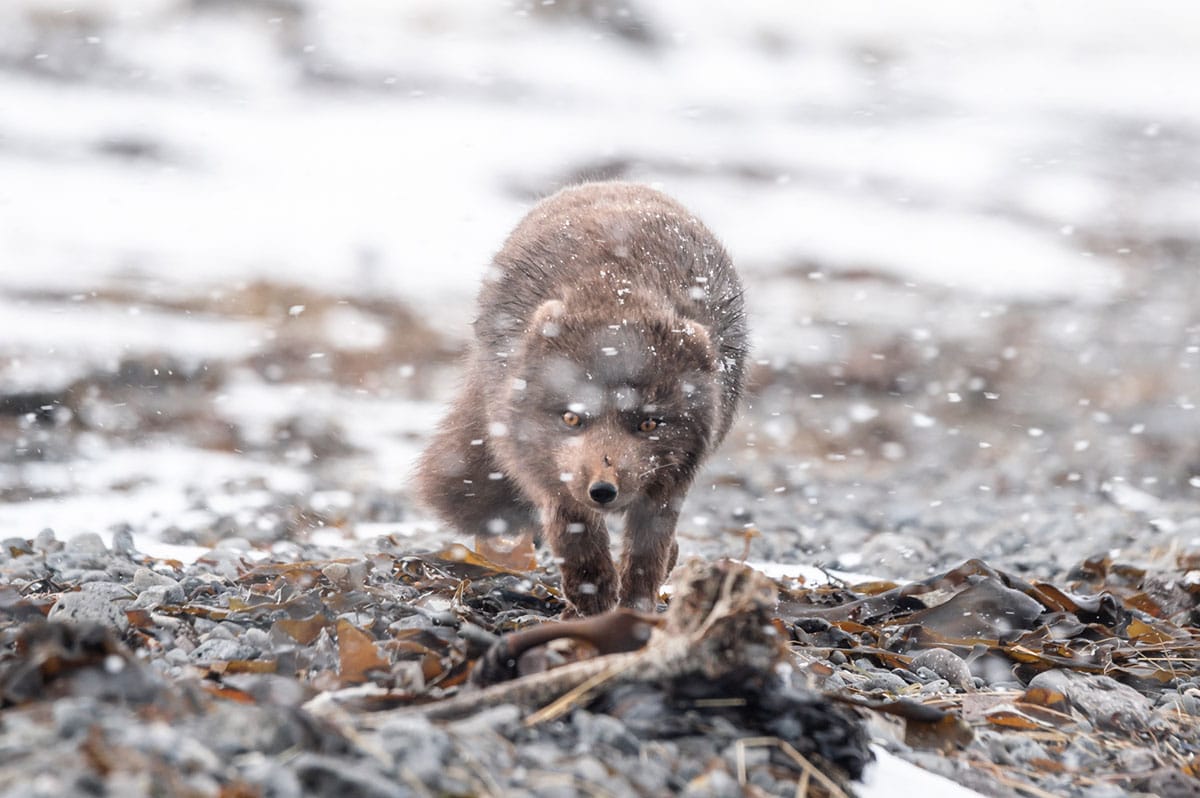
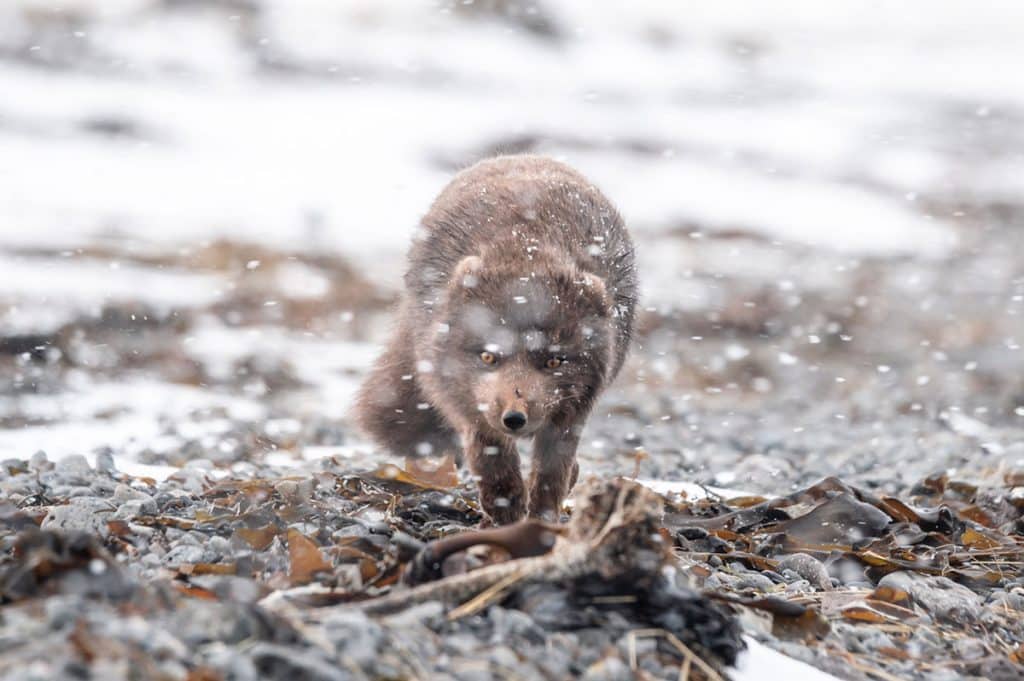
The Arctic fox, the only endemic mammal of Iceland
First, we go back to a distant time, the Ice Age, when Iceland was covered by pack ice. At that time, some animals could cross the North Atlantic on foot over the ice. However, this crossing was not accessible to large herbivores such as musk oxen, which required a continental climate to survive. It was during this period that the Arctic fox colonised Iceland.
Then we move forward to 875, when the first Scandinavian settlers arrived in Iceland. At that time, the island was completely wild and uninhabited by humans—a paradise for tens of millions of seabirds, but also for a species that survived the end of the last Ice Age. When the ice retreated, only the Arctic fox was able to survive in the Icelandic tundra and its unique climate. It then became the only terrestrial mammal of Iceland.
Today, the Arctic fox is widely present in Iceland despite the hunting and persecution it has suffered over the past centuries. It is possible to observe and photograph Arctic foxes in Iceland, although the species remains discreet in most regions. However, due to the isolation of the Westfjords, foxes have found a refuge and a preferred habitat there. This is where we offer our Arctic fox photo tour. It is also where we observe and photograph most of the wildlife of Iceland.
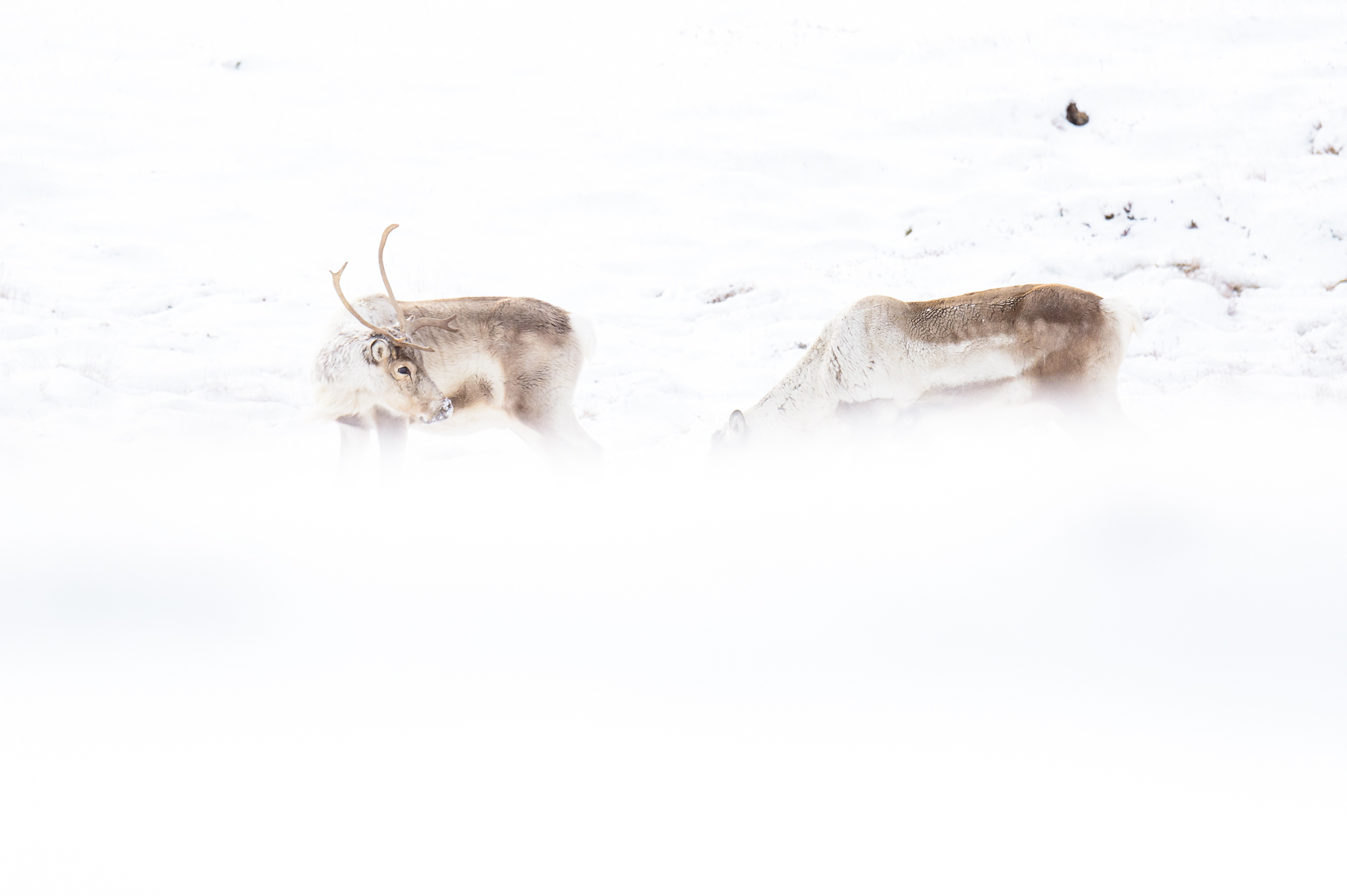
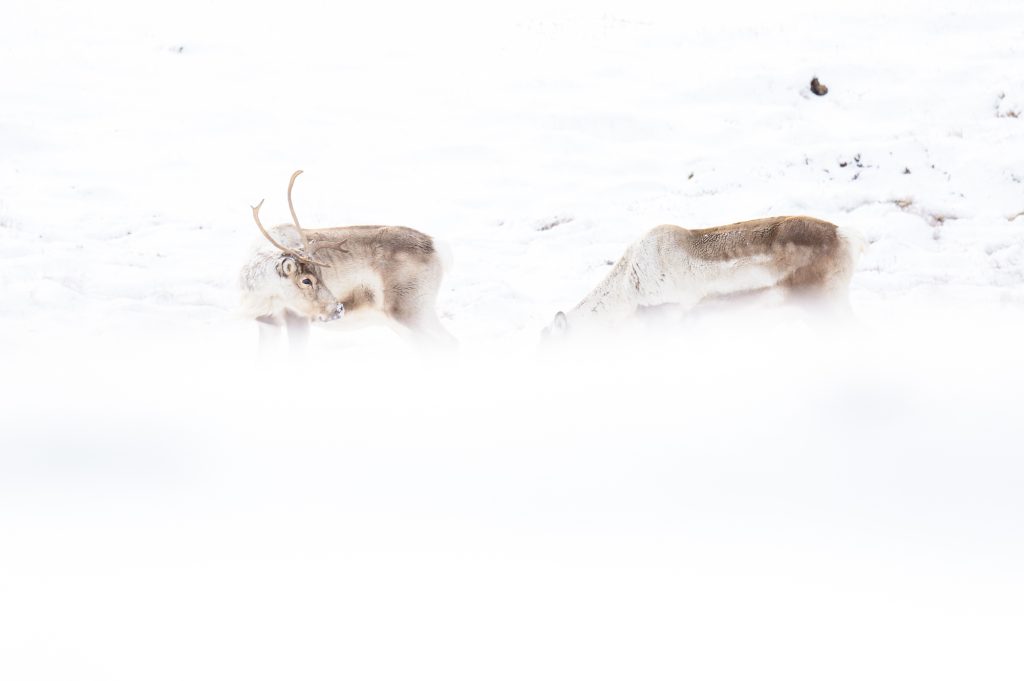
Reindeer in the East Fjords
Reindeer were introduced to Iceland in the 18th century. Like all mammals except the Arctic fox, it was human intervention that brought this species to a North Atlantic island where it was not naturally meant to live. But the story of Icelandic reindeer remains interesting.
Indeed, it was the Danish government (which controlled Iceland at the time) that decided, in order to develop the Icelandic economy, to import reindeer from Scandinavia for farming. The goal was to exploit their fur and meat. But the result was disastrous: most reindeer died during transport or shortly after arrival.
Later, overhunting and harsh climatic conditions led to the extinction of reindeer in Iceland—or so people believed. However, a small population survived in the East Fjords. From this population descend the 6,000 to 7,000 reindeer that now live between Vatnajökull glacier and the East Fjords. Among the wildlife of Iceland, photographers are particularly encouraged to seek out reindeer reindeer.
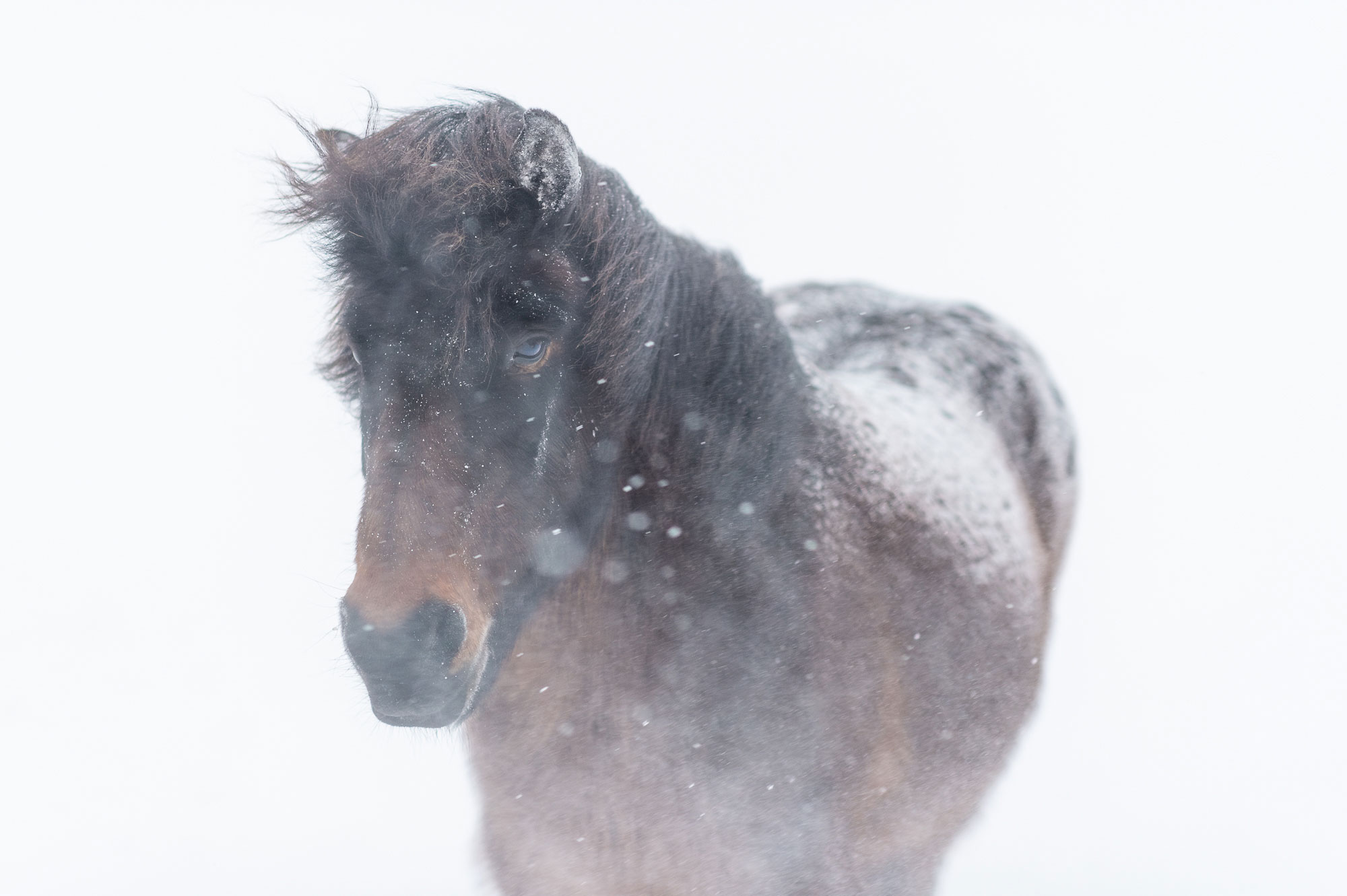
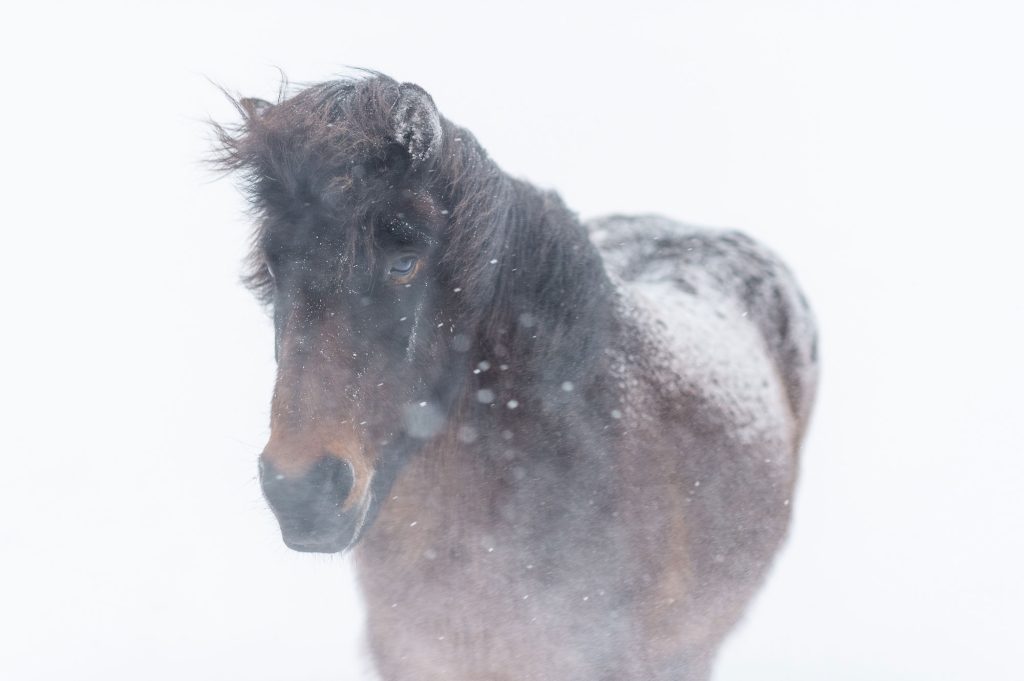
The Icelandic horse, an animal born in Iceland
The Icelandic horse, as it exists today, was not introduced but was in a sense born in Iceland. The first Scandinavian settlers had brought Norwegian horses, the fjord horses. Other contributions such as Shetland horses and Connemara horses from Ireland enriched the genetic pool. The rest of the story is one of natural selection and adaptation to Iceland’s harsh climate. This process led to the creation of a new breed: the Icelandic horse!
After a few centuries, the Icelandic parliament, the Althing, banned the import of new horses to Iceland. The goal was to protect local populations from diseases brought from other regions and to preserve the genetic heritage of Icelandic horses, already well established on the island.
Today, it is possible to observe and photograph Icelandic horses all over the country. However, northern Iceland remains the best region. Horses can be seen roaming freely in the mountains, often in breathtaking landscapes. This is ideal for photographers wishing to document Icelandic horses in their natural environment.
Finally, equestrian tourism has developed significantly in recent years. All travel agencies and Icelandic tourism companies offer horse riding tours, including from the capital Reykjavik. However, we advise horse enthusiasts to research carefully before booking such experiences. While some remote farms offer ethical rides with horses living peaceful lives, most Icelandic horse tours take place under poor conditions for the animals.
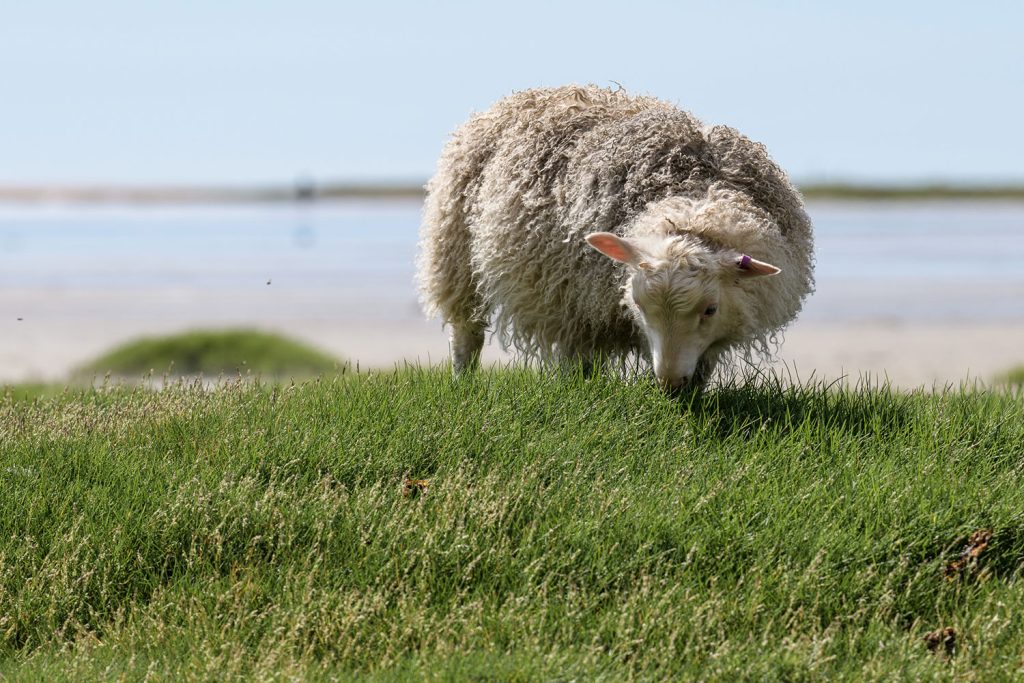
Icelandic sheep
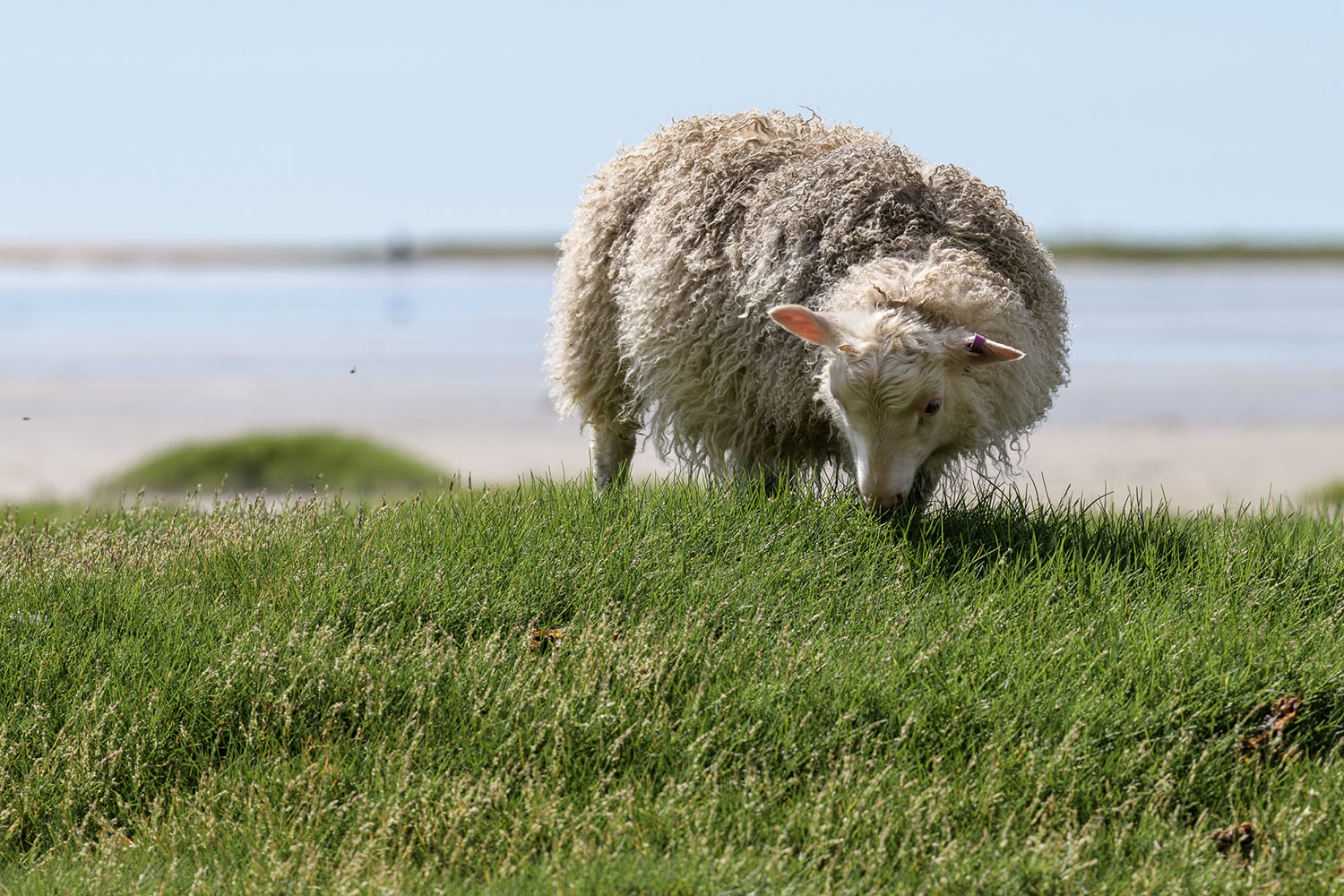
Sheep are an institution in Iceland! Unfortunately, their presence is solely linked to farming, but since sheep are inseparable from Icelandic landscapes, we have included them in this article about Icelandic fauna.
Icelandic sheep are descendants of ancient Norwegian breeds. Like horses, they evolved in an insular environment, genetically isolated, and adapted to Iceland’s climate. Their genetic heritage is among the oldest in Europe.
Small in size, Icelandic sheep have developed incredible resistance to cold and wind and have adapted to difficult terrain. Their wool is renowned for its excellent insulating properties.
They roam freely in mountains, coastal areas, and even the most remote parts of Iceland. However, they stay indoors in winter, as Arctic conditions would be fatal to them. The large annual roundup takes place before winter. Farmers then pool their efforts to gather all sheep from the region. They traditionally used Icelandic horses to move through the mountains and cover long distances. Once gathered, the sheep are sorted and returned to their owners. This event is called Réttir.
Wildlife of Iceland: Other terrestrial mammals
Other non-native terrestrial mammals also live in Iceland. Some arrived accidentally (on ships), while others escaped from farms and became established on the island.
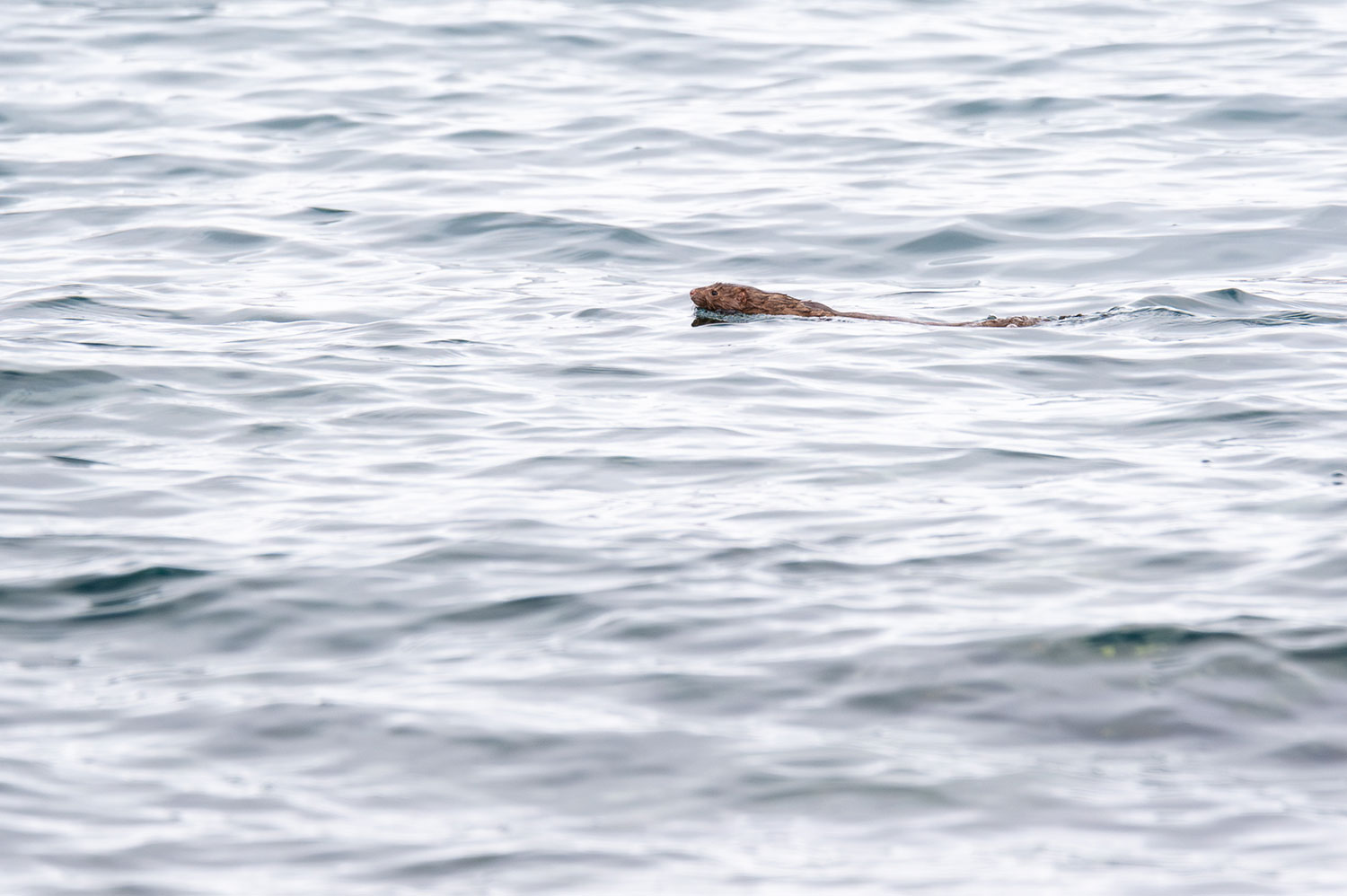
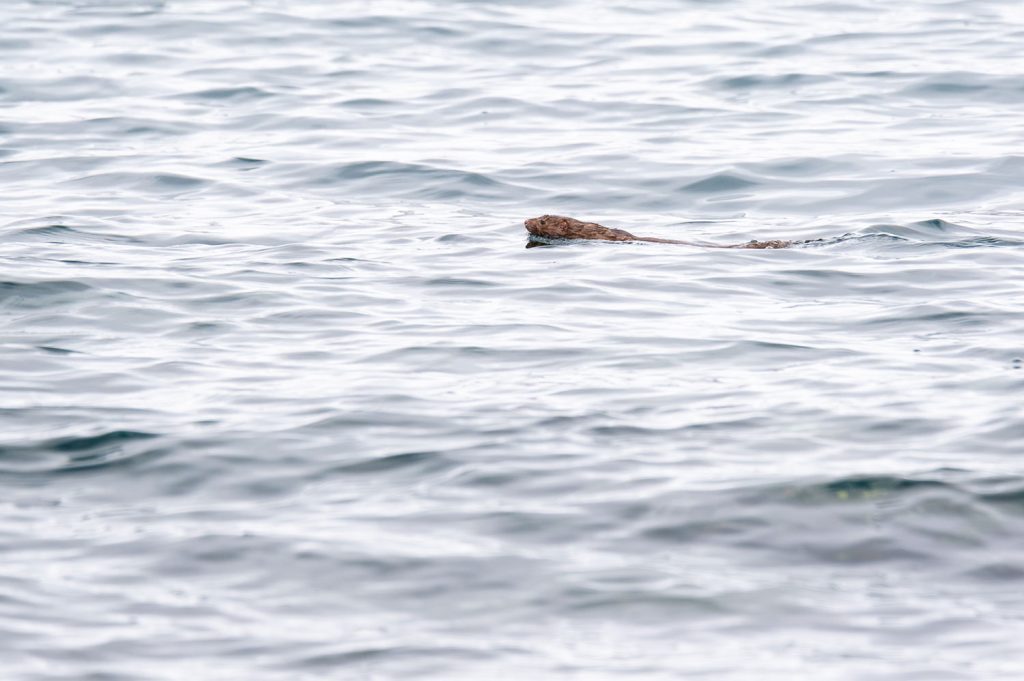
One of the most successful species is the American mink. This small mustelid was introduced in the mid-20th century for fur farming, but some individuals escaped. This type of event is often the beginning of an ecological disaster, and Iceland is no exception. American minks have reproduced and adapted well. They now threaten breeding populations of Arctic terns, puffins, shorebirds, and some duck species. They are even capable of swimming across rivers or reaching nearby coastal islands.
Finally, other mammals, mainly rodents, arrived accidentally in Iceland. The brown rat, black rat, and house mouse mainly live in urban areas, while the field vole has adapted remarkably well to the tundra, especially in rocky zones. These animals of Iceland deserve special attention, as their adaptation to this unique environment could eventually lead to the emergence of new species.
American mink swimming in the ocean
Marine mammals of Iceland
Cetaceans: the humpback whale, queen of the fjords
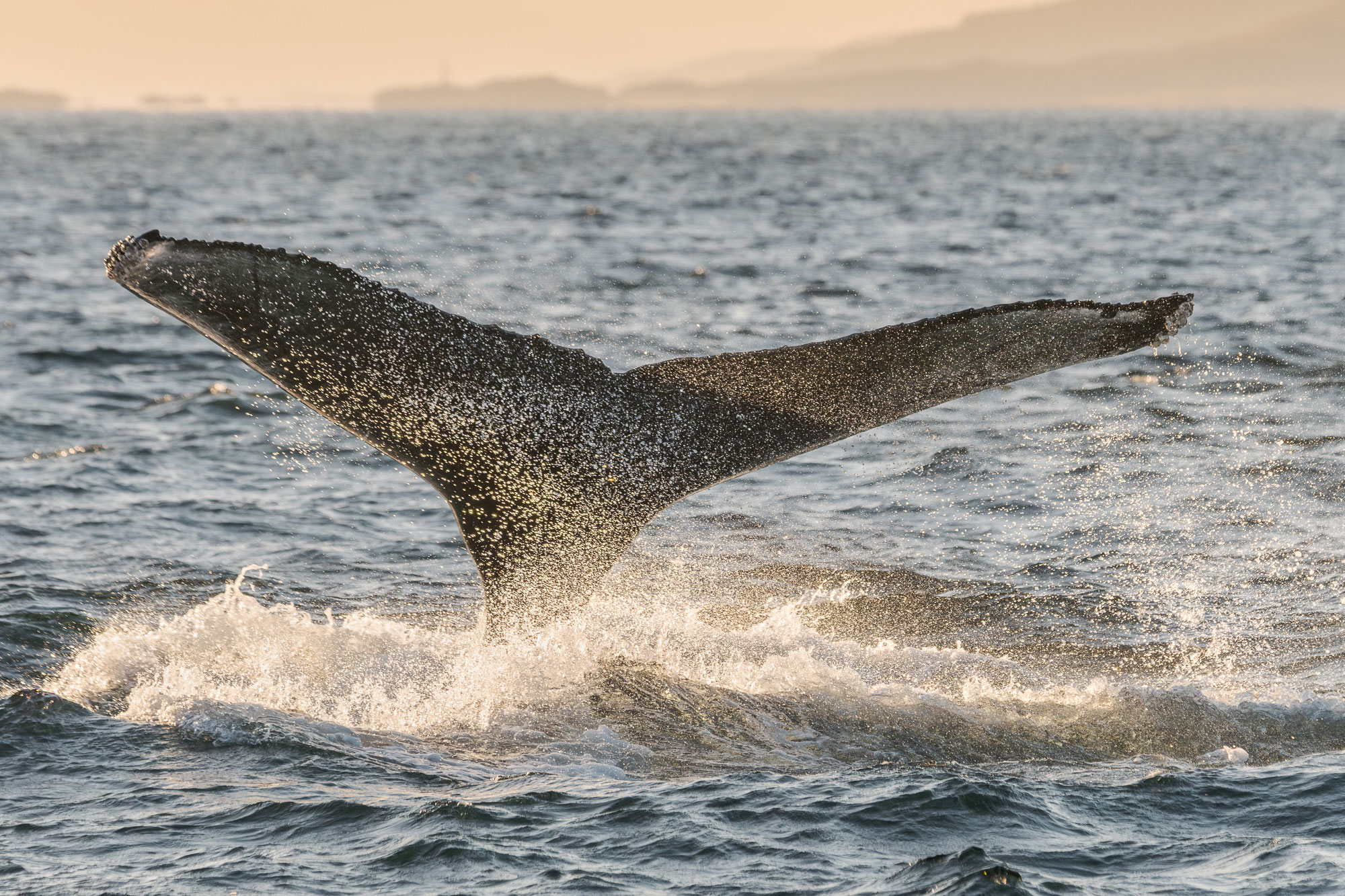
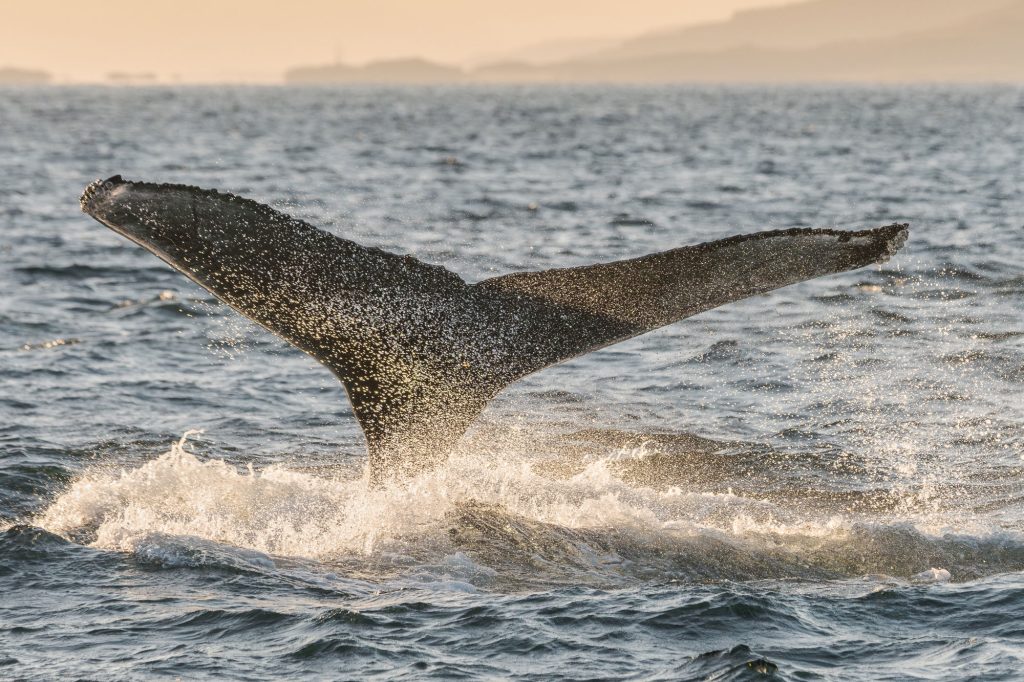
As mentioned above, it is relatively easy to spot marine mammals in Iceland. Many species of whale inhabit Icelandic waters: the sei whale, the fin whale, the blue whale, the minke whale, the orca, and the sperm whale. But the easiest species to spot is undoubtedly the humpback whale. It is present from May to September, or even October, in the Westfjords, in the north around Húsavík, on the Snæfellsnes Peninsula and in the Reykjavik area. Orcas, on the other hand, are harder to spot, except on the Snæfellsnes Peninsula where they are abundant and can be seen practically all year round!
To spot whales in Iceland, there are only two options: book a whale-watching tour, or watch with binoculars (and sometimes even without) from the coast. In the first case, you can book a whale-watching tour from any part of the country (Reykjavík, Akureyri and Húsavík, Ísafjörður, Hólmavík …). In the second case, we strongly recommend the Westfjords. Skötufjörður fjord is where you’re most likely to spot whales from the road. Finally, in the south-west, on the Reykjanes Peninsula, we’ve spotted whales several times from the Lóndrangar viewpoint.
Common seals and grey seals
The two seal species found in Iceland are the common seal and the grey seal.
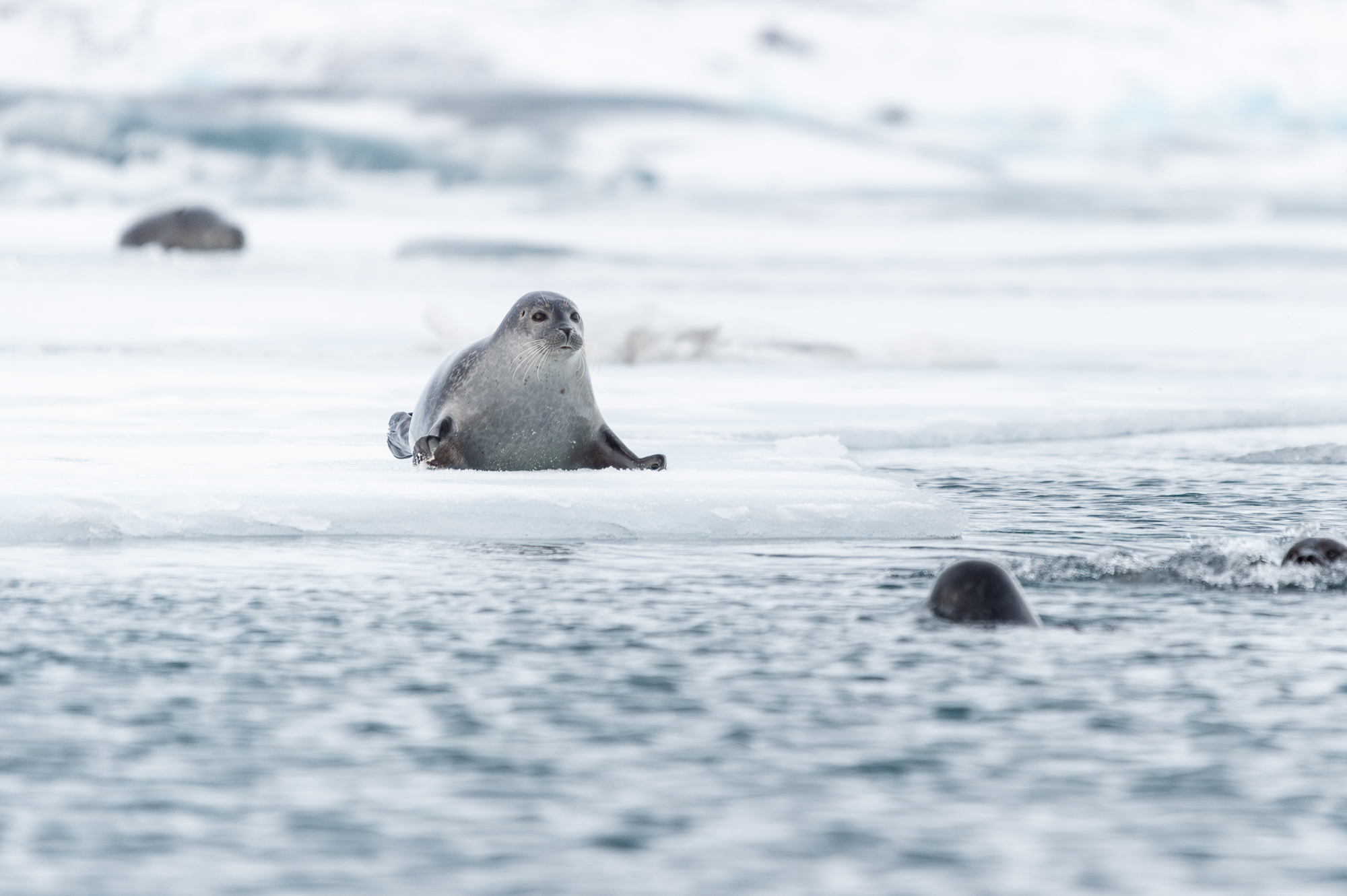
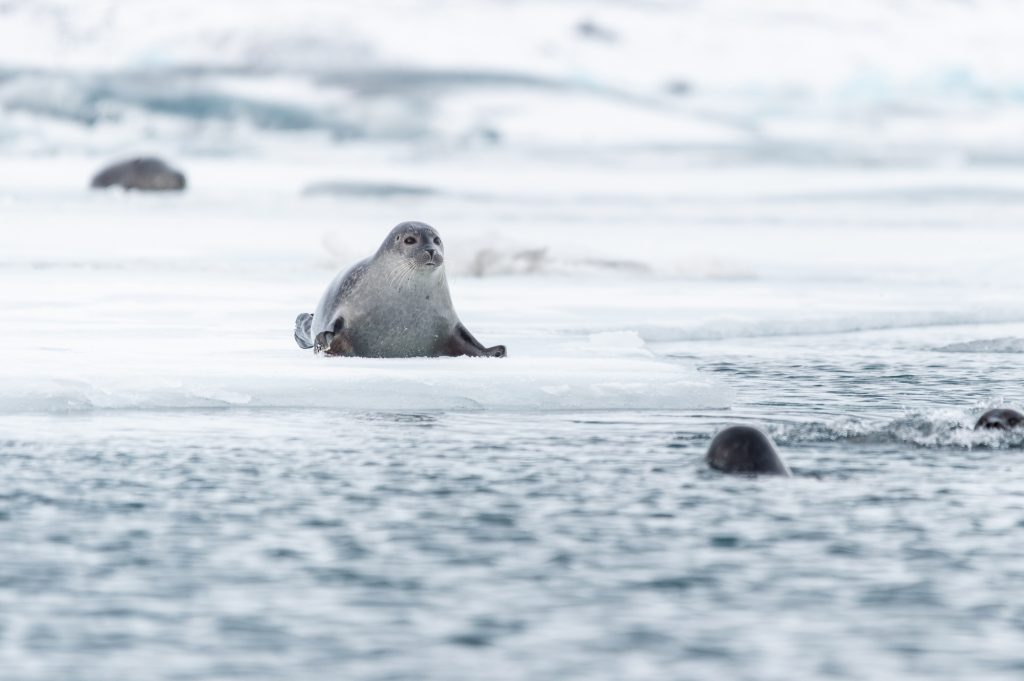
It is relatively easy to observe common seals in Iceland. Found all around the island, they regularly frequent the coast and rest on rocky beaches at low tide. Small colonies can be observed, ranging from just a few individuals to several dozen depending on the site and conditions.
The most remarkable site to observe them is the Jökulsárlón glacial lagoon. Formed by the melting of the Vatnajökull glacier, it provides a unique habitat for seals and Icelandic wildlife in general. They move among the icebergs, hunting fish and resting in a calm, protected environment.
For wildlife photographers, this is arguably one of the most interesting locations in the country: the natural distance created by the lagoon reduces stress for the animals, allowing relatively close observation and photographic opportunities. Common seals offer particularly original scenes here, especially when they rest directly on drifting ice.
Common seals are found in good numbers at the following locations: the Vatnsnes Peninsula, the Snæfellsnes Peninsula (Ytri-Tunga), Skötufjörður fjord (Westfjords), and in the Hornstrandir Nature Reserve.
The grey seal is much more discreet than the common seal. The best place to observe it in Iceland is the Vatnsnes Peninsula in the north. You need to look carefully around Illugastaðir and Hvítserkur, where some grey seals mix with common seals. Other areas such as Ytri-Tunga beach in Snæfellsnes or the Hornstrandir Nature Reserve are also known to be frequented by grey seals.
Finally, we invite you not to approach seals too closely. Even if they appear calm, these animals rely on their safety distance. It is therefore important to keep your distance in order to observe and take photos without disturbing the animals.
Wildlife of Iceland: Birds
Iceland is one of the best destinations for observing and photographing Arctic birds. The island is an important breeding site for around 75 species of seabirds and land birds.
Birdwatching in Iceland is an activity that deserves an entire dedicated trip, given the time required to travel across the island and the large number of species to observe. If you are a wildlife photographer and wish to photograph Icelandic birds, we recommend travelling between May and early August. After that, many migratory species leave the island for the south. Overall, Icelandic wildlife is much easier to observe in summer, even for resident species.
Most Icelandic birds are relatively tame. Since they are no longer heavily hunted, they live peacefully along the coasts and inland. However, caution is still necessary. We encourage you to always keep your distance to avoid stressing them, and to avoid trampling nesting sites. Respect for wildlife is an essential part of wildlife observation and photography.
Icelandic seabirds
Iceland is one of the best places in the world to observe seabirds. Known for its towering cliffs, wild rivers, lakes and vast wetlands, the island provides ideal habitats for a wide diversity of species. Some birds remain in Iceland year-round, but most are migratory and arrive during the summer season. To maximise your chances of observing and photographing Icelandic seabirds, summer is therefore the best period.
The Atlantic puffin
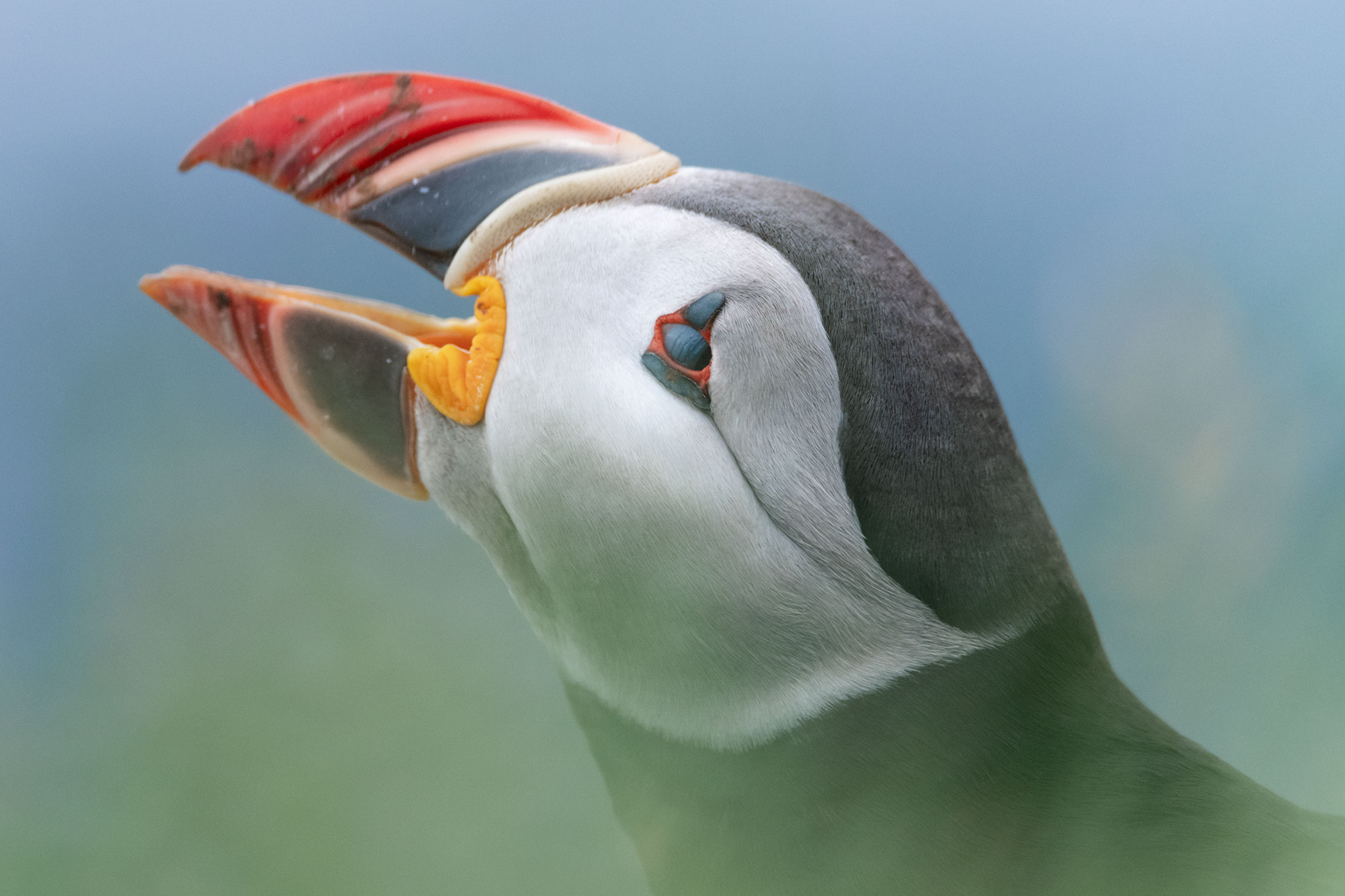
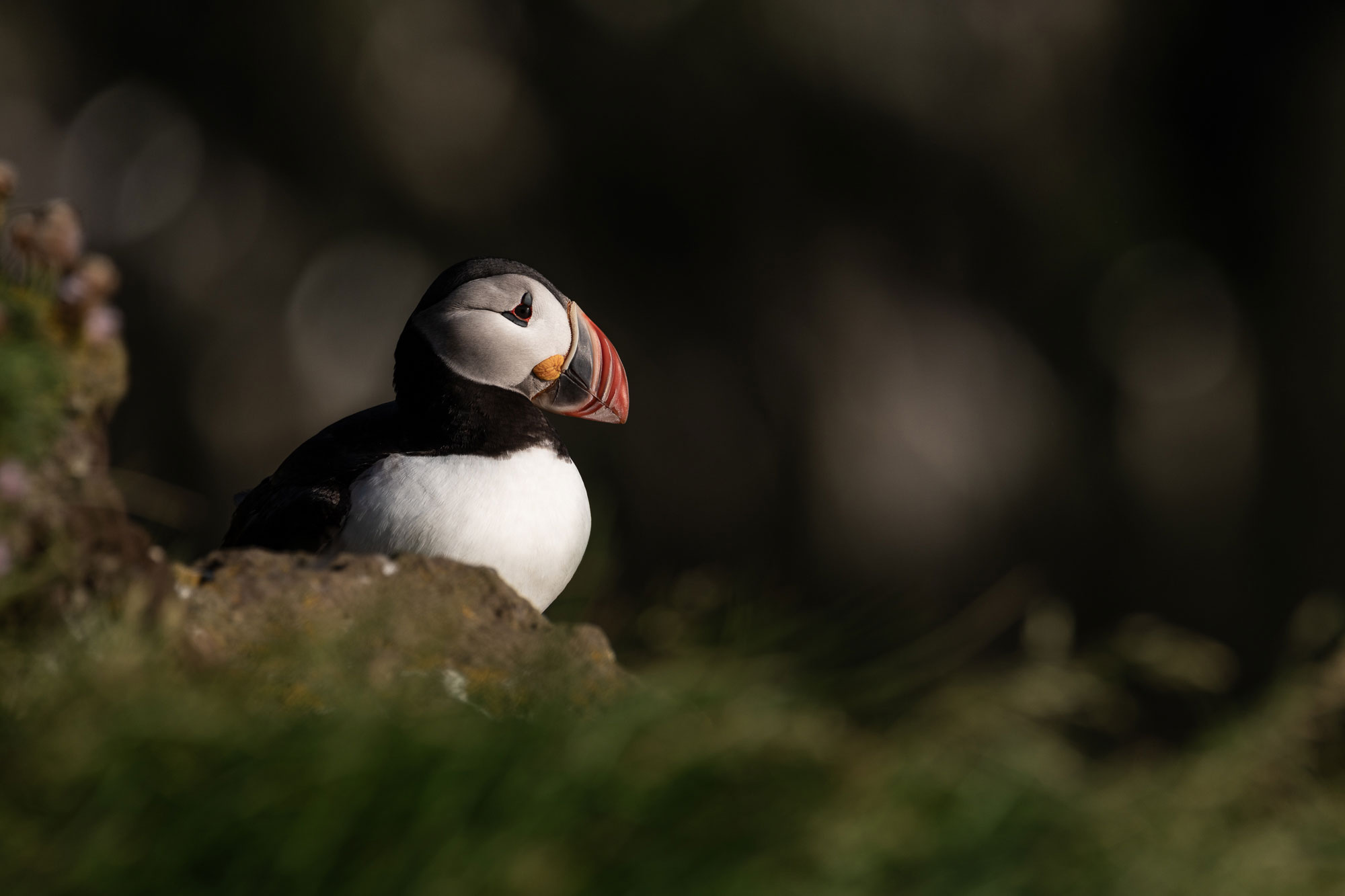
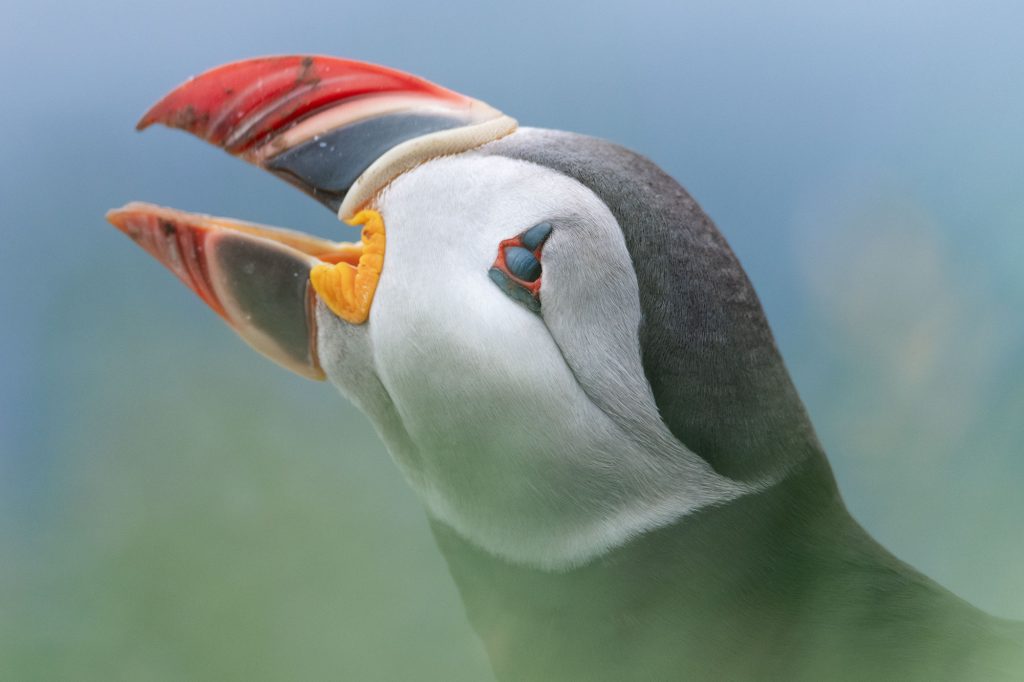
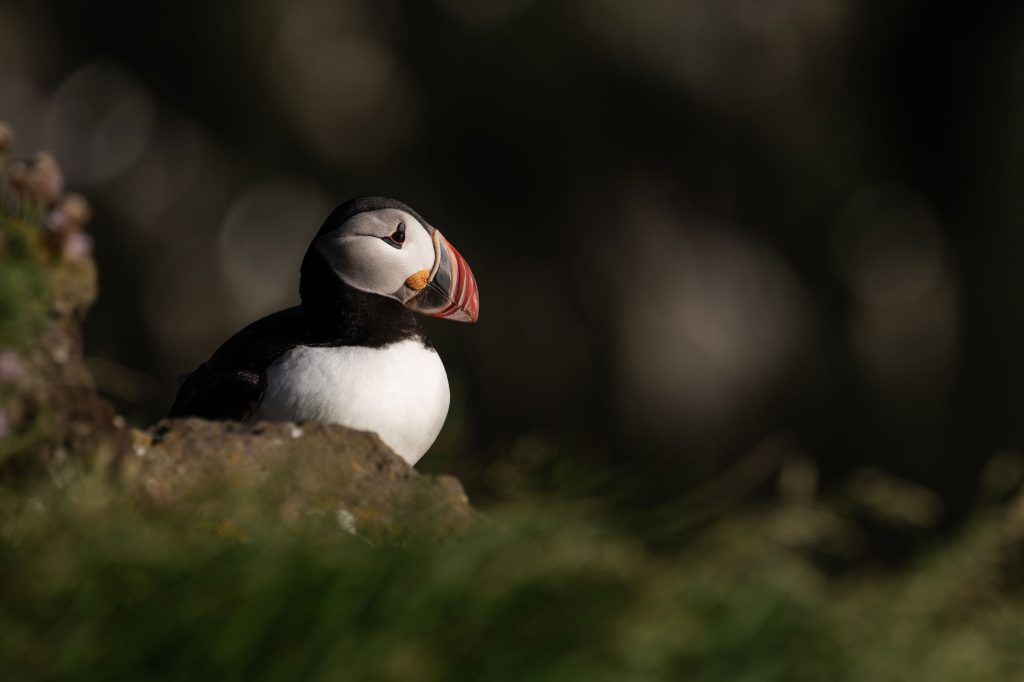
The Atlantic puffin is a national symbol in Iceland, alongside Icelandic horses and sheep. It is one of the most iconic animals of Iceland. This small auk, adapted to life at sea and Icelandic cliffs, is easily recognizable by its black-and-white plumage, but above all by its brightly colored beak during the breeding season.
The Atlantic puffin spends most of its life at sea. It only comes ashore in Iceland to breed, starting from late April. It then digs a burrow in grassy soil at the top of cliffs and lays a single egg.
In August, the young puffins leave the nest and instinctively head out to sea. This marks the end of the season: Icelandic cliffs gradually empty out and, when winter arrives, they become completely deserted.
It is possible to observe and photograph puffins in Iceland at several sites without needing a boat. The best known are:
Dyrhólaey cliffs: the most famous spot on the south coast. Puffins can be seen here with a spectacular volcanic arch and a black sand beach below.
Látrabjarg cliffs: a more remote site at the edge of the Westfjords, Látrabjarg is one of the most important European refuges for Atlantic puffins and other seabirds.
Vestmannaeyjar islands: with very high densities, especially on Heimaey island, the Vestmannaeyjar islands are one of the best places to see puffins in Iceland.
Borgarfjörður Eystri: arguably the most important site in the Eastfjords. A viewing platform has even been built there. It is the best place to observe puffin burrows.
Puffin in Iceland
Puffin at Dyrhólaey
Common murre and black guillemot
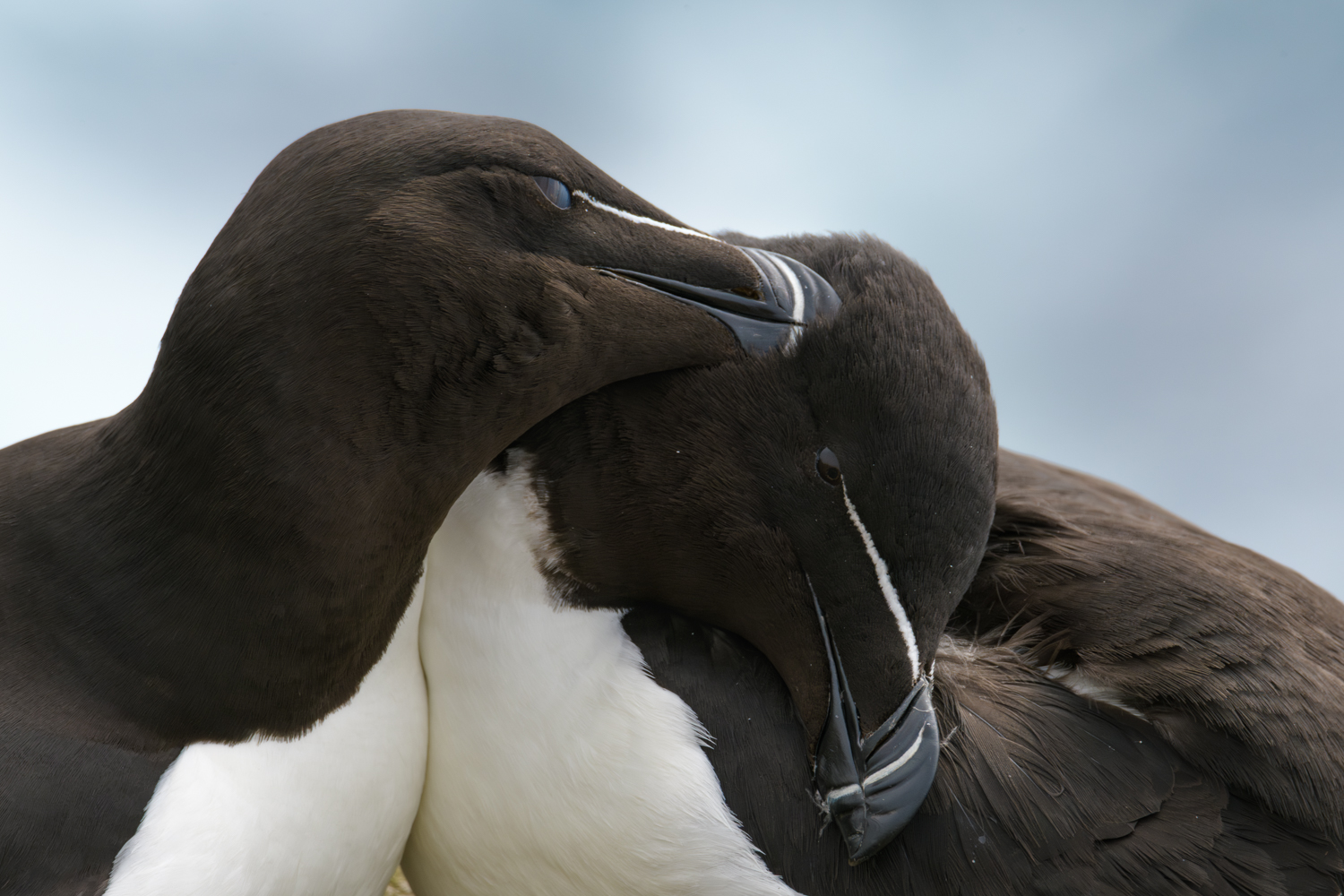
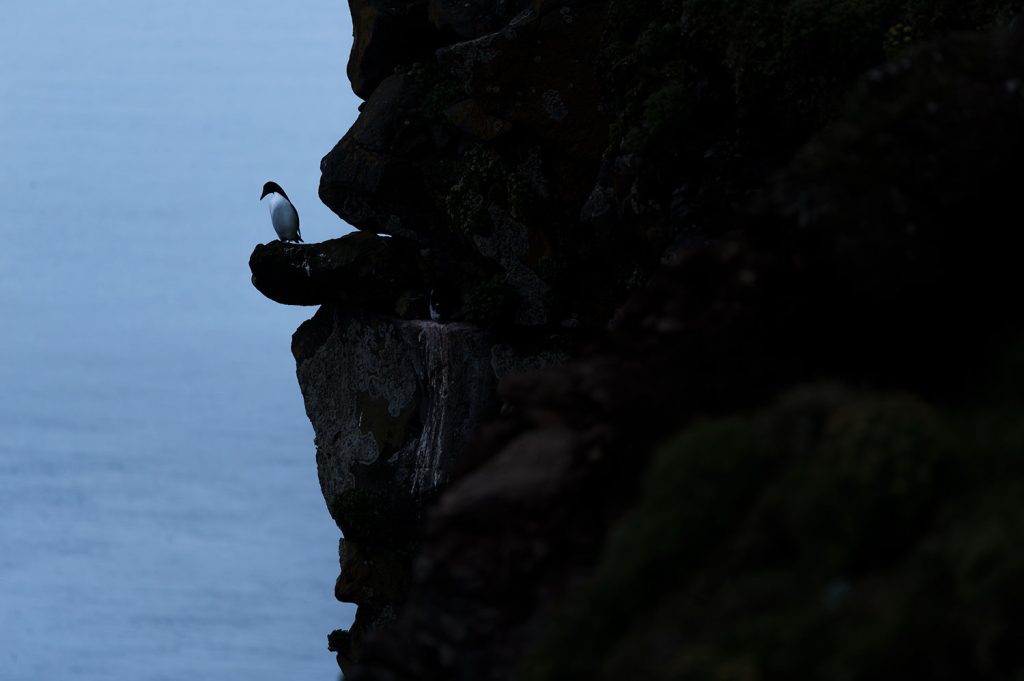
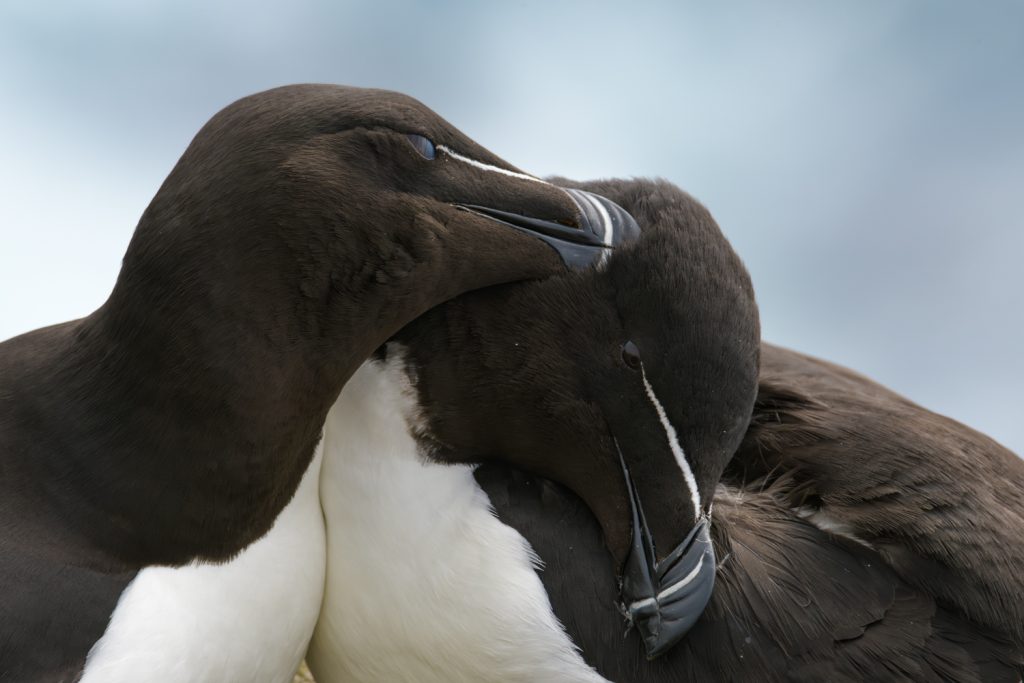
The common murre is much easier to observe in Iceland than the black guillemot. It is present on all the major cliffs previously listed for the Atlantic puffin. It can also be found in other locations such as the Hornstrandir reserve, where the Atlantic puffin is almost absent.
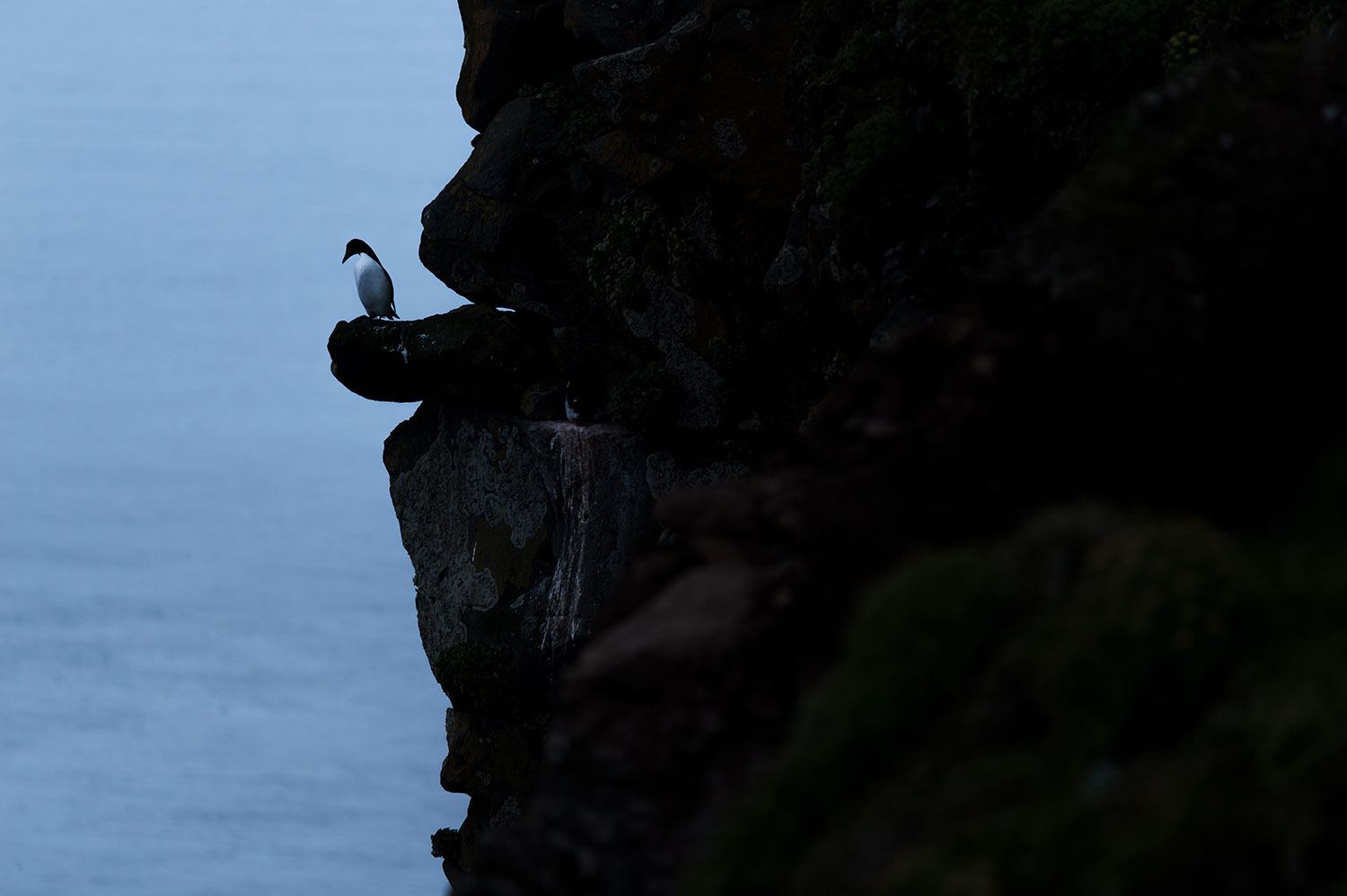
The common murre is not very shy, but it prefers open cliffs that are often inaccessible. As a result, it is more difficult to photograph. The best approach is to watch for resting periods during the polar day. At these times, it may use more accessible ledges to rest, making it easier for photographers to observe it, as in this photo we took in the Hornstrandir Nature Reserve in June.
Common murre in Hornstrandir
The black guillemot, on the other hand, prefers lower rocky coasts, fjords, and especially small islands. The best place to observe it is Vigur Island in the Westfjords. With its deep black body contrasting with the two white patches on its wings, the black guillemot is a highly interesting species to photograph, particularly in Iceland where the black basalt landscapes dominate.
The razorbill
More robust than the guillemots, the razorbill is also black on the upperparts and white underneath. This coloration is a classic adaptation among seabirds: seen from above, the bird blends into the dark surface of the ocean, while from below, the white belly matches the sunlight filtering through the water. This camouflage, known as countershading, helps razorbills protect themselves from both aerial and marine predators.
In Iceland, the razorbill is often found nesting alongside Atlantic puffins. This is notably the case on the Látrabjarg cliffs.
Young razorbills leave the nest very early in their development. They head out to sea before they are even capable of flying, jumping from cliffs—usually at night to reduce the risk of predation.
Once they reach the ocean, they become immediately independent: they must learn to swim, dive, and feed on their own. At this stage, the parents completely stop feeding them, marking the end of the dependency between adults and young birds.
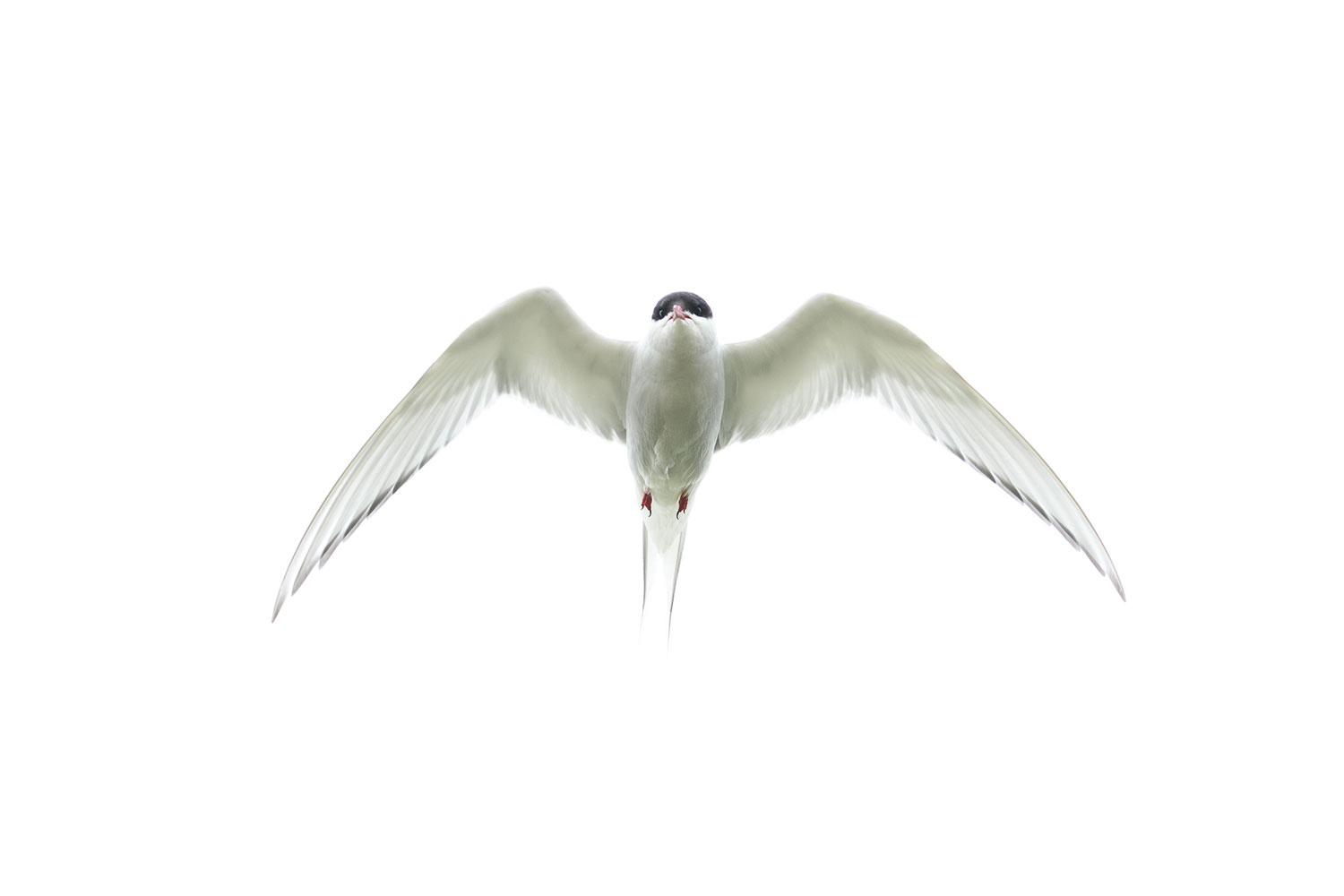
The Arctic tern
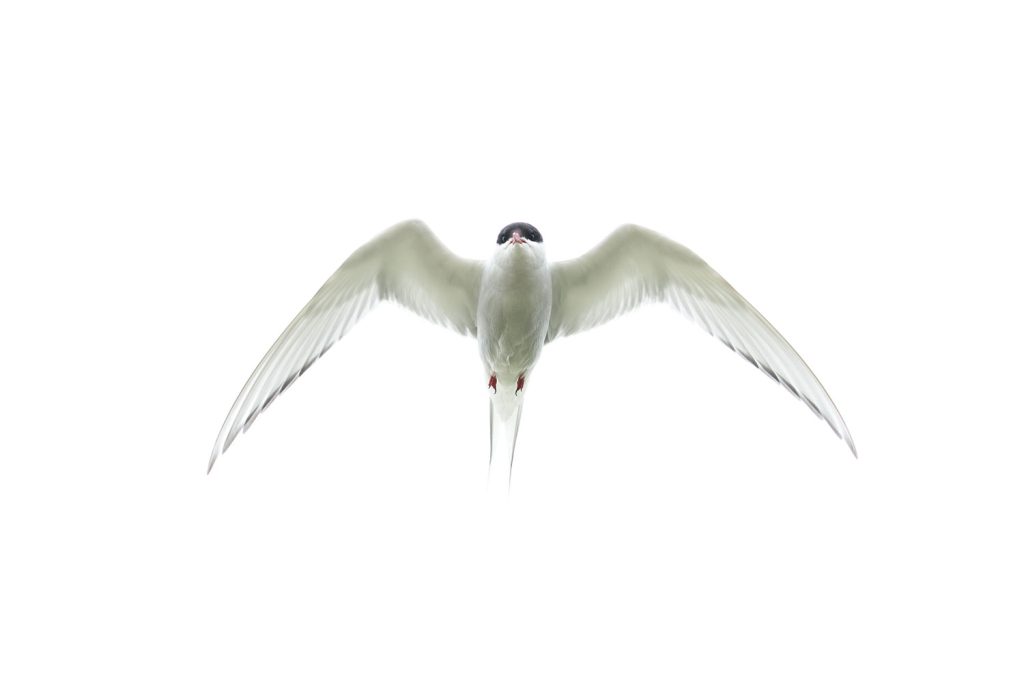
The main thing to know about the Arctic tern is that it is the longest migratory bird in the animal kingdom. Each year, it moves from the Arctic summer to the Antarctic summer, circling the globe and effectively chasing perpetual daylight. This migration can reach up to 70,000 km in a single year!
In Iceland, the Arctic tern occupies the entire country starting in May. It favors grassy areas close to the ocean or freshwater bodies. Pairs form for life, and their courtship displays are quite impressive. However, if you intend to photograph Arctic terns in Iceland, be careful: this bird can become extremely aggressive when an intruder approaches its nesting area.
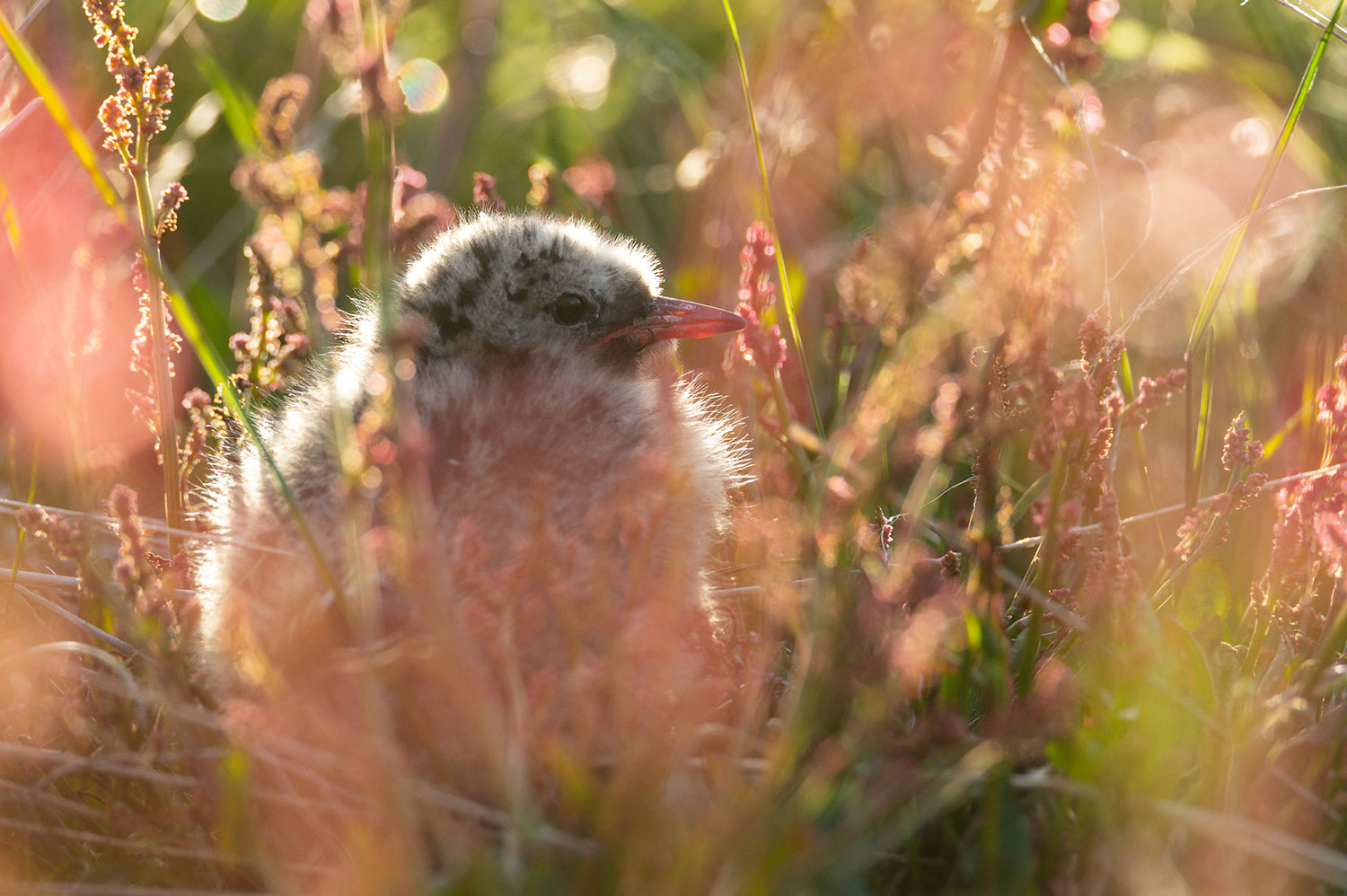
At first, it will simply issue warnings. If the threat continues, it may dive and strike at the intruder’s head. Finally, if someone gets too close to a chick, the terns may attack in groups and even defecate on the intruder. You’ve been warned—you might want to bring a rain jacket!
Arctic tern in Iceland
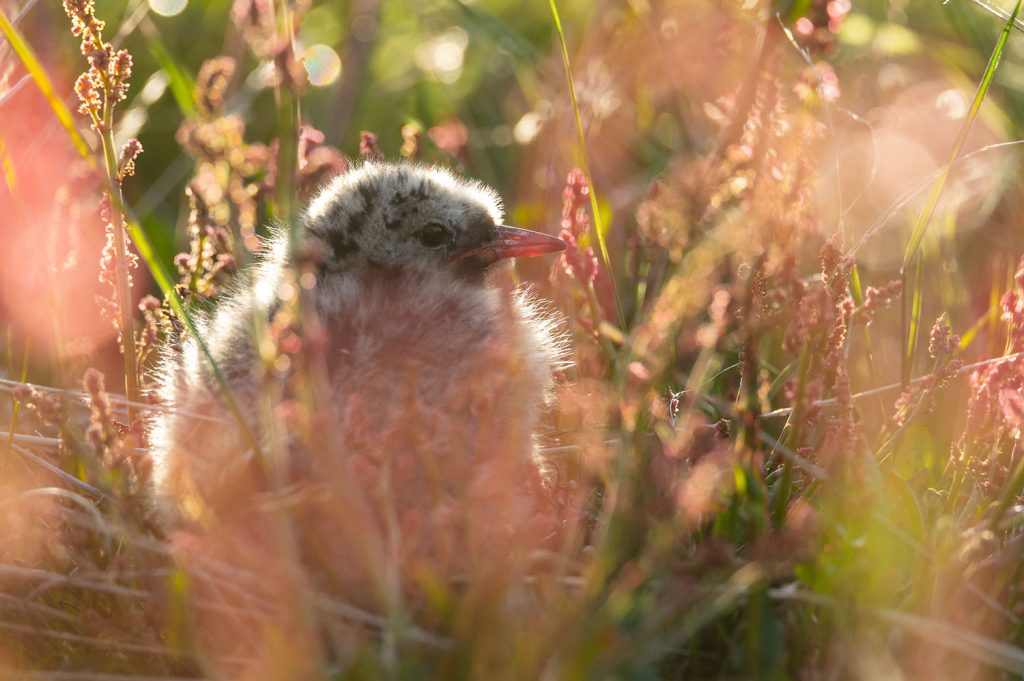
Juvenile Arctic tern
The eider duck
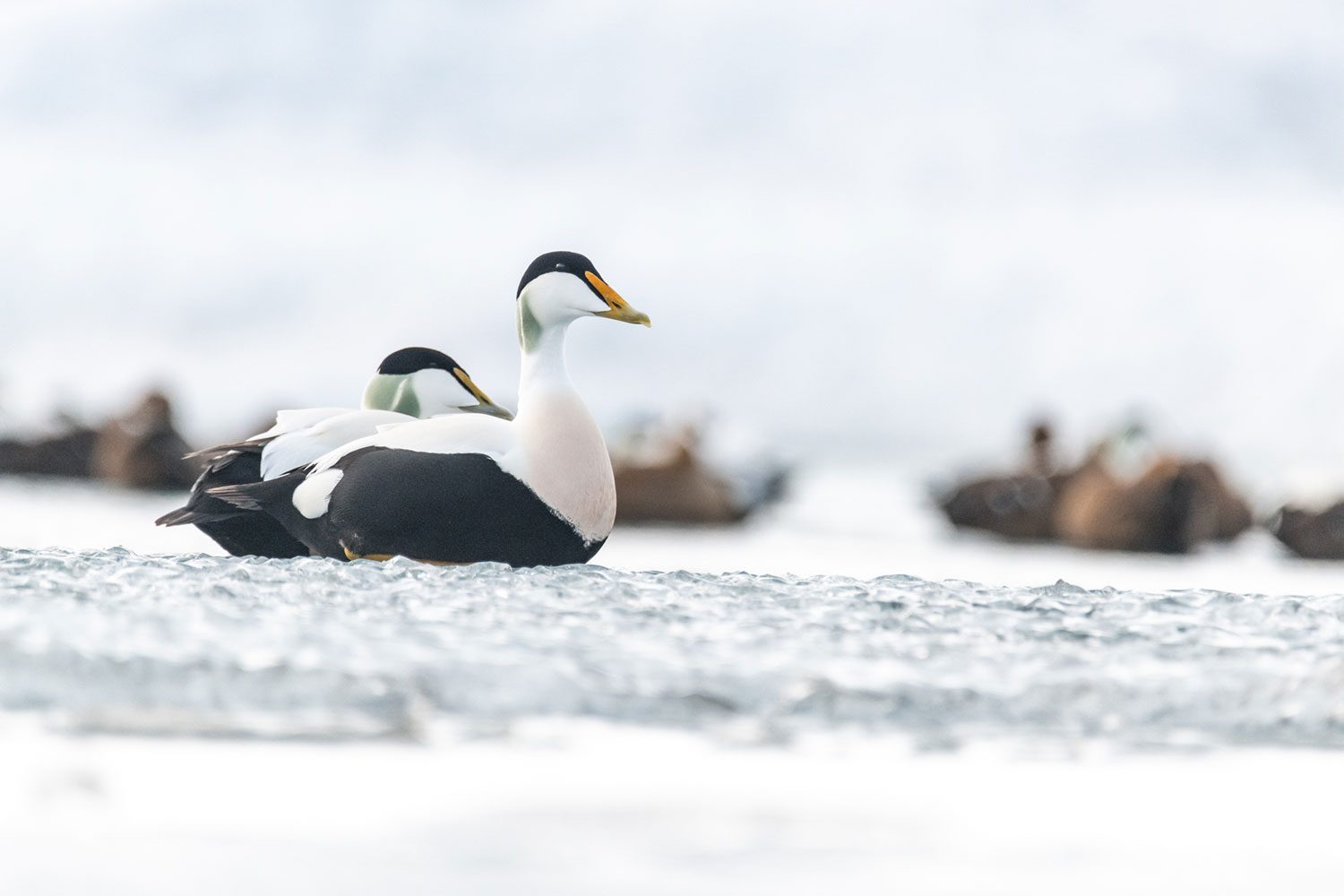
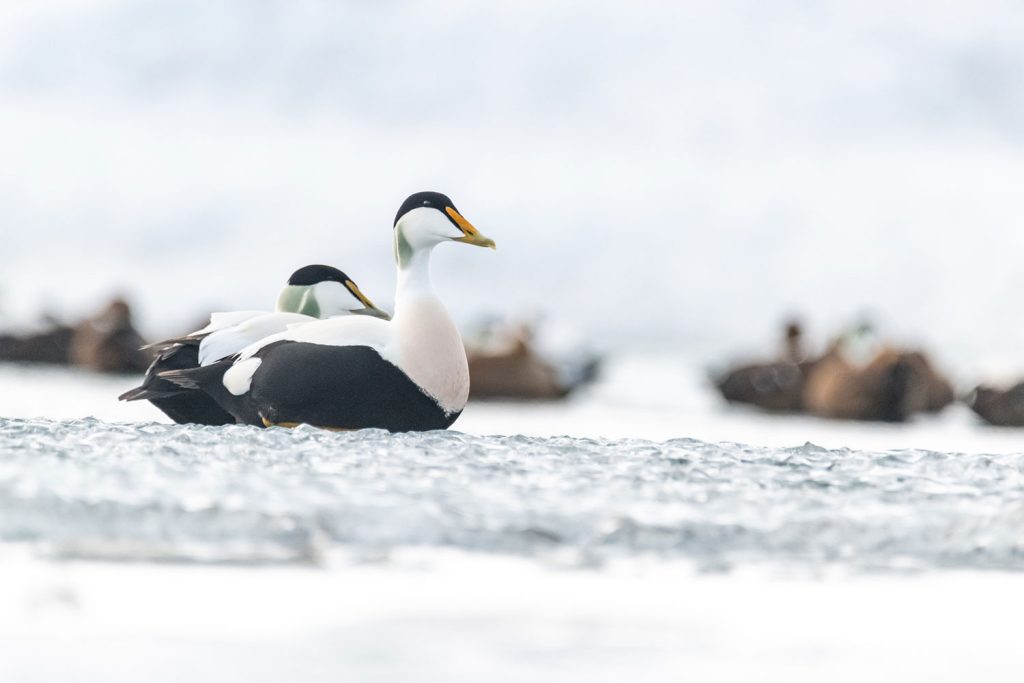
The common eider is an iconic sea duck of the Northern Hemisphere, and of Icelandic wildlife in particular. It inhabits subarctic and arctic regions, from cold temperate coasts to the edge of the pack ice. Perfectly adapted to freezing waters thanks to its highly insulating plumage, it spends most of its life at sea and only comes ashore to breed.
In Iceland, the common eider is at the heart of an ancient tradition: the sustainable harvesting of down. This practice, also found in Norway, consists of collecting part of the down left in nests after breeding, without disturbing the birds or affecting their reproductive success. In some Icelandic coastal regions, farms even build small shelters or protected areas to encourage females to nest. The harvested down then becomes an additional source of income.
To observe common eiders in Iceland, you mainly need to explore coastal areas, especially remote and less-frequented fjords. The species can form large gatherings of several hundred, and sometimes over a thousand individuals. Despite this, the birds remain cautious and quickly move offshore when they feel threatened.
Finally, a particularly unique place to observe this species is the Jökulsárlón glacial lagoon. Already famous for its common seals, this lagoon also attracts many common eiders. In winter, they can be seen resting on drifting ice floes or at the base of icebergs, creating especially photogenic scenes in a unique polar landscape.
Common eider in southern Iceland
The harlequin duck
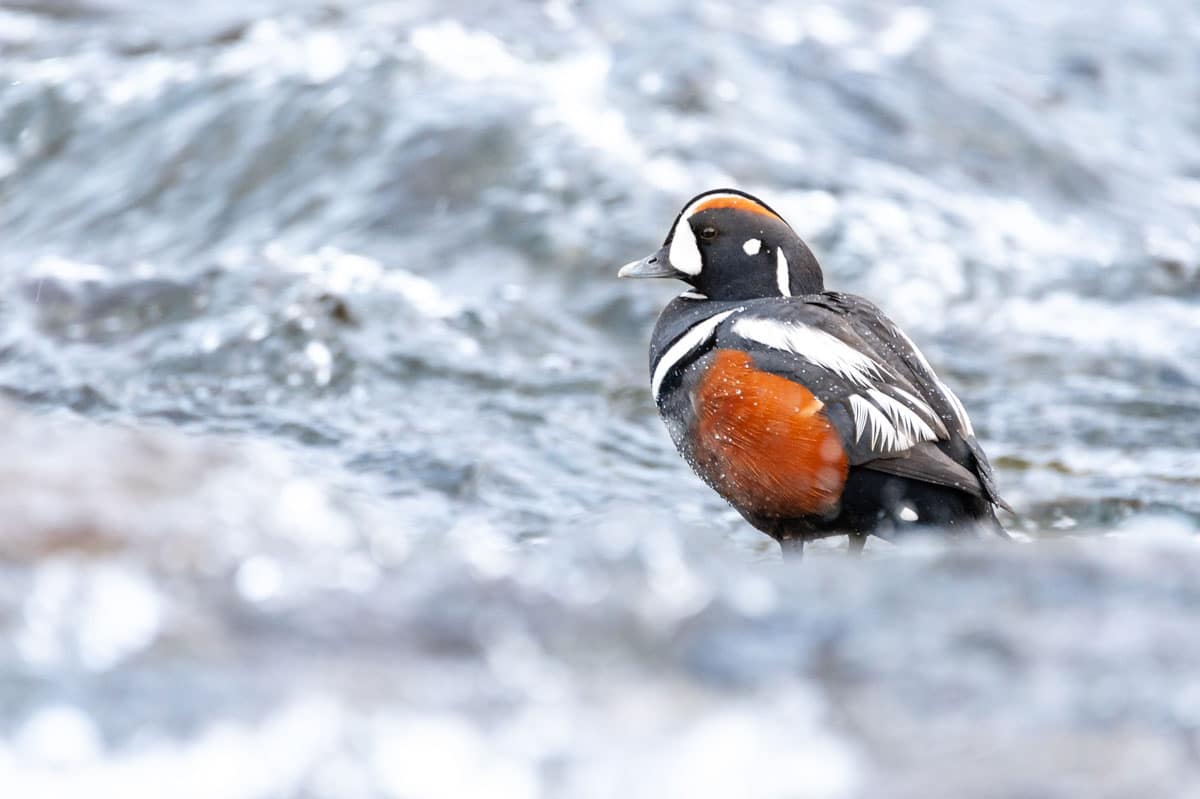
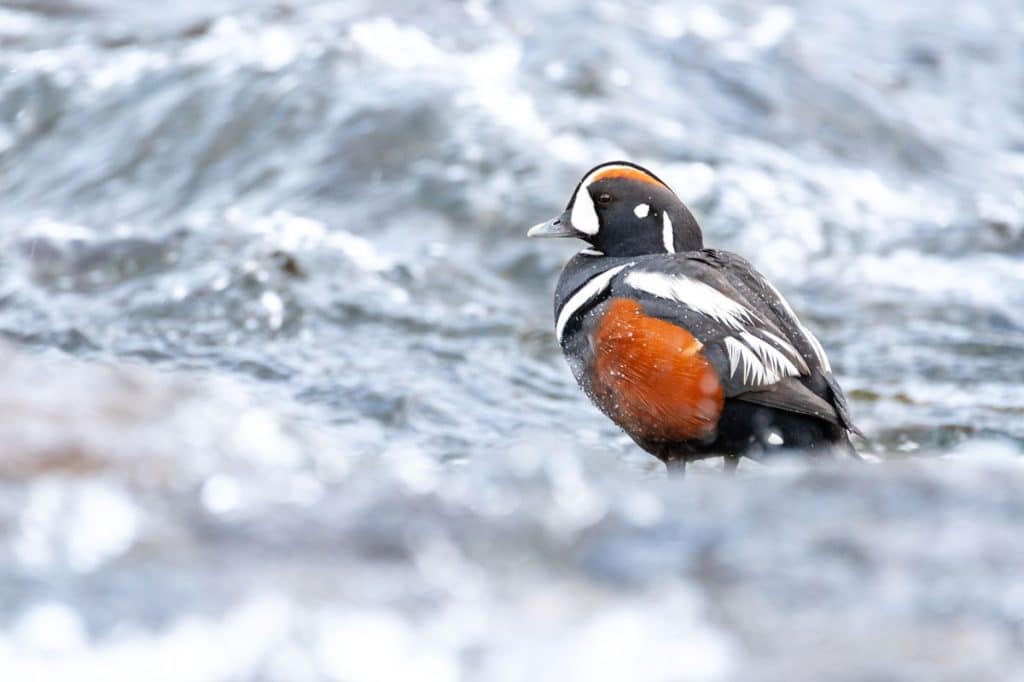
Along with the common eider, the harlequin duck is one of the animals of Iceland that we observe most frequently. During the breeding season, the male displays a particularly striking plumage, combining shades of slate blue, chestnut, and contrasting white markings.
The harlequin duck feeds mainly on aquatic larvae, insects, and small invertebrates, which it searches for both along Icelandic coasts and in certain rivers. Unlike most sea ducks, it especially favors fast-flowing waters: rapids, torrents, and waterfalls are among its preferred habitats during the breeding season.
Highly appreciated by ornithologists and wildlife photographers, the harlequin duck offers especially photogenic scenes in Iceland. Its dark, high-contrast plumage stands out beautifully against volcanic landscapes, glacial rivers, and the black basalt formations characteristic of the island.
Harlequin duck in Hornstrandir reserve
Wading birds of Iceland
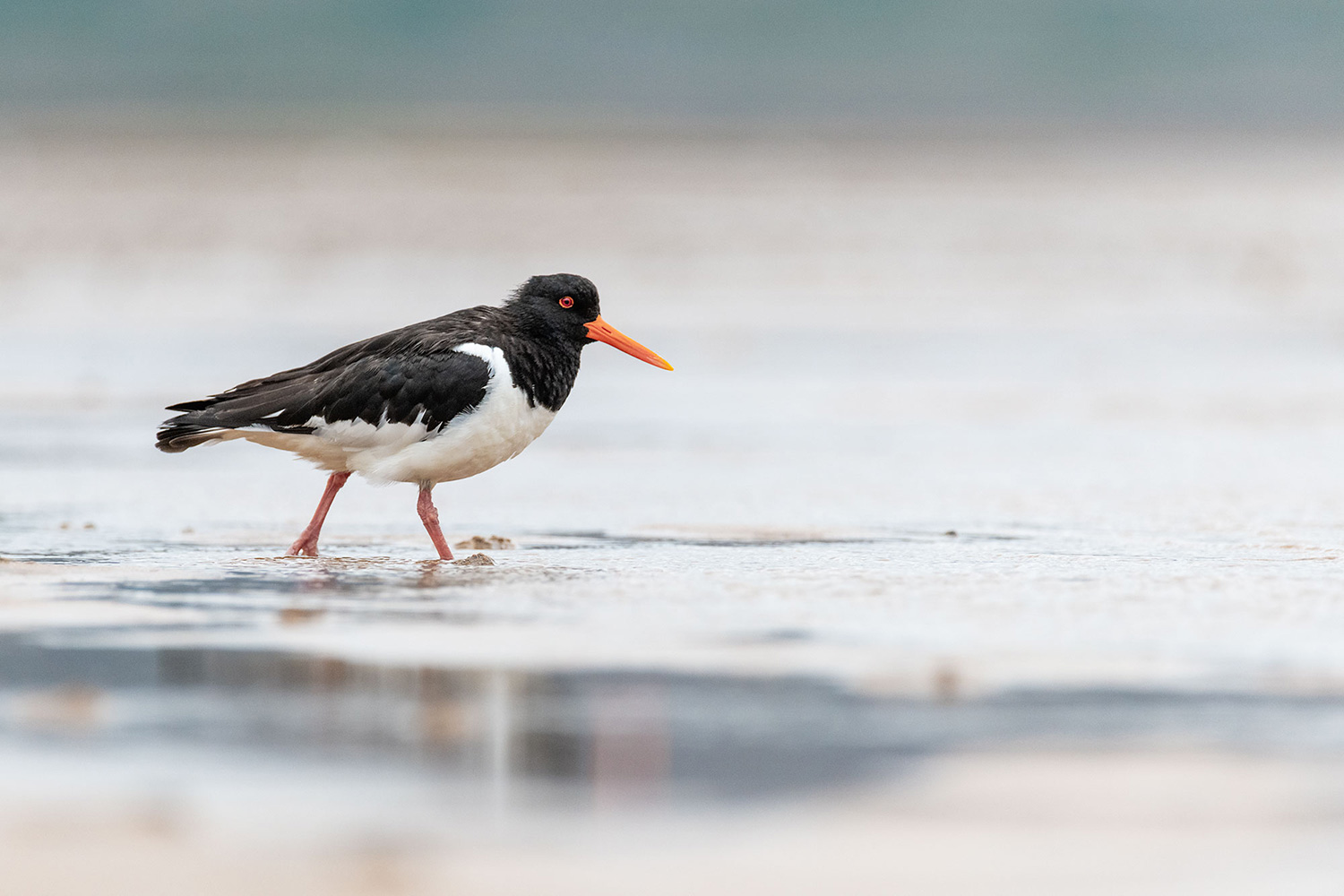
The oystercatcher
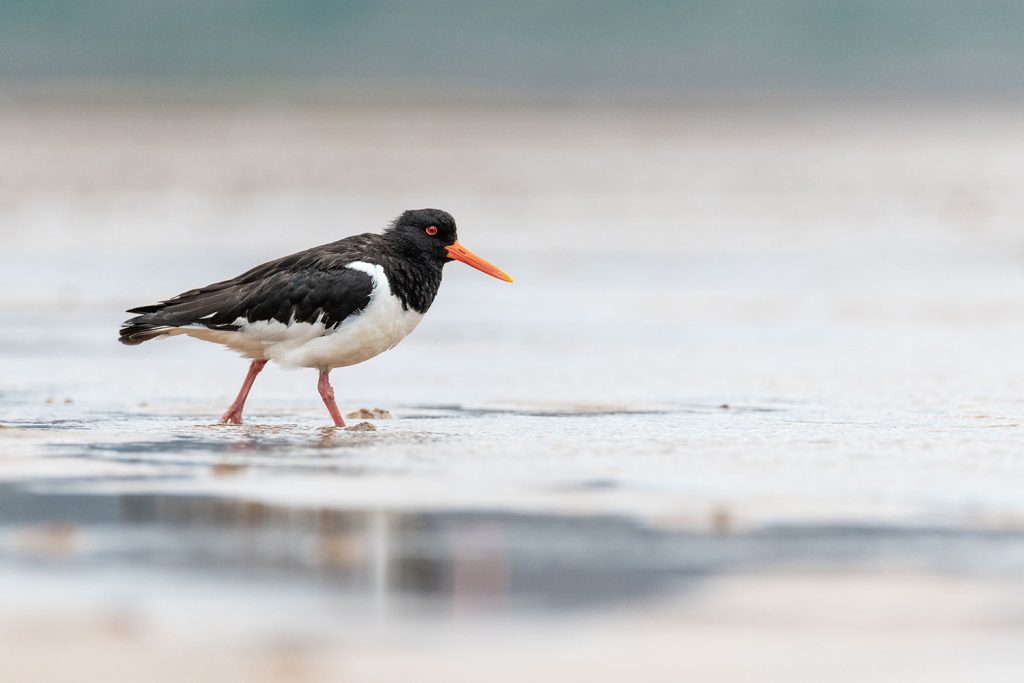
With its bright orange-red bill and red legs, the Eurasian oystercatcher is one of the most emblematic birds of the North Atlantic coasts, and an important representative of Icelandic wildlife.
The Eurasian oystercatcher is common in Iceland during the breeding season. It is even a permanent resident in the west and southwest of the country.
There are different populations of oystercatchers. The main difference lies in their diet. Individuals that mainly feed on worms tend to have thinner, less robust bills than those that feed on shellfish.
To photograph the oystercatcher in Iceland, it is best to focus on low tide periods, when these wading birds are actively feeding. Their preferred hunting grounds are sandy beaches and rocky intertidal zones.
The Eurasian oystercatcher is a common species among the animals of Iceland, and it is easy to spot thanks to its bright colours and its distinctive (and audible) call.
An oystercatcher on an Icelandic beach
The Eurasian golden plover
Unlike the little ringed plover, the Eurasian golden plover is present across almost the entire Eurasian Arctic. During the breeding season, it occupies the whole Icelandic territory.
Golden plovers winter on the coasts of France, the Iberian Peninsula, and northwestern Africa. They return to Iceland at the beginning of May but only start breeding in June. They can be found along the entire Icelandic coastline, especially on pebble beaches, gravel areas, and open wetlands. They are among the most common species of the wildlife of Iceland.
Every year, the golden plover lays 3 or 4 eggs directly on the ground. Its defense strategy relies heavily on camouflage, both for eggs and chicks. Indeed, although the nests are on the ground, they are extremely difficult to spot. However, we often encounter chicks in July in the Westfjords.
As for adults, they are relatively easy to spot. Most of the time, you encounter them by accident. They then perform a broken-wing or broken-leg display to lure you away from the nest. Despite the amusing appearance of the situation, we avoid staying too long and move away so as not to stress these shorebirds.
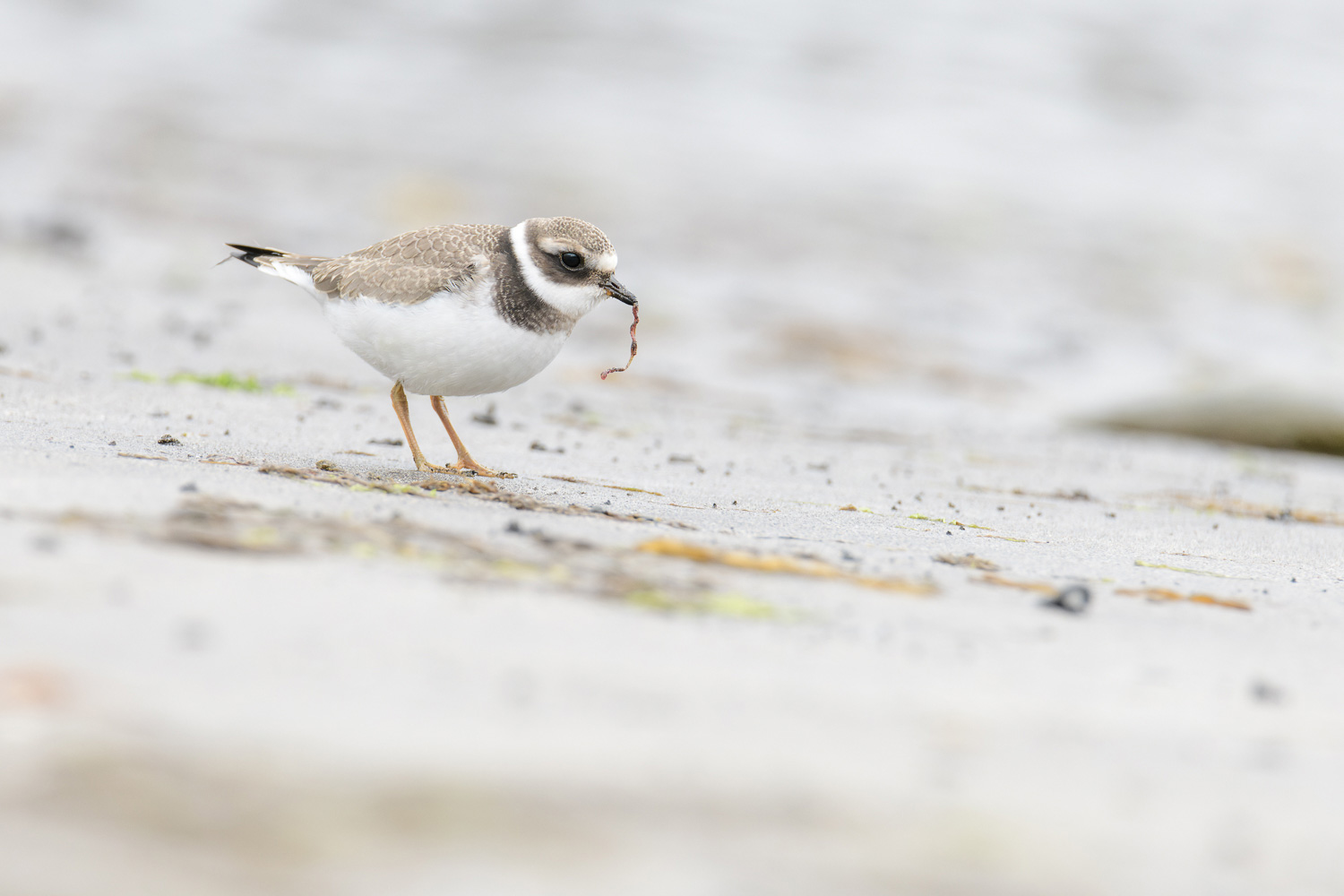
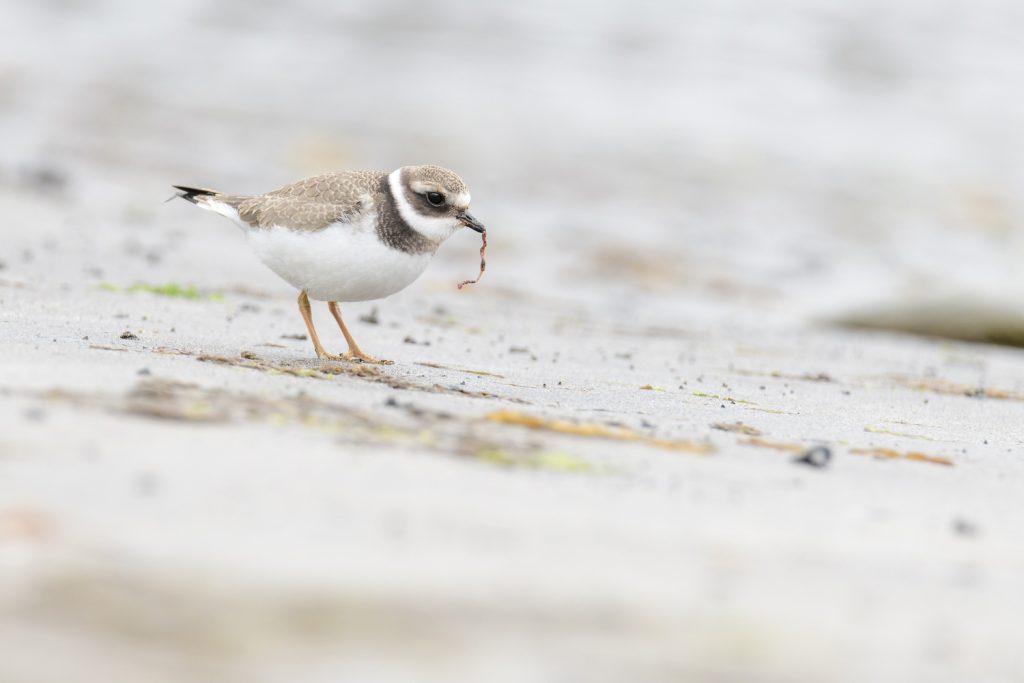
Juvenile ringed plover
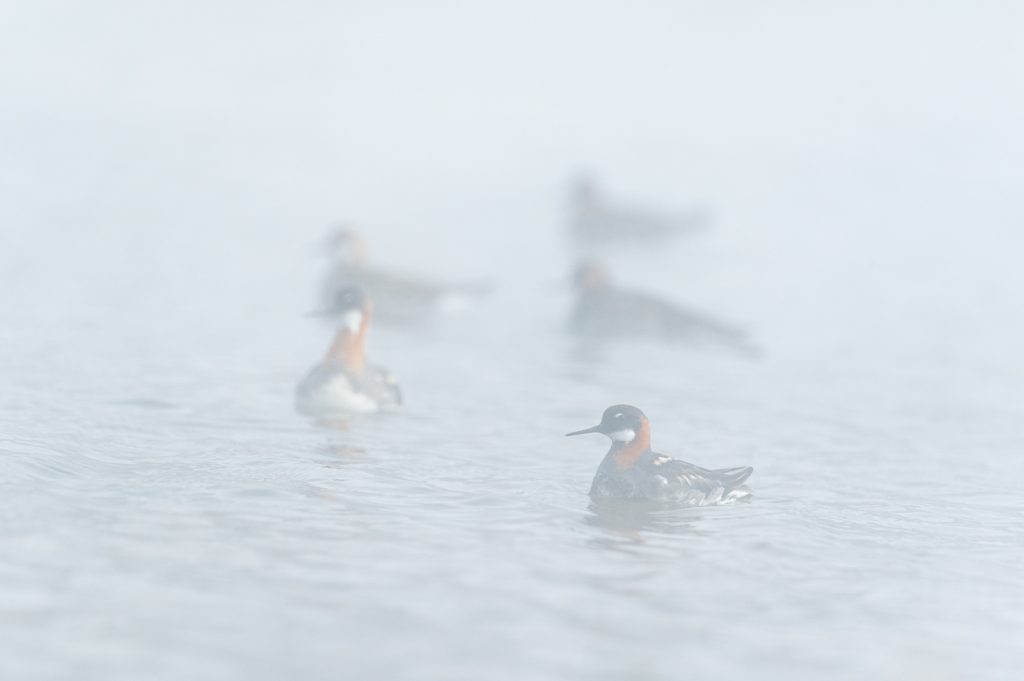
The red-necked phalarope
The red-necked phalarope finds in Iceland one of its most favorable breeding grounds. This small shorebird, about 18 cm long, frequents shallow waters of lakes, ponds, and lagoons where it feeds at the surface.
What makes this species particularly interesting are two remarkable behavioral traits. The first is its high tolerance to human presence: it is not very shy and can often be observed from just a few meters away without noticeable behavioral changes, making it highly appreciated by wildlife photographers.
The second is its unusual reproductive system. In this species, females are larger and more colorful than males, and the system is reversed compared to most birds: it is polyandrous. Females actively defend a territory and attract several males. The males then incubate the eggs and raise the young, while females move on to mate with other partners.
This rare strategy in the bird world makes the red-necked phalarope a particularly fascinating species to observe in Icelandic landscapes.
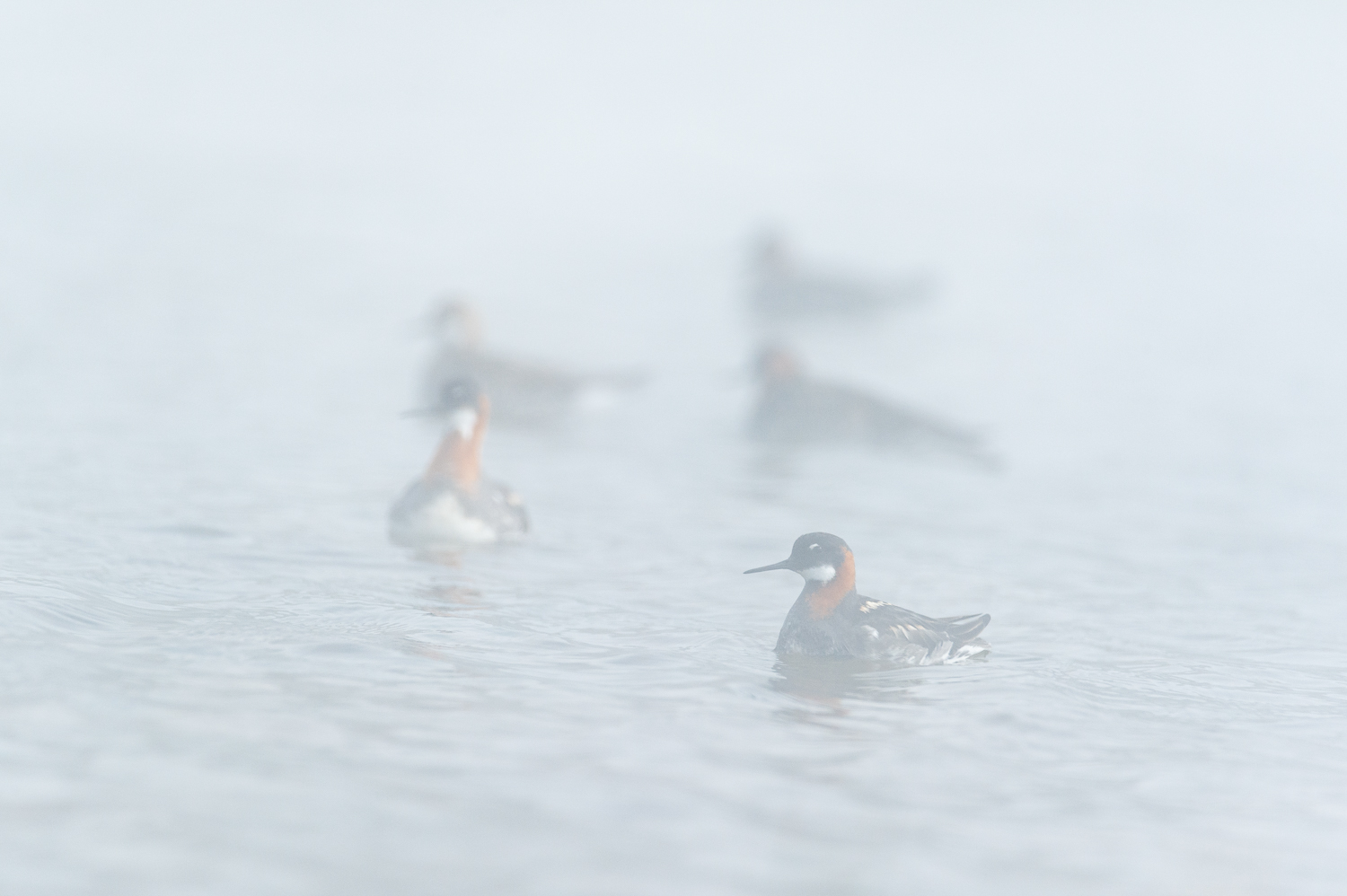
A group of Red-necked phalarope at a hot spring in Iceland
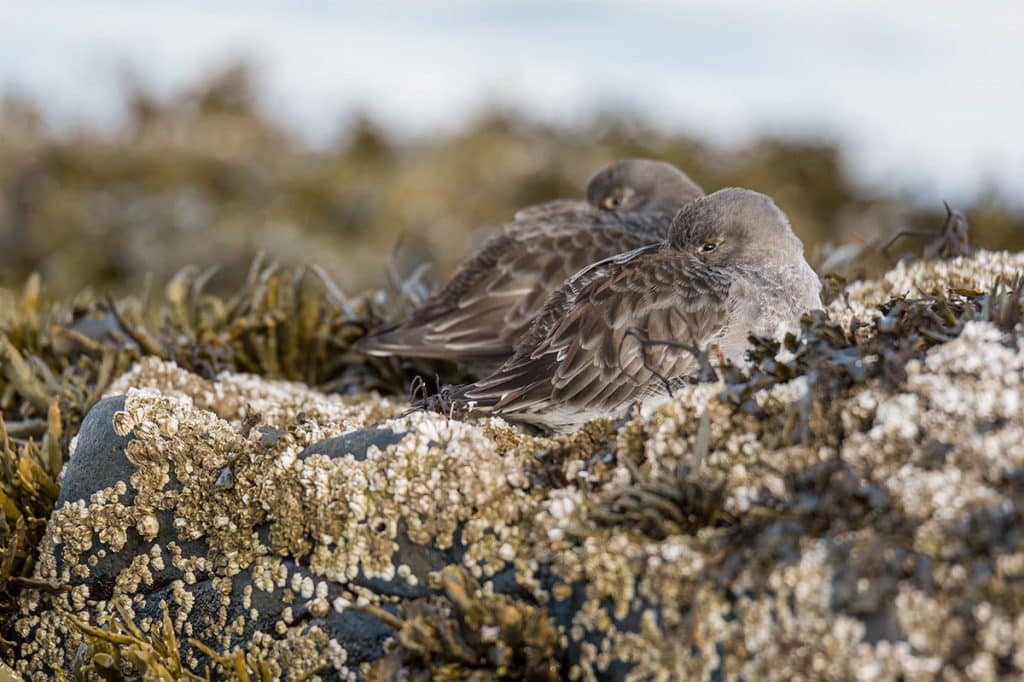
The purple sandpiper
The purple sandpiper is one of our favorite species of the wildlife of Iceland. It is one of the most emblematic shorebirds of Iceland’s coasts. It is among the few species present year-round on the island, perfectly adapted to the harsh conditions of rocky, wind-beaten shores.
Very confident, it is generally not very shy and can be observed from just a few meters away without changing its behavior, making it especially appreciated by naturalists and photographers.
To observe purple sandpipers in Iceland, fjords are particularly favorable areas, especially at low tide. They can be found on exposed rocks and among seaweed beds, searching for small invertebrates.
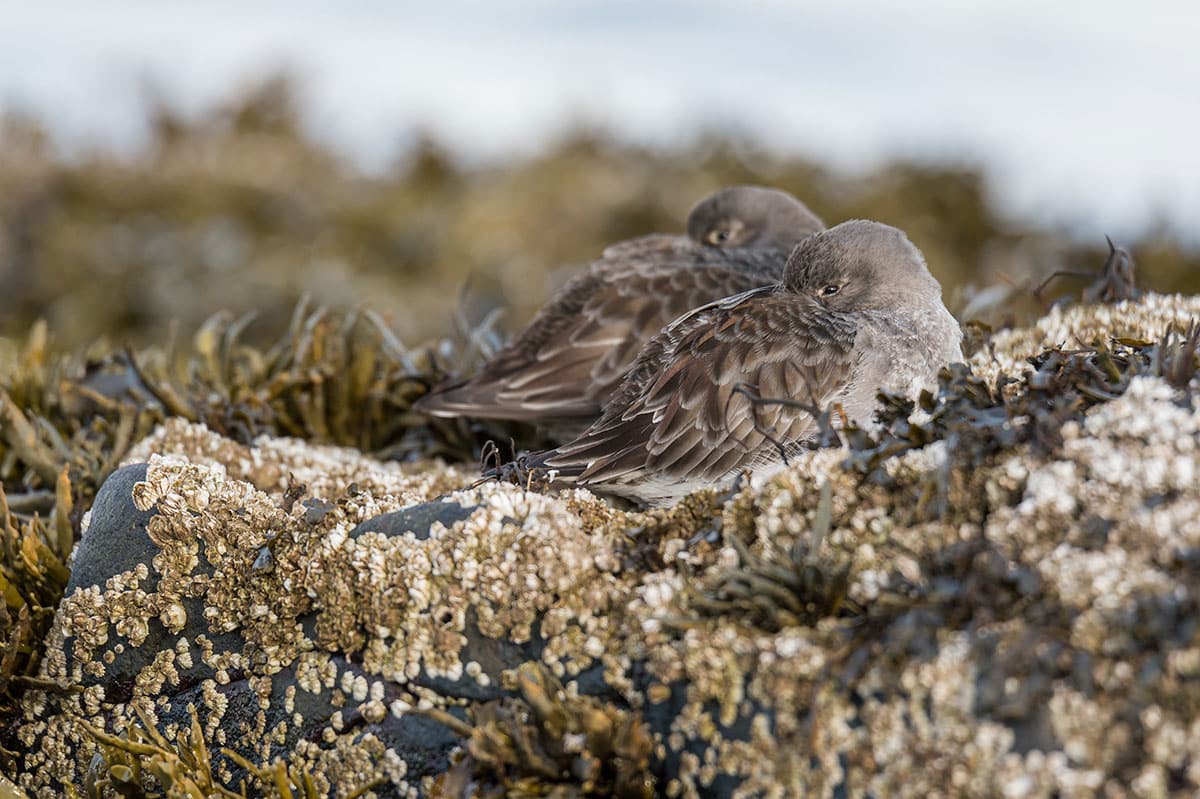
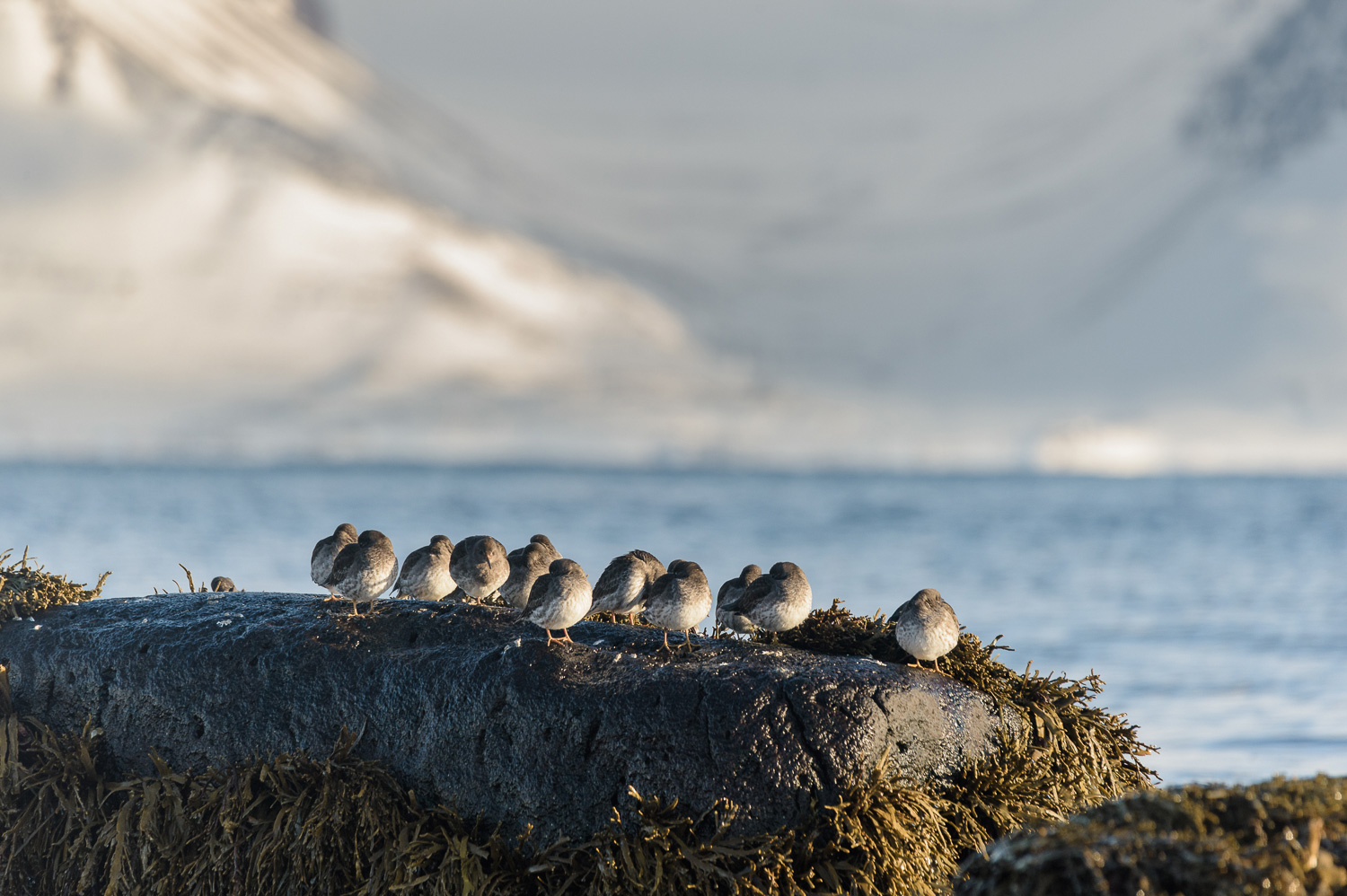
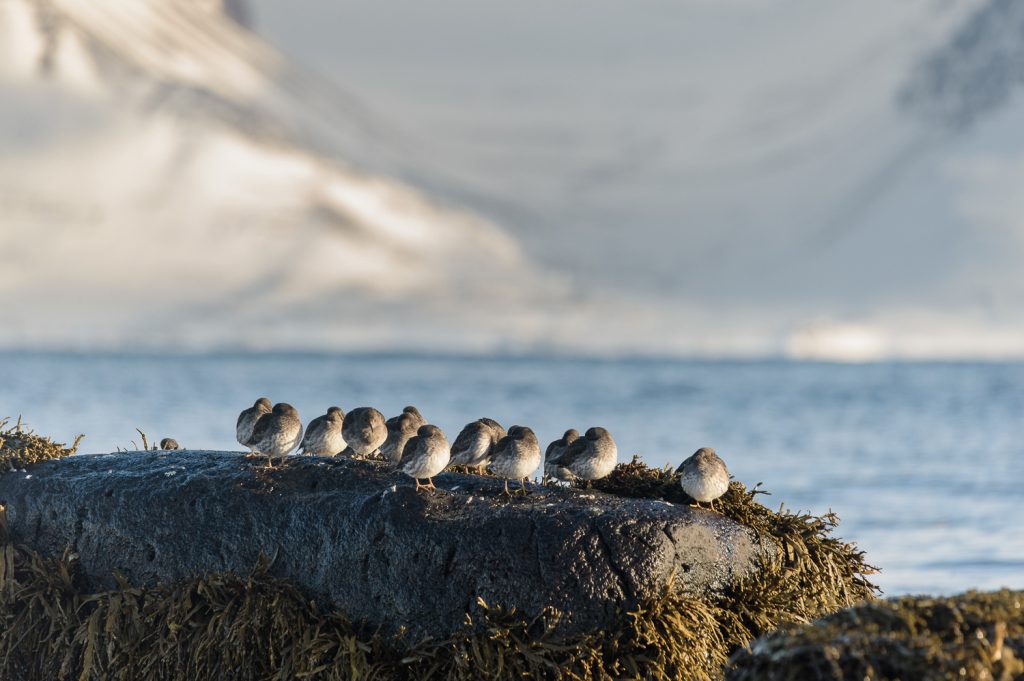
At high tide, individuals gather in small compact groups on exposed rocks. They adopt a characteristic posture, with their heads tucked into their feathers to conserve heat, forming true “balls of feathers” with dark purplish tones. This highly graphic scene in Icelandic coastal landscapes offers particularly aesthetic observation and photography opportunities.
Purple Sandpiper in Hornstrandir
A group of purple sandpipers in Iceland’s Westfjords
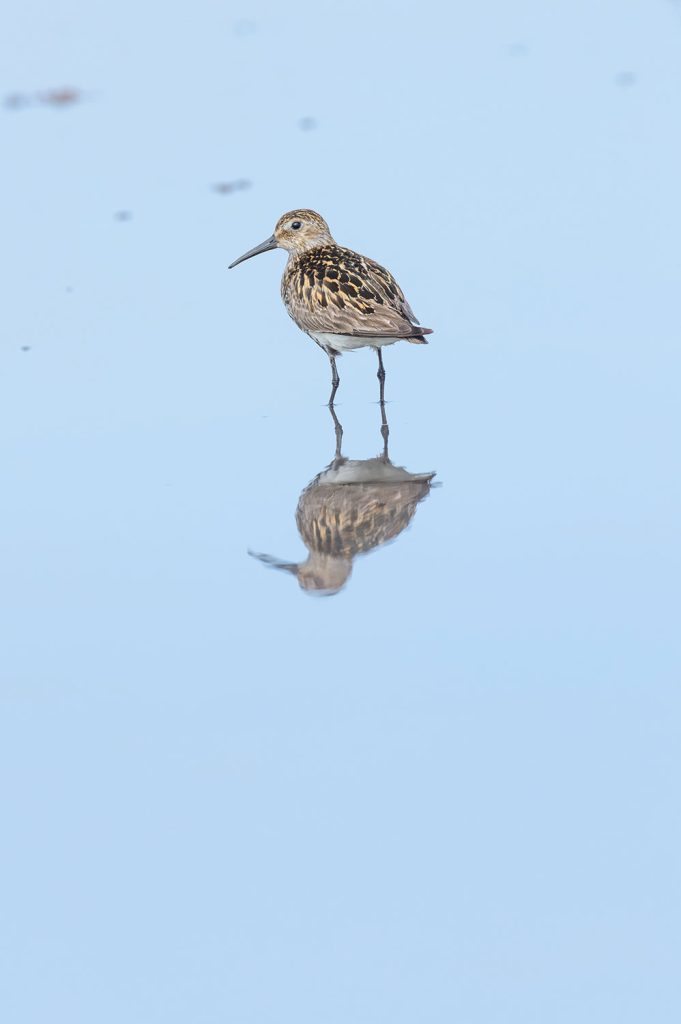
The dunlin
Another emblematic shorebird of Iceland: the dunlin. This very common wader arrives on the island from mid-April to breed, before returning to the coasts of Western Europe and Africa for the winter.
In Iceland, the dunlin frequents most wetlands: marshes, bogs, lakes, coastal tundra, and inland wet plains. In spring, it is hard to miss the characteristic songs of males displayed in flight above their territory. These vocalizations are often the best way to detect the species.
Moreover, dunlins usually lay four eggs in a nest hidden in vegetation. Like many shorebirds, the chicks are precocial: just a few hours after hatching, they already leave the nest and begin feeding on their own.
The dunlin is part of the relatively unafraid species of the wildlife of Iceland. Nevertheless, it is essential to keep a distance, especially during the breeding season, to avoid disturbing adults or exposing eggs and chicks to predators.
Finally, we have on several occasions observed predation of dunlins or purple sandpipers by merlins. These birds usually perch on a rock at a moderate distance before swooping down on the group. From what we have seen, their success rate is relatively low.
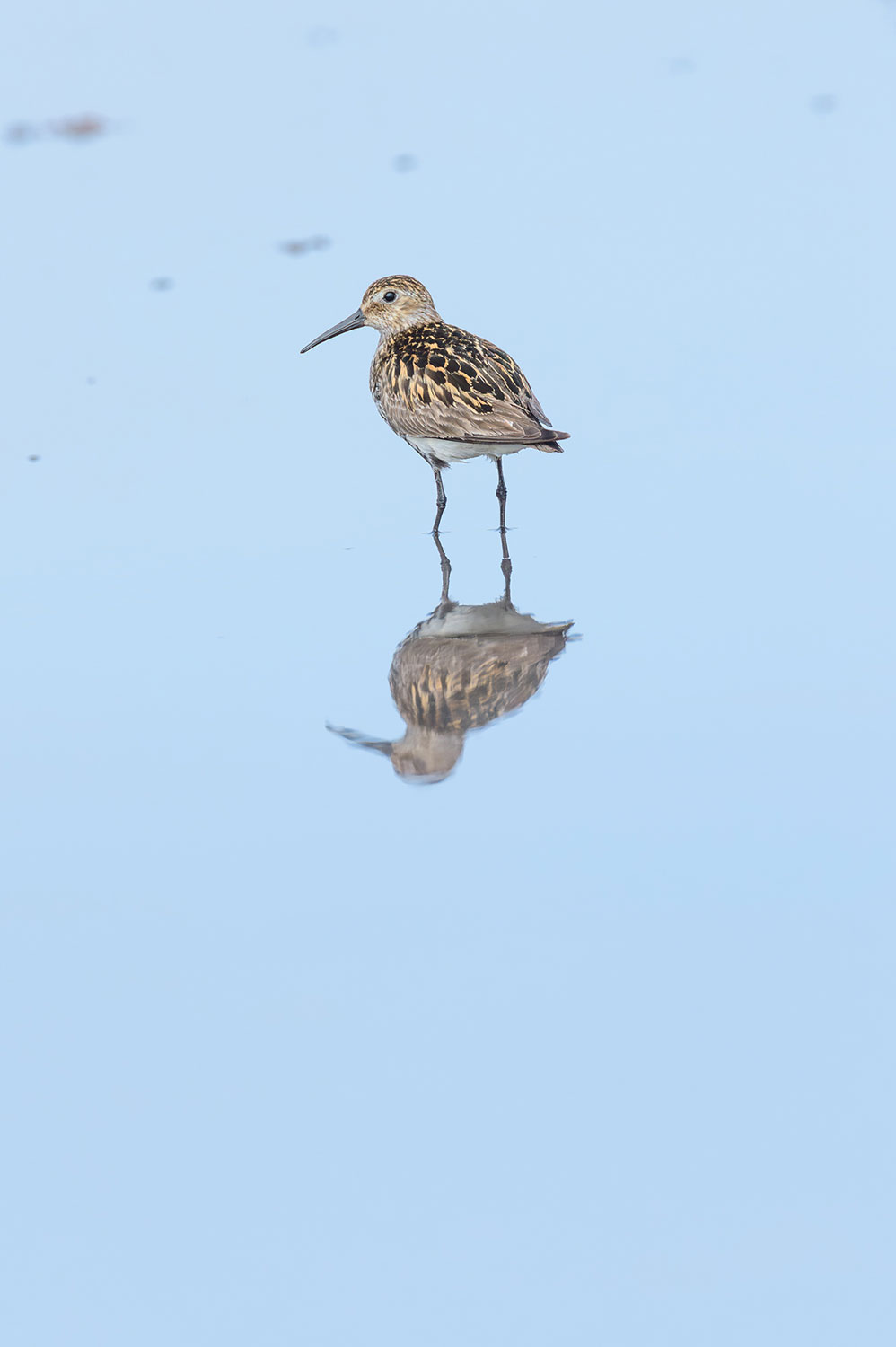
Dunlin in Iceland
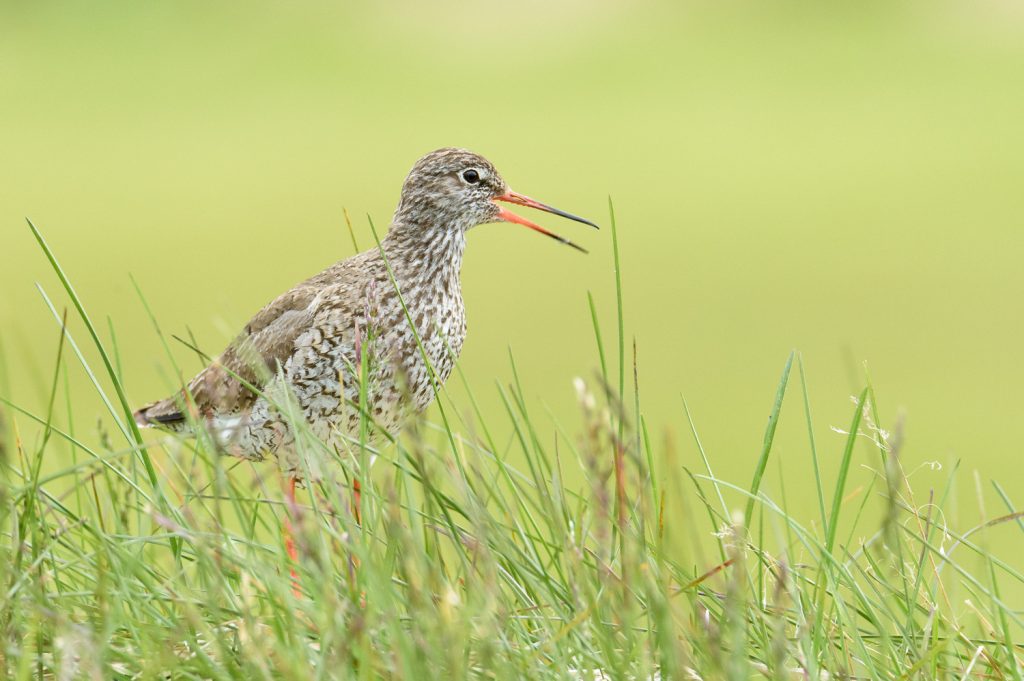
The common redshank
The common redshank is one of the most emblematic birds of Icelandic wetlands. With its long red legs and loud call, it enlivens marshes, flooded plains, and lake shores from the return of spring. In Iceland, this migratory species takes advantage of vast wilderness areas to nest far from dense human activity. It is not uncommon to see it perched on a post or small mound, vigilantly watching its territory.
Highly territorial during the breeding season, the redshank actively defends its nest against intruders. When a predator or human approaches too closely, it emits insistent alarm calls and performs rapid circular flights above the area. Its discreet brown plumage allows it to blend easily into low marsh vegetation, where it usually lays its eggs on the ground.
Finally, redshanks are part of the long list of the wildlife of Iceland that leave the island at the end of summer. They then migrate to milder coasts of Western Europe and Africa. At that point, their characteristic calls disappear from Icelandic landscapes and silence returns for the winter.
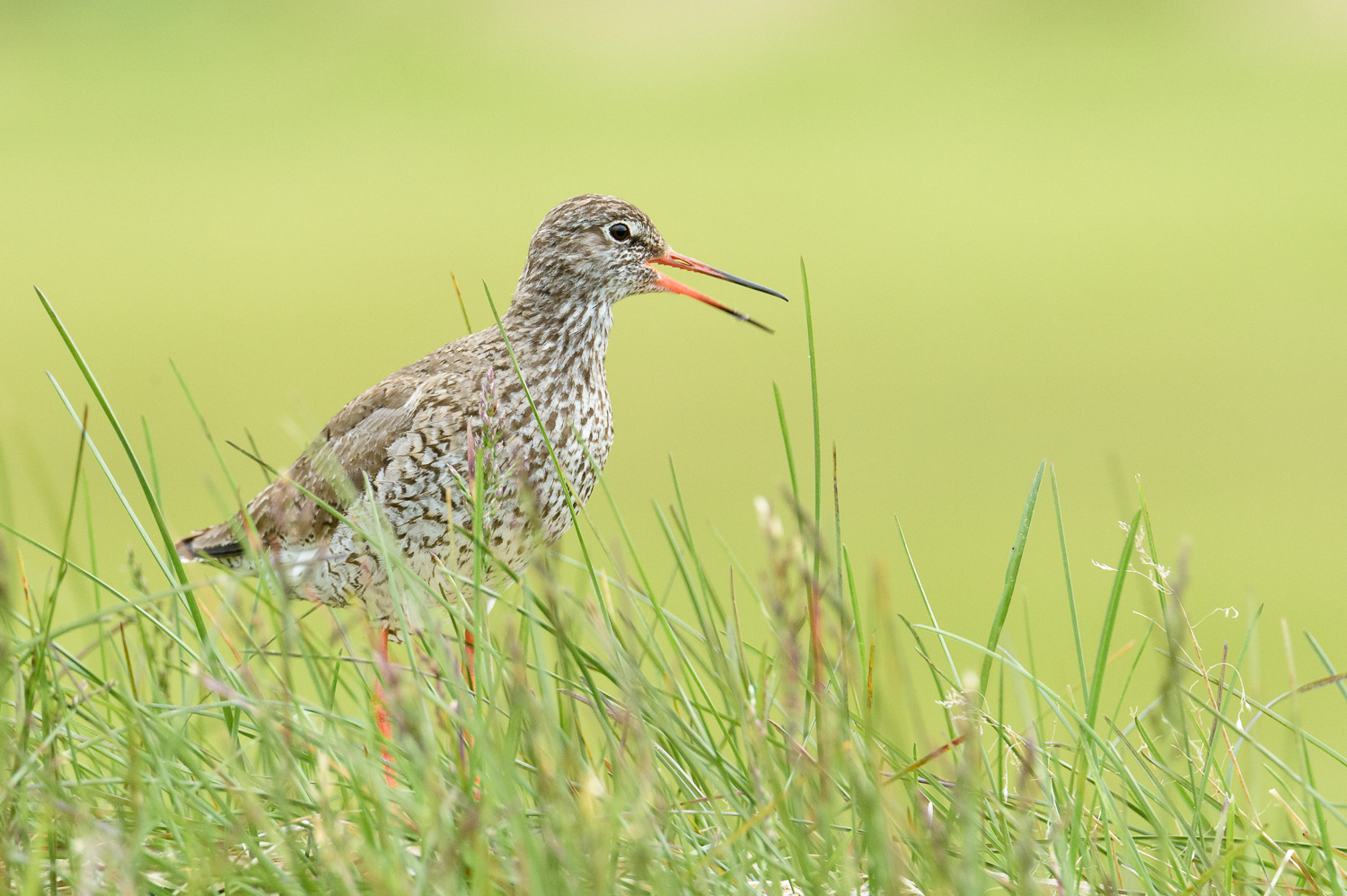
A redshank in the meadows of Iceland
The terrestrial birds of Iceland
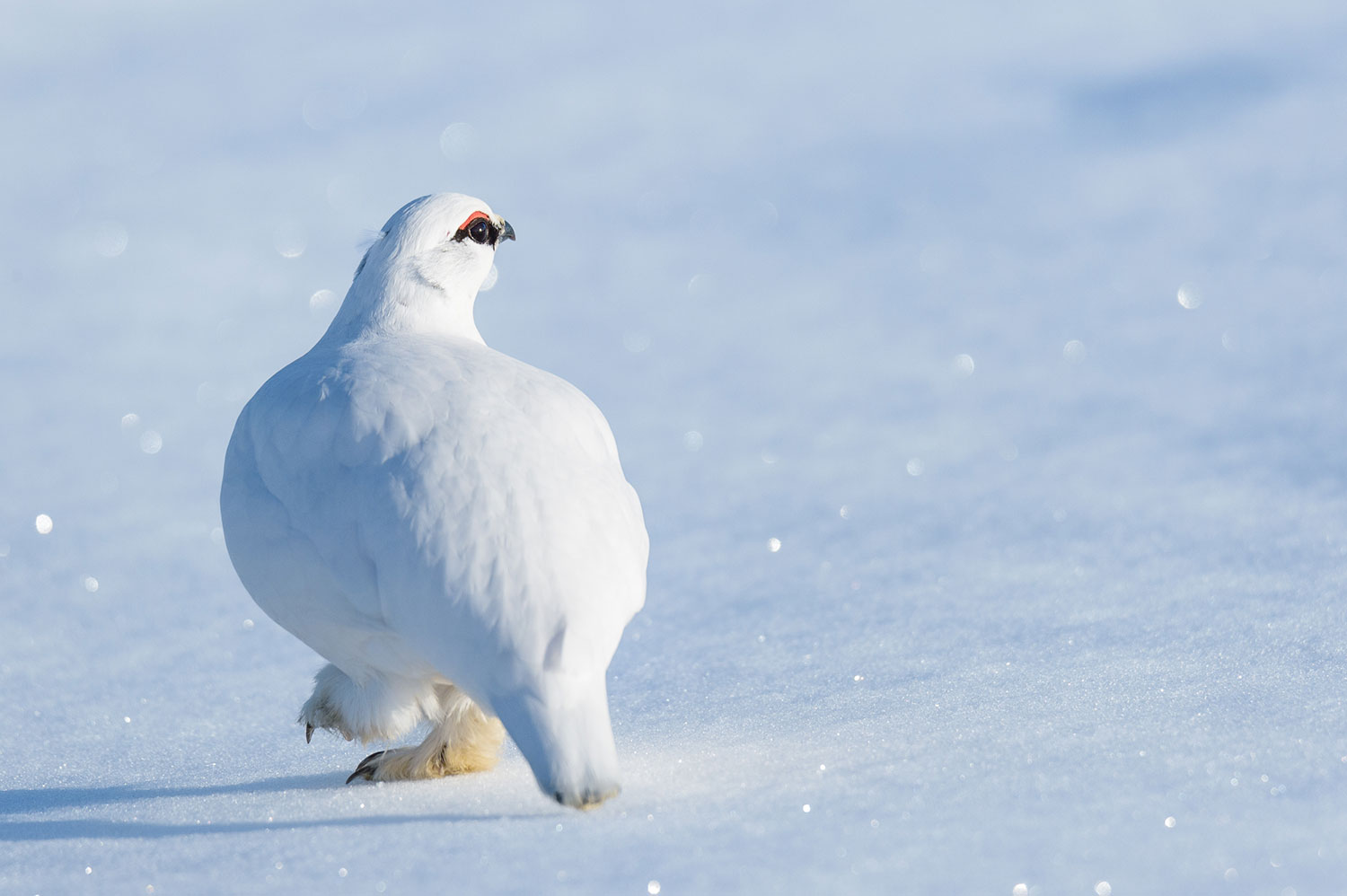
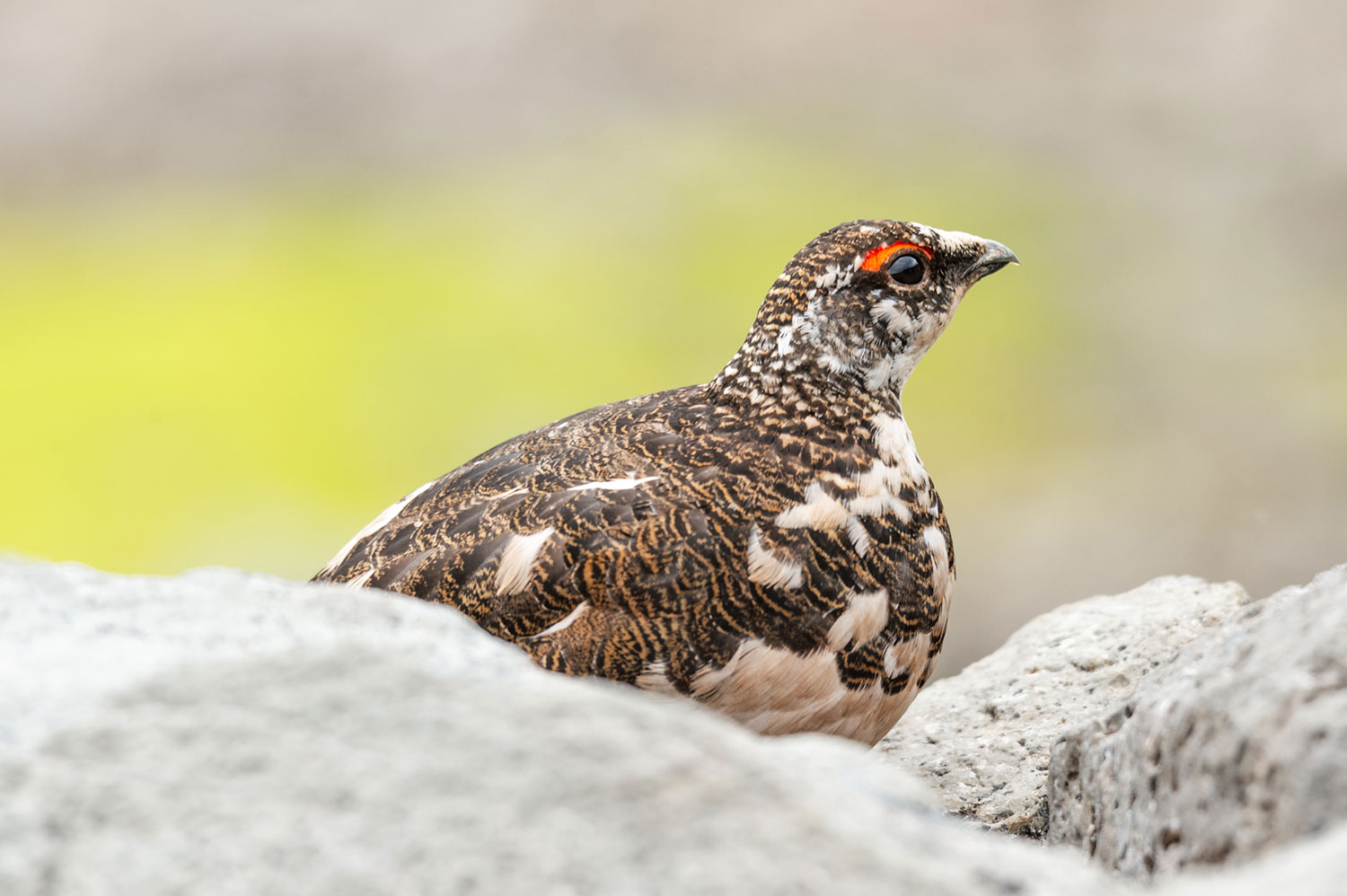
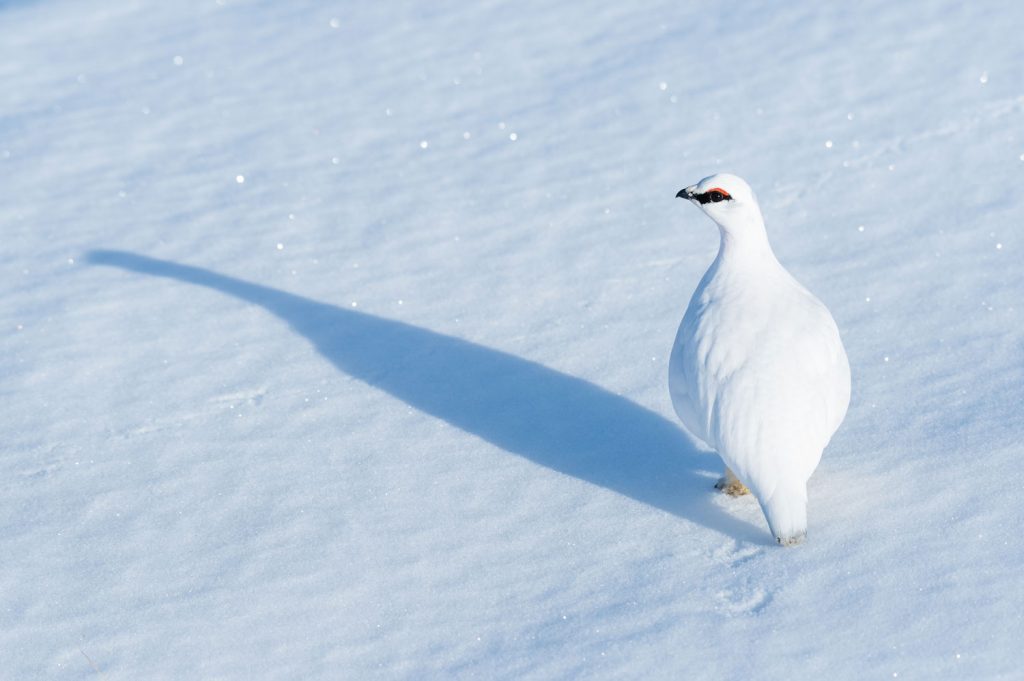
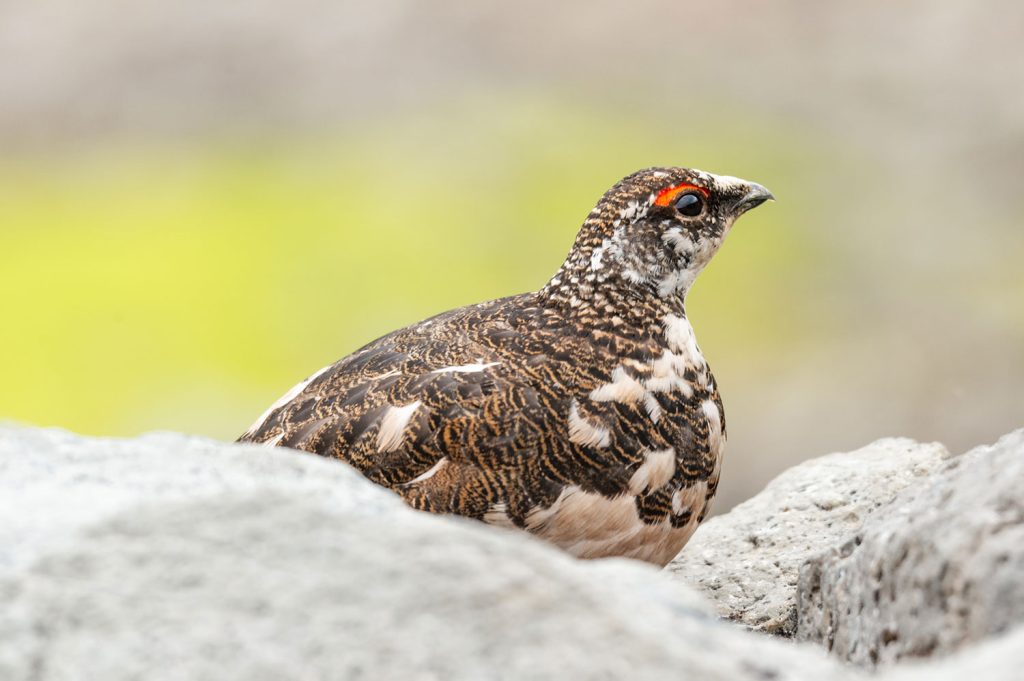
The rock ptarmigan
The rock ptarmigan, or snow partridge (Rjúpa in Icelandic), is one of the masters of camouflage in Iceland. Among the wildlife of Iceland, it is a true survivor from the Ice Age. It particularly favors mountainous areas, lava fields, and scree slopes, where it breeds during the summer.
In winter, it can be observed across much of the country. In the Westfjords, it sometimes descends close to villages when food becomes scarce at higher altitudes. It then becomes easier to observe. This is also the case around Lake Mývatn, where the species is present year-round.
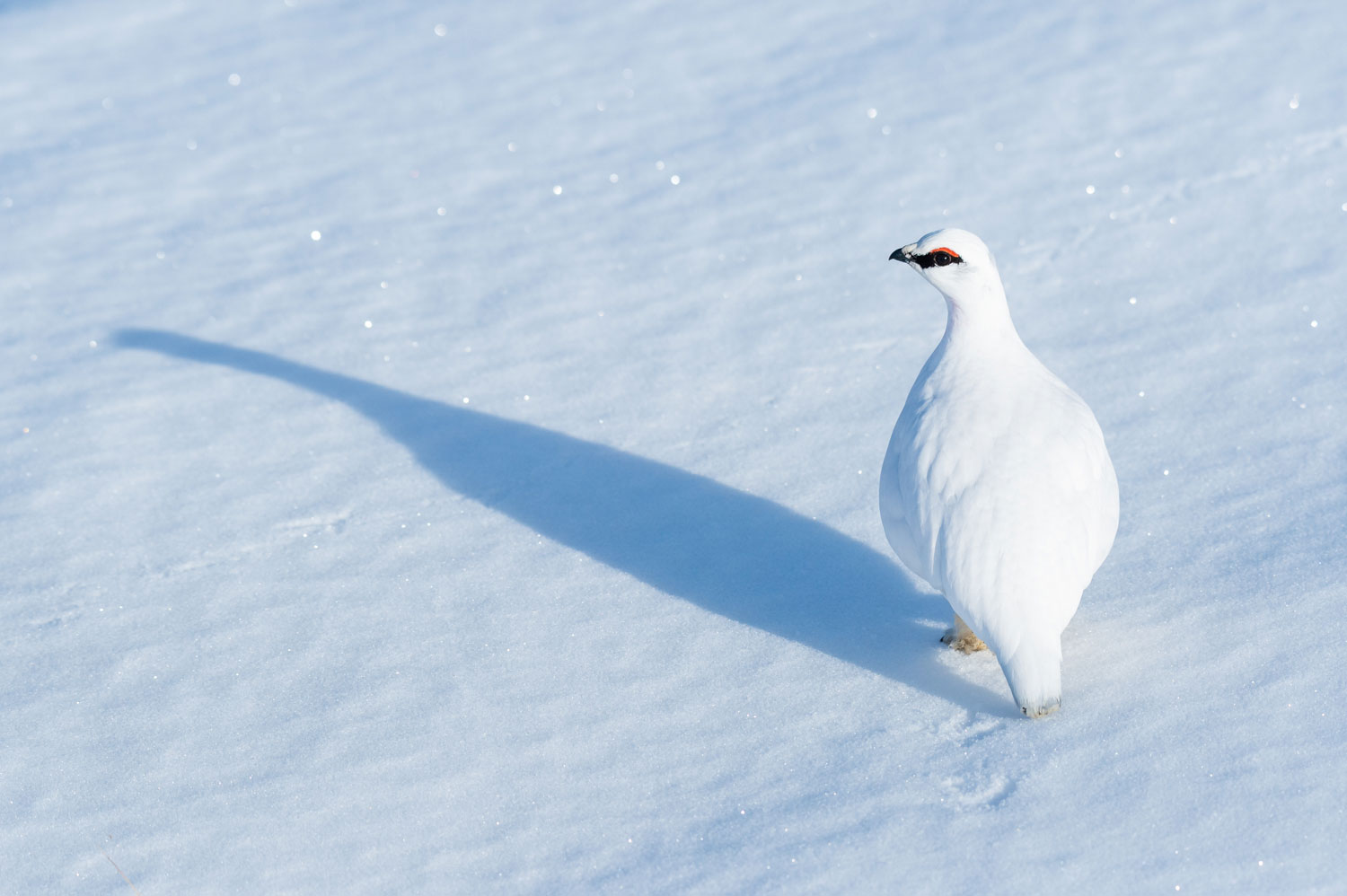
The rock ptarmigan has an all-white winter plumage, ideal for blending into snow. With the arrival of spring, this plumage gradually becomes mottled with brown, before turning entirely brown and grey in summer, ensuring perfect camouflage in rocky landscapes and sparse vegetation.
We have been fortunate to photograph rock ptarmigans in Iceland for several years, in both summer and winter. They are generally not very shy, but a safety distance of about 25 meters is recommended. However, if an adult performs a distraction display, it usually indicates a nearby nest: in that case, it is essential to move away quickly to avoid disturbance.
The following two photographs illustrate the seasonal plumage differences.
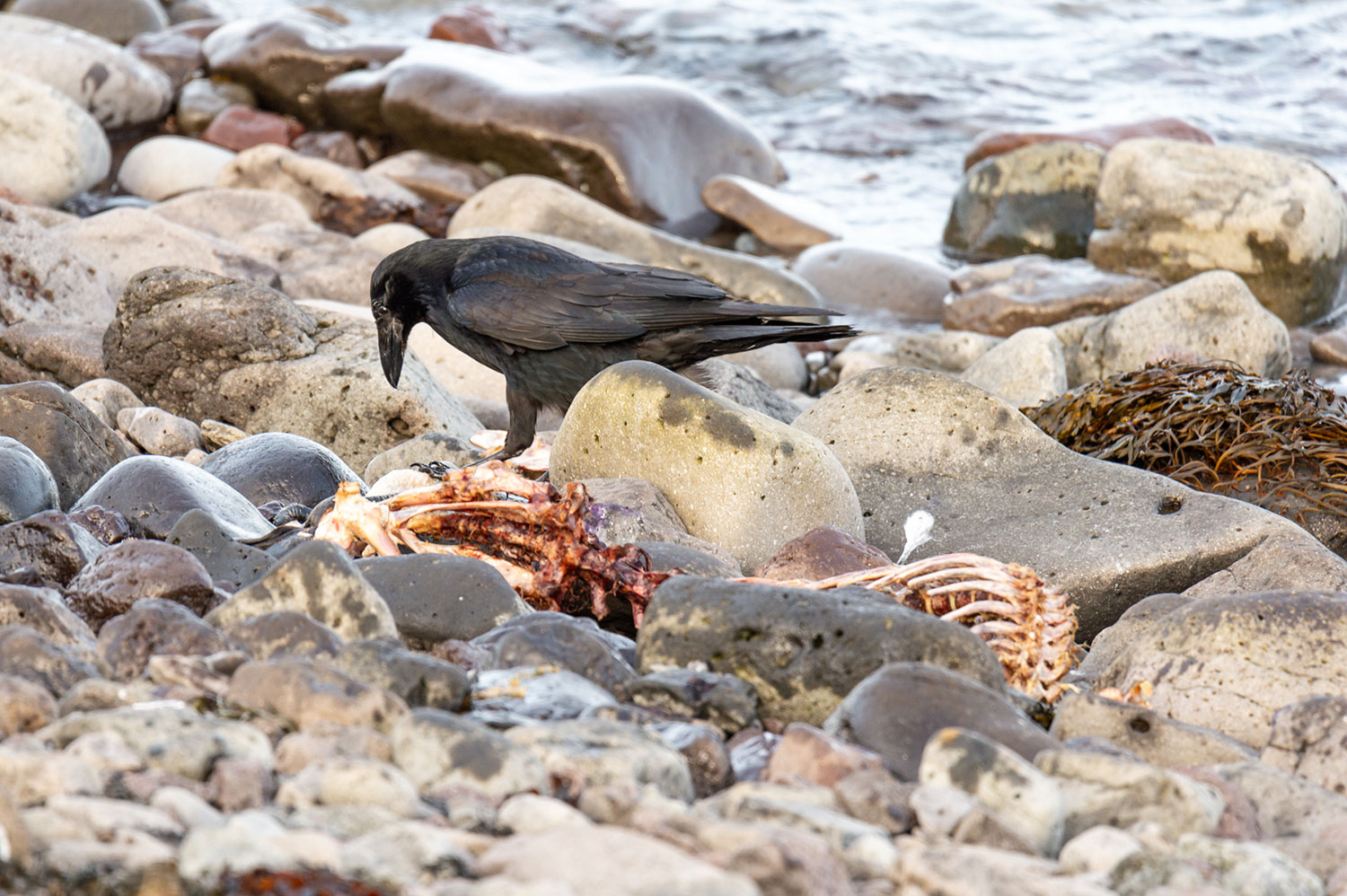
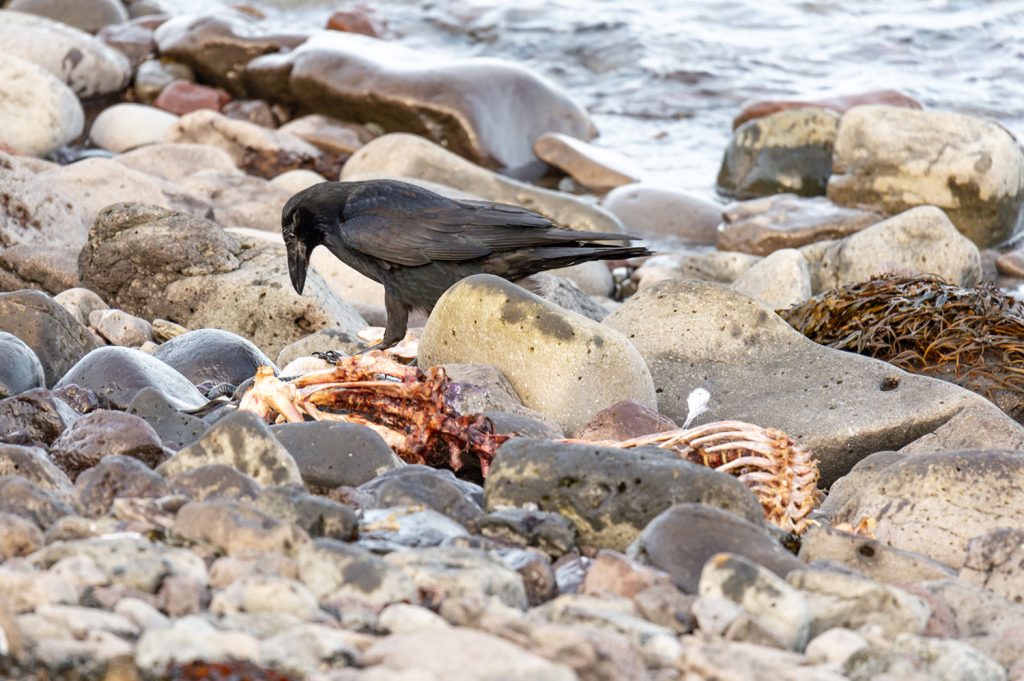
The common raven
Imagine a species capable of living both in the high Arctic and on the edge of the Sahara. The common raven is a remarkable specialist of extreme environments. While it particularly favors cold climates, it is equally well adapted to the arid and mountainous regions of North Africa. Among the wildlife of Iceland, the common raven is certainly the most resilient species.
In Iceland, the common raven is a permanent resident that can be observed throughout the country, especially along the coasts and rugged cliffs. Highly opportunistic, it takes advantage of harsh conditions to feed on carcasses of marine mammals and any animals that did not survive winter or storms. During the breeding season, it also consumes eggs, chicks, and occasionally small mammals. In this respect, it occupies a similar ecological niche to the Arctic fox.
The deep, hoarse call of the common raven is an integral part of Icelandic landscapes. It is frequently heard near cliffs, lava fields, and mountainous areas. The Westfjords are among the best regions to observe it: large gatherings can occur there when a marine mammal washes ashore.
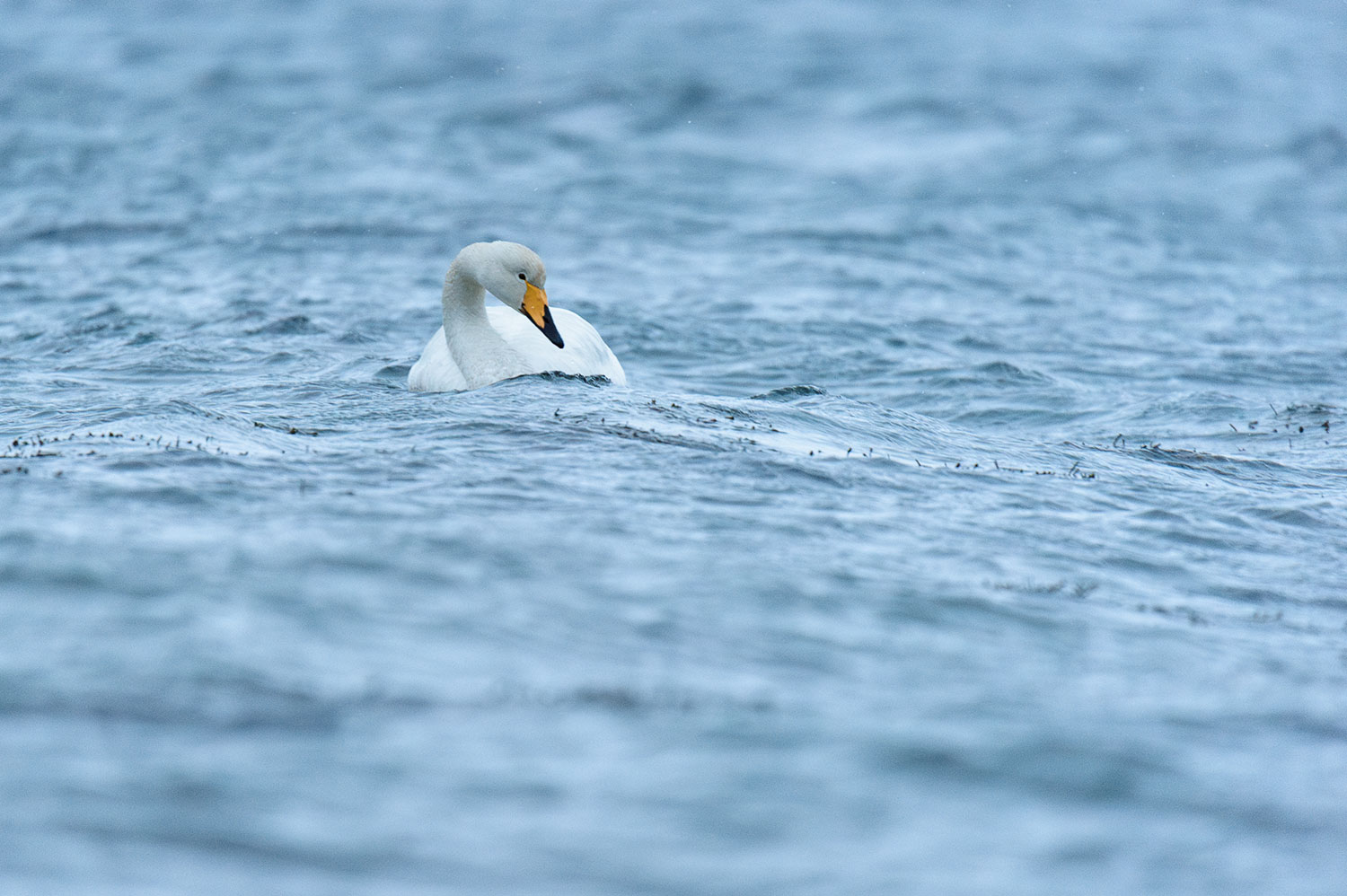
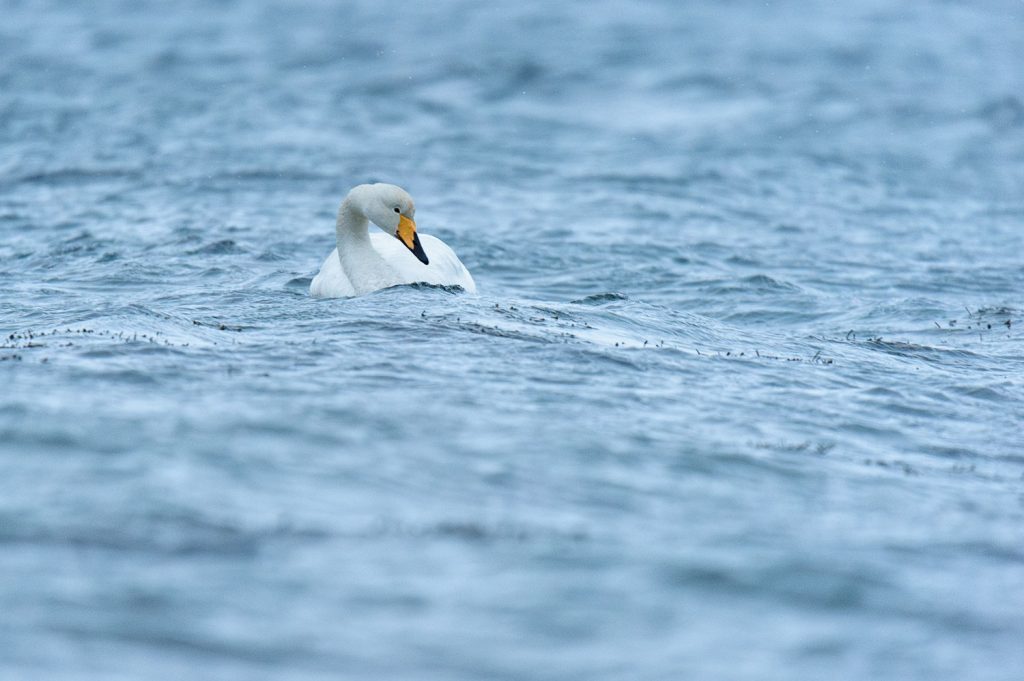
The whooper swan
The whooper swan is one of the largest birds found in Iceland. It can be encountered—and especially heard—in many regions of the island thanks to its powerful call that carries far across open landscapes. It particularly frequents wetlands and marshes, but is also present along coasts, in fjords, and inland areas. The Westfjords, in particular, offer ideal conditions due to their calmness and low human pressure.
Interestingly, Icelandic populations show a differentiated geographic and migratory pattern, making this case unique among the wildlife of Iceland. In the east of the country, whooper swans are mostly migratory and winter along the coasts of Western Europe and Great Britain. In contrast, western populations are more sedentary and can be observed year-round, particularly in the Snæfellsnes Peninsula, the Westfjords, as well as the Reykjavík region and the Reykjanes Peninsula.
Finally, for wildlife photography, inland whooper swans are often difficult to approach, as they are particularly wary. It is usually more effective to observe them along coastal areas or open waters, where they behave more calmly and tolerate human presence better. This pattern also applies to many species of the wildlife of Iceland.
Whooper swan in the Westfjords
Other birds of Iceland
To complete this overview of the wildlife of Iceland, here is a list of other bird species living on the island. We will describe these species gradually in this article:
Terrestrial birds
Wheatear
Snow bunting
Meadow pipit
Common starling
Eurasian blackbird
Common redpoll
Eurasian wren
Seabirds and ducks
Northern fulmar
Northern gannet
Parasitic jaeger
Great skua
Great black-backed gull
European herring gull
Black-legged kittiwake
Arctic tern
Long-tailed duck
Common merganser
Brent goose
Mallard
Northern pintail
Eurasian wigeon
Northern shoveler
Greylag goose
Greater white-fronted goose
Waders
Whimbrel
Black-tailed godwit
Bar-tailed godwit
Red-necked phalarope
Raptors
Gyrfalcon
White-tailed eagle
Merlin
Wildlife Photo Travel and the wildlife of Iceland
Wildlife Photo Travel is a team of nature and wildlife enthusiasts. We settled in Iceland more than 10 years ago, and since then we have been traveling across the island, in both summer and winter, to observe Icelandic wildlife. We also offer photo tours for wildlife and landscape photographers.
Our guides are both nature photographers and specialists in extreme climates. Their job is to help wildlife photographers access natural sites in safe and optimal conditions. This is especially true for our fox photography tour, which takes place in a remote and completely wild nature reserve.
If you would like to learn more about our activities and philosophy, feel free to contact us, we will be happy to discuss it with you.

Sorry, the comment form is closed at this time.