
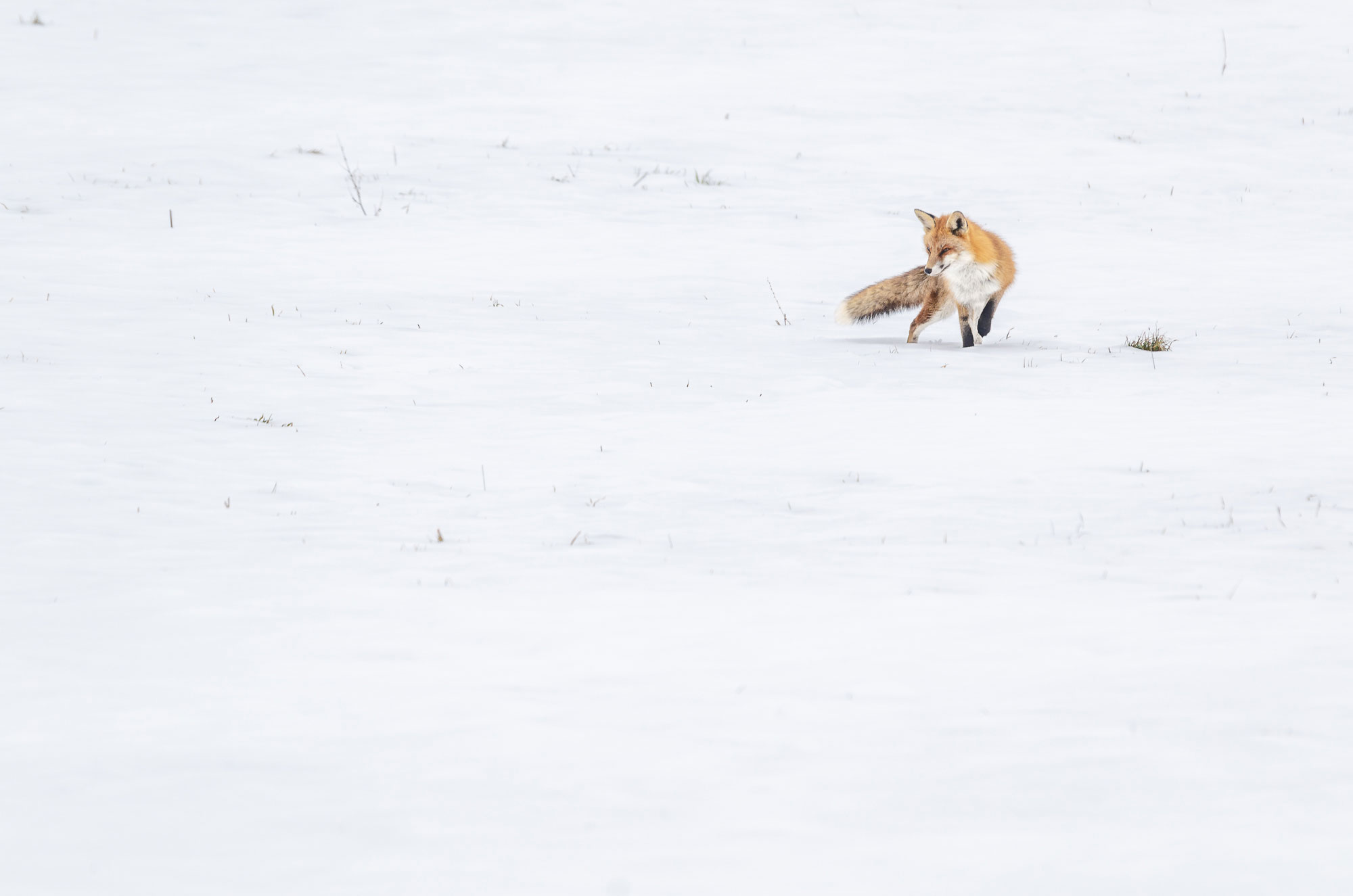
10 mistakes to avoid in wildlife photographyWe spend part of our time in the field alongside amateur and professional wildlife photographers. This experience allows us to witness these photographers’ lives, their successes, but also the difficulties they face, and consequently, the mistakes they make.
Wildlife photography is not an easy field. It requires a passion for nature, a love of living creatures and the wild, but also patience, reasonable expectations, and the ability to keep a cool head in all circumstances.
We have decided to compile here the 10 mistakes to avoid in wildlife photography. The aim is to help you improve and move forward.
1- Showing impatience
We had to start this list of mistakes to avoid in wildlife photography with the one we see most often in the field. Being absolutely desperate to take a photo or make an observation, by any means necessary, usually fails. And failure means disturbing the animals.
Patience is a key part of training in wildlife photography. Before setting out, you must accept the rules of the game. Otherwise, you’re heading straight for disaster.
Indeed, the first thing to learn is how to manage your expectations. Heading out into the field with too many expectations can actually lead you into a mad rush to get the shot. On the contrary, limiting your expectations and being content with what nature offers makes things much easier straight away. You’ll take better pictures, disturb the animals less, and feel less frustrated.
Patience is a key virtue for wildlife photographers. It’s what allows us to observe, learn, and bear witness. It’s thanks to patience that we eventually gain a comprehensive picture of an animal’s life, and by extension, take photos that capture that experience.
2- Use automatic settings
Admittedly, the automatic settings on modern cameras are extremely effective. But even if you have the best camera for wildlife photography, reality eventually catches up with you: in most lighting conditions, the only way to achieve the results you want is to use manual settings.
Using manual settings means committing to serious training in photography. It involves not only understanding how exposure, aperture, and ISO work, but also practising until these settings become second nature and intuitive.
In the field, a wildlife photographer doesn’t necessarily have time to think about settings. Only experience allows you to reach this level of mastery.
To give an example, it is impossible to photograph animals at dusk and achieve a precise result using automatic settings. In the dark, the camera will tend to overexpose. There is a high chance that the result will be a blurry, very noisy photo, as the camera will have used an exposure time and ISO setting that are too high.
In this case, by selecting the exposure and sensitivity yourself, you can photograph the animals’ silhouettes, for example, or a shiny part of an animal (such as the eye).
The same applies to photographing birds in flight. Only manual settings allow you to adapt to the animal’s speed.
3- Trying to photograph animals without scouting the area first
When you want to photograph a particular species, Prospecting is undoubtedly the most important step. It is similar to an investigation during which you gather information about the animals you wish to photograph: their territory, their feeding and hunting grounds, their habits, and so on. The idea is to stack the odds in your favour so you can capture the images you want, whilst minimising disturbance to the animals.
Prospecting allows you to gather information so that you can set up your hide at the right time and in the right place.
To prospect, we recommend taking a pair of binoculars and heading out without your camera.
Some photographers also use a notebook to record their observations, times, etc.
Admittedly, many photographers enjoy wandering around and taking wildlife photos as and when they come across subjects. But this method is far from the most effective, for one thing, and it can cause a great deal of disturbance, for another. It is also often frustrating, as failure inevitably leads to frustration.
Finally, scouting from a distance with binoculars increases your chances of discovering new species or new individuals that have established their territory in the area. If you don’t yet have binoculars, we recommend Nikon’s Prostaff range, which offers excellent value for money.
4. Unethical behavior
We won’t hide the fact that, at Wildlife Photo Travel, the ethics of wildlife photography are of the utmost importance, and we apply strict rules during our Wildlife photo tours. The wildlife photographers who join us on our adventures must adhere to these rules, the primary aim of which is to minimise our impact on the local flora and fauna.
For us, it is ethics above all that make a good wildlife photographer. Respecting the animals we photograph, caring for their safety and well-being, is the gateway to this incredible world. It is this concern, this empathy, that drives us to understand, learn and capture stories of wildlife through our photos.
But in practical terms, what are the consequences of unethical wildlife photography? Well, first and foremost, we put these animals in danger, sometimes without even realising it. Forcing an animal to change its den, delaying a feeding, and so on, can put these animals at risk of death.
Secondly, in such situations, the photographer is no longer a witness but a participant in the scene. This means they influence the animals’ behaviour, creating a situation of stress or panic. And let’s be clear: nothing good can come of these situations, neither for the photographer nor for the animal.
Ultimately, it is ethics that give wildlife photography its greatness. Before being a profession, it is a passion, a way of life. It opens the door to an extraordinary world, but also one that is under threat. For all these reasons, we believe that unethical behaviour is one of the main mistakes to avoid in wildlife photography.
5- Neglecting to learn about the species you want to photograph
This is one of the most common mistakes to avoid in wildlife photography. How can you photograph something you don’t know?
The photographer is a witness; they tell a story. To tell an animal’s story, you must first understand it yourself. And understanding begins with knowing who it is and what its daily life is like. You must therefore observe it, ideally from a distance, using binoculars. Comparing your observations with reference material (monographs, online resources, etc.) is the best way to familiarise yourself with an animal and confirm your conclusions.
Furthermore, it is very difficult to approach an animal if you do not know how it behaves, its senses, its habits, and so on. Trying to photograph an animal you do not know almost always ends in the animal being disturbed and fleeing.
Finally, learning about the species you want to photograph is a good way to protect them. Information is vital; it helps raise public awareness and makes the existence of these animals more tangible. It is impossible to protect a species about which we know nothing.
For example, at Wildlife Photo Travel, we spend a great deal of time observing and photographing the Arctic fox, but we also spend a lot of time researching and reading studies. This combination enables us to identify specific behaviours and anything out of the ordinary. It also allows us to establish a framework that protects the foxes.
6- Being ill-equipped
In wildlife photography, ‘equipment’ doesn’t just refer to photographic gear. To spend time out in the field, it’s often necessary to have suitable clothing and accessories. For example, how can you photograph animals in winter, making the most of the snow, without being dressed appropriately?
Depending on the situation, you may need to stay outdoors for long hours at a time, often in a static position. You therefore need to protect yourself from the cold, the heat, mosquitoes, ticks, and so on. In short, as you’ll have realised, you can’t set off on an adventure without having thought this through beforehand.
We have personally seen many photographers struggle during a photo shoot and end up giving up due to a lack of warm clothing. The cold can quickly get you down. All you want then is to go home and warm up. This is one of the mistakes to avoid in wildlife photography.
For our photo tours, we’ve created guides explaining to photographers what clothing and accessories to pack depending on the destination. If you’re setting off on your own, the best thing to do is visit a hiking gear shop and explain to the staff what you’re planning to do. They’ll then advise you on the right clothing for your region or destination.
7- Neglecting the environment, the background, and the angle of the shot
Your surroundings, the background of your subject, and the angle of the shot are the key factors that determine your composition. These factors must be considered in advance, as once you’re in the thick of it, it’s often too late to change your mind.
It is during the prospecting phase that these choices must be made. This is when you have an overall view of the terrain, the possible backgrounds, your subject’s path, and the options available to you. By taking all these options into account, you can dream and imagine the photographs you want to take – this is the time to be creative!
As with the choice of setting and background, the choice of shooting angle has a significant impact on your compositions. Generally speaking, the rule is to photograph animals at eye level. But in photography, and in art in general, rules are made to be broken—provided you have a firm grasp of the basics. Indeed, to break a rule and create an original composition, you must first know the rule in question.
In wildlife photography, there are several ways to vary the shooting angle. To get down to eye level, the best way is to use a tripod. But other angles can also be interesting. For example, positioning yourself at ground level to isolate the subject by creating a blurred foreground (with snow, grass, etc.). Similarly, positioning yourself at water level can create a very beautiful immersive effect.
8. Do not choose a subject in advance
One of the classic mistakes in wildlife photography is trying to photograph every animal, heading out into the field without a specific subject in mind. By doing so, you end up spreading yourself too thin and significantly reducing your chances of success. After all, isn’t success about capturing the photos you’ve imagined, with specific subjects, in a specific environment, and so on? It therefore makes sense to choose a subject in advance, do your research, scout the location, and then head out with that objective firmly in mind.
As a general rule, we always advise wildlife photographers to focus on one subject, set themselves objectives, and move on to the next subject once those objectives have been achieved – or abandoned (yes, you’re allowed to change your mind!).
9- Failing to plan ahead
In wildlife photography, it’s all about anticipation. You don’t wait for events to happen; you imagine them, think them through, and try to anticipate them. That way, you’re not caught off guard or taken by surprise. You manage situations because you’ve planned for them. Among the mistakes to avoid in wildlife photography, this one is particularly damaging.
In fact, no matter which field of photography we’re talking about—be it wildlife, portraiture, landscape, or street photography—anticipation is a key quality. A lack of anticipation quickly leads to a lack of opportunities.
But what does this anticipation actually involve? Here are a few tips to help you stay one step ahead of events that may occur in wildlife photography:
- Don’t just focus on the animals in front of you, but also on those that might come up behind.
- Set your camera settings before you’re in a position to take photos. You then need to adjust your settings as the light changes. That way, when the right moment arises, your camera is ready!
- Never make assumptions about what will or won’t happen. Observation must remain objective. Sometimes, by wanting an event to happen too much, we end up believing it will happen. On the contrary, you must remain open to everything nature has to offer.
- Anticipate your subject’s possible routes, and take into account the fact that an event may cause it to change course (a passing hiker, another animal, etc.)
- Find out about human activity during your planned excursion times (a cycle race, for example, can quickly make wildlife photography impossible)
- Pack the necessary equipment for different weather conditions (rain, snow, heat, etc.)
- Research your subject’s life cycle. For example, find out about the mating season, birthing season, etc., so that you can adapt your outings and behaviour to these periods.
10. Believe that the camera takes the photo
Another mistake to avoid in wildlife photography: some photographers place too much responsibility on their camera.
Our equipment is under our control; the photographs we take are a reflection of our artistic vision and technical skill. Thinking that a camera will take the photo of our dreams for us is a fundamental mistake. This kind of thinking is what drives many wildlife photographers to constantly buy new cameras, new lenses, and so on. Unfortunately, despite the technology, the problem remains the same, and these photographers fail to improve. Sometimes, they continue to blame their equipment for their failures.
It is clear that the best approach is to arm yourself with patience and engage in self-criticism to understand your own mistakes. Exchanging ideas with other photographers and sharing experiences is also a very good way to improve. Wildlife photographers often make the same mistakes. Sharing them is not only useful for making progress, but also reassuring. We believe this is a great way to stay positive and turn a failure into a learning experience.
In conclusion, no camera will take a photo for us. There is generally no reason to blame your equipment. Instead, you should seek to understand it to master it perfectly and intuitively.
We spend part of our time in the field alongside amateur and professional wildlife photographers. This experience allows us to witness these photographers’ lives, their successes, but also the difficulties they face, and consequently, the mistakes they make.
Wildlife photography is not an easy field. It requires a passion for nature, a love of living creatures and the wild, but also patience, reasonable expectations, and the ability to keep a cool head in all circumstances.
We have decided to compile here the 10 mistakes to avoid in wildlife photography. The aim is to help you improve and move forward.
1- Showing impatience
We had to start this list of mistakes to avoid in wildlife photography with the one we see most often in the field. Being absolutely desperate to take a photo or make an observation, by any means necessary, usually fails. And failure means disturbing the animals.
Patience is a key part of training in wildlife photography. Before setting out, you must accept the rules of the game. Otherwise, you’re heading straight for disaster.
Indeed, the first thing to learn is how to manage your expectations. Heading out into the field with too many expectations can actually lead you into a mad rush to get the shot. On the contrary, limiting your expectations and being content with what nature offers makes things much easier straight away. You’ll take better pictures, disturb the animals less, and feel less frustrated.
Patience is a key virtue for wildlife photographers. It’s what allows us to observe, learn, and bear witness. It’s thanks to patience that we eventually gain a comprehensive picture of an animal’s life, and by extension, take photos that capture that experience.
2- Use automatic settings
Admittedly, the automatic settings on modern cameras are extremely effective. But even if you have the best camera for wildlife photography, reality eventually catches up with you: in most lighting conditions, the only way to achieve the results you want is to use manual settings.
Using manual settings means committing to serious training in photography. It involves not only understanding how exposure, aperture, and ISO work, but also practising until these settings become second nature and intuitive.
In the field, a wildlife photographer doesn’t necessarily have time to think about settings. Only experience allows you to reach this level of mastery.
To give an example, it is impossible to photograph animals at dusk and achieve a precise result using automatic settings. In the dark, the camera will tend to overexpose. There is a high chance that the result will be a blurry, very noisy photo, as the camera will have used an exposure time and ISO setting that are too high.
In this case, by selecting the exposure and sensitivity yourself, you can photograph the animals’ silhouettes, for example, or a shiny part of an animal (such as the eye).
The same applies to photographing birds in flight. Only manual settings allow you to adapt to the animal’s speed.
3- Trying to photograph animals without scouting the area first
When you want to photograph a particular species, Prospecting is undoubtedly the most important step. It is similar to an investigation during which you gather information about the animals you wish to photograph: their territory, their feeding and hunting grounds, their habits, and so on. The idea is to stack the odds in your favour so you can capture the images you want, whilst minimising disturbance to the animals.
Prospecting allows you to gather information so that you can set up your hide at the right time and in the right place.
To prospect, we recommend taking a pair of binoculars and heading out without your camera.
Some photographers also use a notebook to record their observations, times, etc.
Admittedly, many photographers enjoy wandering around and taking wildlife photos as and when they come across subjects. But this method is far from the most effective, for one thing, and it can cause a great deal of disturbance, for another. It is also often frustrating, as failure inevitably leads to frustration.
Finally, scouting from a distance with binoculars increases your chances of discovering new species or new individuals that have established their territory in the area. If you don’t yet have binoculars, we recommend Nikon’s Prostaff range, which offers excellent value for money.
4. Unethical behavior
We won’t hide the fact that, at Wildlife Photo Travel, the ethics of wildlife photography are of the utmost importance, and we apply strict rules during our Wildlife photo tours. The wildlife photographers who join us on our adventures must adhere to these rules, the primary aim of which is to minimise our impact on the local flora and fauna.
For us, it is ethics above all that make a good wildlife photographer. Respecting the animals we photograph, caring for their safety and well-being, is the gateway to this incredible world. It is this concern, this empathy, that drives us to understand, learn and capture stories of wildlife through our photos.
But in practical terms, what are the consequences of unethical wildlife photography? Well, first and foremost, we put these animals in danger, sometimes without even realising it. Forcing an animal to change its den, delaying a feeding, and so on, can put these animals at risk of death.
Secondly, in such situations, the photographer is no longer a witness but a participant in the scene. This means they influence the animals’ behaviour, creating a situation of stress or panic. And let’s be clear: nothing good can come of these situations, neither for the photographer nor for the animal.
Ultimately, it is ethics that give wildlife photography its greatness. Before being a profession, it is a passion, a way of life. It opens the door to an extraordinary world, but also one that is under threat. For all these reasons, we believe that unethical behaviour is one of the main mistakes to avoid in wildlife photography.
5- Neglecting to learn about the species you want to photograph
This is one of the most common mistakes to avoid in wildlife photography. How can you photograph something you don’t know?
The photographer is a witness; they tell a story. To tell an animal’s story, you must first understand it yourself. And understanding begins with knowing who it is and what its daily life is like. You must therefore observe it, ideally from a distance, using binoculars. Comparing your observations with reference material (monographs, online resources, etc.) is the best way to familiarise yourself with an animal and confirm your conclusions.
Furthermore, it is very difficult to approach an animal if you do not know how it behaves, its senses, its habits, and so on. Trying to photograph an animal you do not know almost always ends in the animal being disturbed and fleeing.
Finally, learning about the species you want to photograph is a good way to protect them. Information is vital; it helps raise public awareness and makes the existence of these animals more tangible. It is impossible to protect a species about which we know nothing.
For example, at Wildlife Photo Travel, we spend a great deal of time observing and photographing the Arctic fox, but we also spend a lot of time researching and reading studies. This combination enables us to identify specific behaviours and anything out of the ordinary. It also allows us to establish a framework that protects the foxes.
6- Being ill-equipped
In wildlife photography, ‘equipment’ doesn’t just refer to photographic gear. To spend time out in the field, it’s often necessary to have suitable clothing and accessories. For example, how can you photograph animals in winter, making the most of the snow, without being dressed appropriately?
Depending on the situation, you may need to stay outdoors for long hours at a time, often in a static position. You therefore need to protect yourself from the cold, the heat, mosquitoes, ticks, and so on. In short, as you’ll have realised, you can’t set off on an adventure without having thought this through beforehand.
We have personally seen many photographers struggle during a photo shoot and end up giving up due to a lack of warm clothing. The cold can quickly get you down. All you want then is to go home and warm up. This is one of the mistakes to avoid in wildlife photography.
For our photo tours, we’ve created guides explaining to photographers what clothing and accessories to pack depending on the destination. If you’re setting off on your own, the best thing to do is visit a hiking gear shop and explain to the staff what you’re planning to do. They’ll then advise you on the right clothing for your region or destination.
7- Neglecting the environment, the background, and the angle of the shot
Your surroundings, the background of your subject, and the angle of the shot are the key factors that determine your composition. These factors must be considered in advance, as once you’re in the thick of it, it’s often too late to change your mind.
It is during the prospecting phase that these choices must be made. This is when you have an overall view of the terrain, the possible backgrounds, your subject’s path, and the options available to you. By taking all these options into account, you can dream and imagine the photographs you want to take – this is the time to be creative!
As with the choice of setting and background, the choice of shooting angle has a significant impact on your compositions. Generally speaking, the rule is to photograph animals at eye level. But in photography, and in art in general, rules are made to be broken—provided you have a firm grasp of the basics. Indeed, to break a rule and create an original composition, you must first know the rule in question.
In wildlife photography, there are several ways to vary the shooting angle. To get down to eye level, the best way is to use a tripod. But other angles can also be interesting. For example, positioning yourself at ground level to isolate the subject by creating a blurred foreground (with snow, grass, etc.). Similarly, positioning yourself at water level can create a very beautiful immersive effect.
8. Do not choose a subject in advance
One of the classic mistakes in wildlife photography is trying to photograph every animal, heading out into the field without a specific subject in mind. By doing so, you end up spreading yourself too thin and significantly reducing your chances of success. After all, isn’t success about capturing the photos you’ve imagined, with specific subjects, in a specific environment, and so on? It therefore makes sense to choose a subject in advance, do your research, scout the location, and then head out with that objective firmly in mind.
As a general rule, we always advise wildlife photographers to focus on one subject, set themselves objectives, and move on to the next subject once those objectives have been achieved – or abandoned (yes, you’re allowed to change your mind!).
9- Failing to plan ahead
In wildlife photography, it’s all about anticipation. You don’t wait for events to happen; you imagine them, think them through, and try to anticipate them. That way, you’re not caught off guard or taken by surprise. You manage situations because you’ve planned for them. Among the mistakes to avoid in wildlife photography, this one is particularly damaging.
In fact, no matter which field of photography we’re talking about—be it wildlife, portraiture, landscape, or street photography—anticipation is a key quality. A lack of anticipation quickly leads to a lack of opportunities.
But what does this anticipation actually involve? Here are a few tips to help you stay one step ahead of events that may occur in wildlife photography:
- Don’t just focus on the animals in front of you, but also on those that might come up behind.
- Set your camera settings before you’re in a position to take photos. You then need to adjust your settings as the light changes. That way, when the right moment arises, your camera is ready!
- Never make assumptions about what will or won’t happen. Observation must remain objective. Sometimes, by wanting an event to happen too much, we end up believing it will happen. On the contrary, you must remain open to everything nature has to offer.
- Anticipate your subject’s possible routes, and take into account the fact that an event may cause it to change course (a passing hiker, another animal, etc.)
- Find out about human activity during your planned excursion times (a cycle race, for example, can quickly make wildlife photography impossible)
- Pack the necessary equipment for different weather conditions (rain, snow, heat, etc.)
- Research your subject’s life cycle. For example, find out about the mating season, birthing season, etc., so that you can adapt your outings and behaviour to these periods.
10. Believe that the camera takes the photo
Another mistake to avoid in wildlife photography: some photographers place too much responsibility on their camera.
Our equipment is under our control; the photographs we take are a reflection of our artistic vision and technical skill. Thinking that a camera will take the photo of our dreams for us is a fundamental mistake. This kind of thinking is what drives many wildlife photographers to constantly buy new cameras, new lenses, and so on. Unfortunately, despite the technology, the problem remains the same, and these photographers fail to improve. Sometimes, they continue to blame their equipment for their failures.
It is clear that the best approach is to arm yourself with patience and engage in self-criticism to understand your own mistakes. Exchanging ideas with other photographers and sharing experiences is also a very good way to improve. Wildlife photographers often make the same mistakes. Sharing them is not only useful for making progress, but also reassuring. We believe this is a great way to stay positive and turn a failure into a learning experience.
In conclusion, no camera will take a photo for us. There is generally no reason to blame your equipment. Instead, you should seek to understand it to master it perfectly and intuitively.
Sorry, the comment form is closed at this time.