We are in a good position to know that most wildlife photographers spend a lot of time talking about equipment. They devote a great deal of energy to research and a significant budget to purchases. In this article, we have deliberately picked a misleading title to tell you about this race for equipment and the myth that leads many photographers to believe that ‘the camera makes the photo’. So what is the best camera for wildlife photography?
In this article, we are obviously only giving our opinion based on our experience. We are talking about our philosophy, which we try to convey during our wildlife photo tours. Our idea of this art goes beyond technology. But first, what are the specific characteristics of wildlife photography?
The technical characteristics of wildlife photography
Wildlife photography is different from other types of photography in that it is practised under specific conditions and with numerous constraints. We believe it is one of the most difficult, demanding and costly types of photography in terms of time, energy and money.
Firstly, wildlife photographers often work in low light, as many animals are crepuscular or nocturnal. These conditions require a high level of technical skill and suitable equipment. In these conditions, it is difficult to take good pictures without a perfect command of stabilisation and focusing techniques.
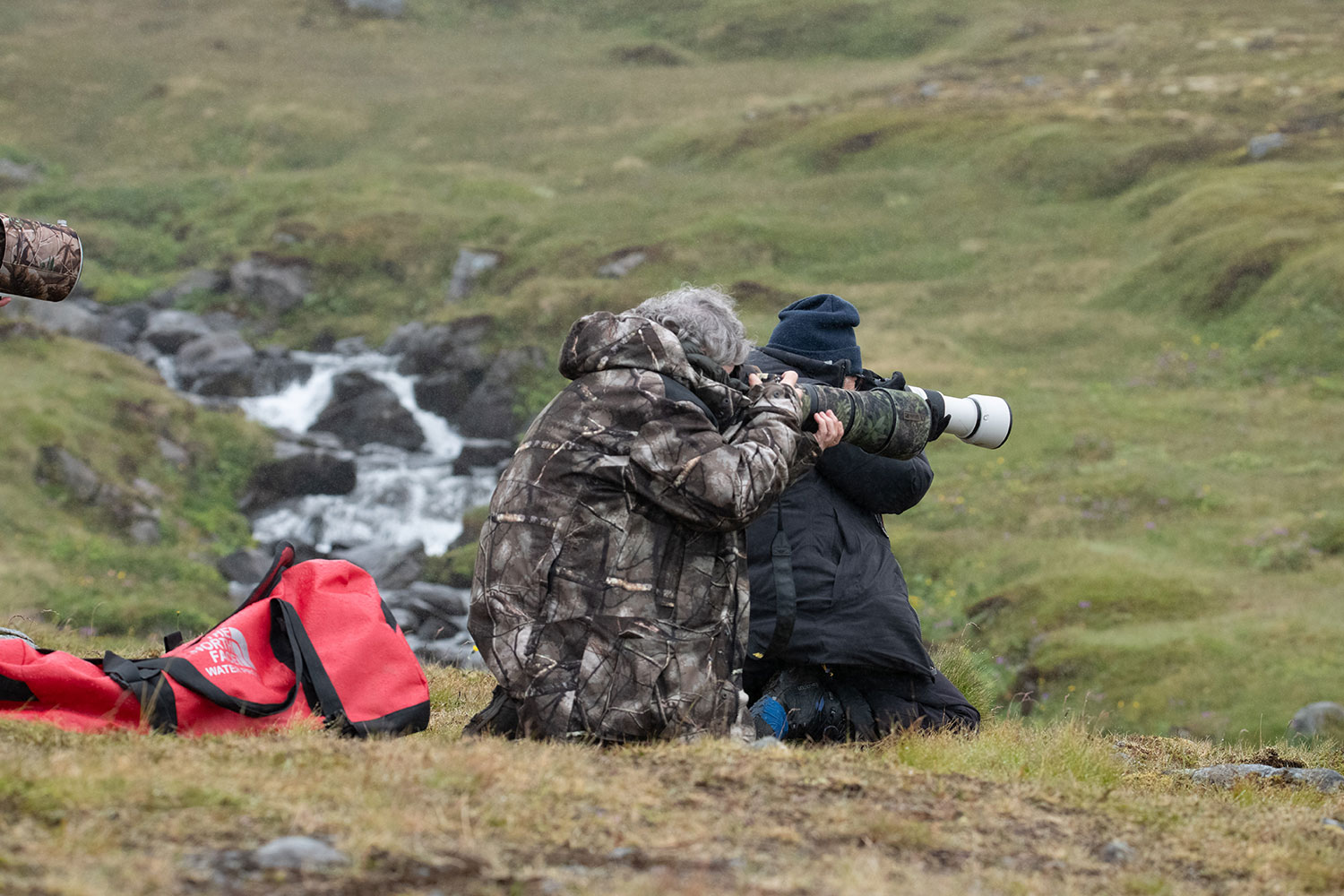
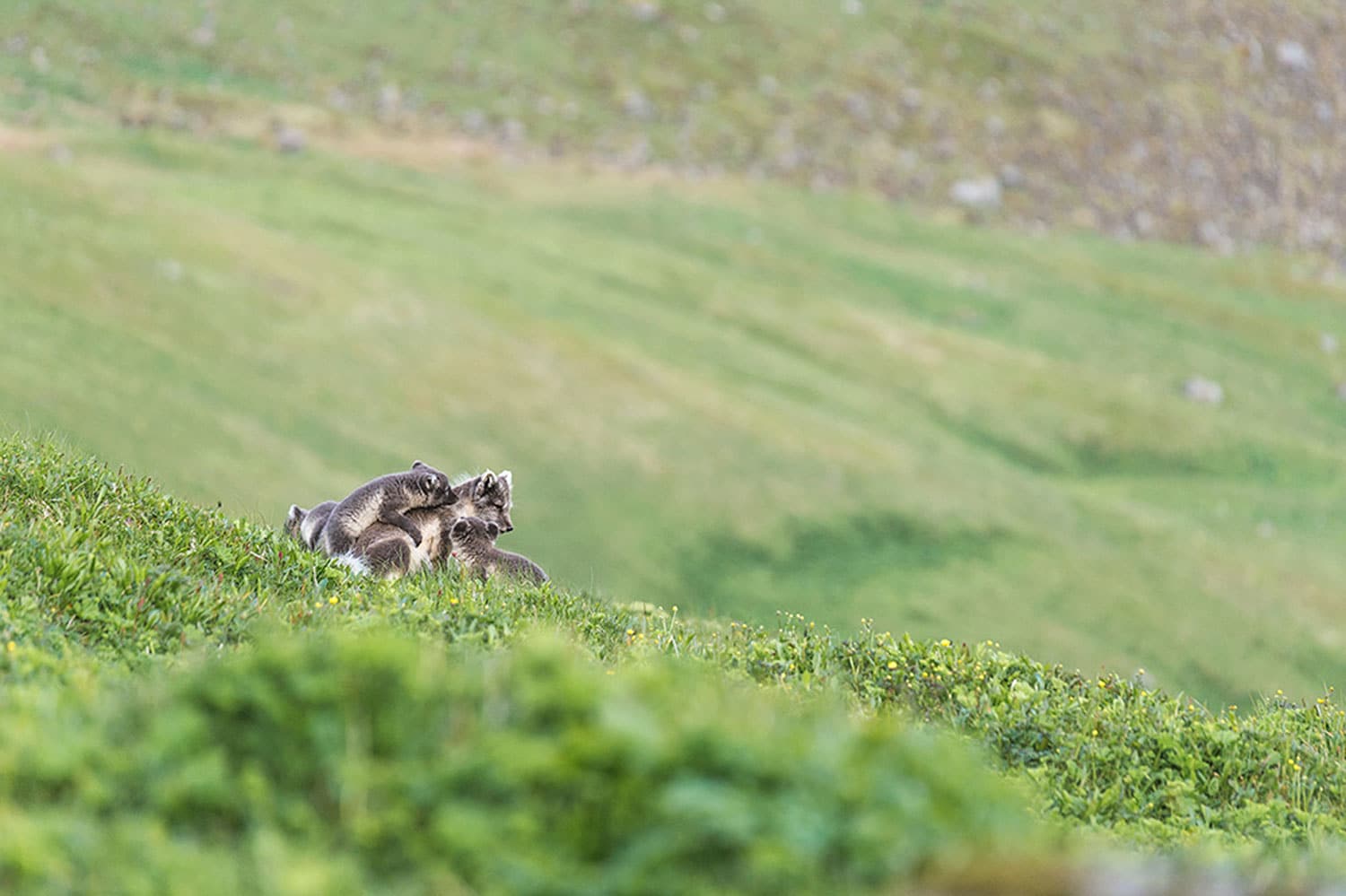
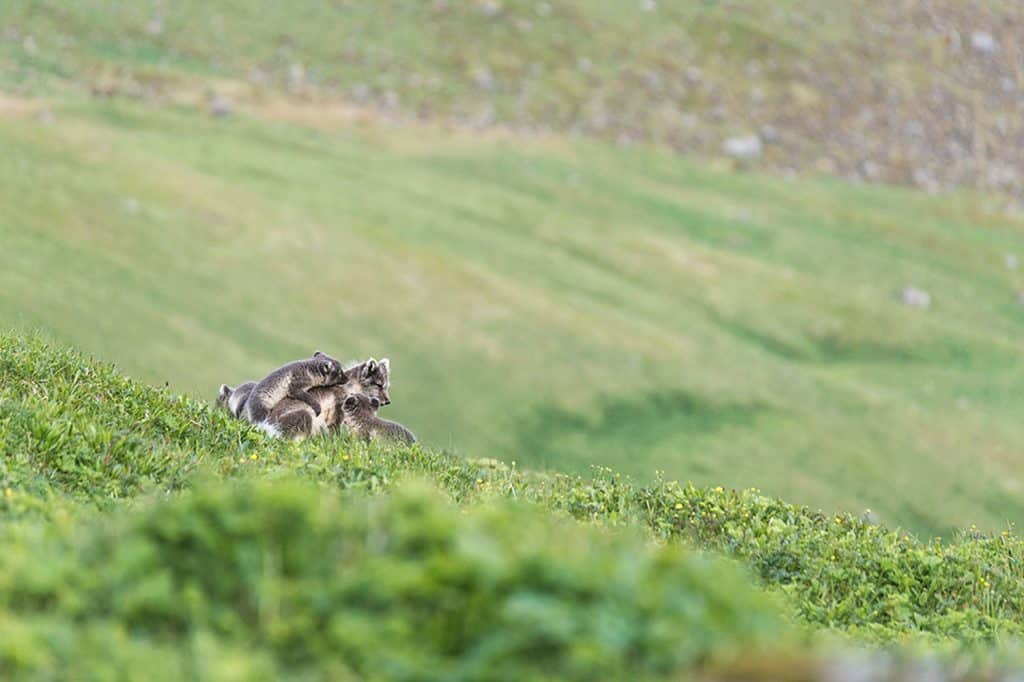
Secondly, since wildlife photography is mainly practised outdoors, photographers have to contend with the weather. On the one hand, these conditions increase the level of difficulty, and on the other, they require additional equipment. In the most extreme regions, such as the Arctic, the Sahara or the jungle, solid field experience is necessary. In all cases, weather conditions are a challenge, but they are also a source of creativity. A photo of an animal in a blizzard, in sandstorms or in pouring rain tells a story and shows extreme living conditions. This is typically what we offer photographers with red deer in Scotland or Arctic foxes in Iceland.
Finally, making wildlife photography your profession, with sufficient and consistent profitability, is quite a feat! The majority of wildlife photographers are simply nature enthusiasts with artistic and nature conservation goals. Financing your camera and lenses is therefore more difficult than for more profitable categories of photography. We would also like to address photographers who want to practise wildlife photography but are unable to do so for financial reasons. It is important to note that with an old SLR camera (such as the Nikon D4, for example) and a 150/600 zoom lens from Tamron or Sigma, it is possible to acquire the necessary equipment on a very reasonable budget. It should not be forgotten that professional wildlife photographers have taken iconic images with cameras that are now considered obsolete.
The technology race
Camera and lens manufacturers obviously have very effective marketing strategies to promote their photographic equipment. Nikon, Canon, and Sony are stepping up their investments and creativity to develop ever more powerful cameras with new features and large-scale communication campaigns. It is very easy to get caught up in a cycle where the more you buy, the more you need to buy.
It is clear that technology is advancing at an unprecedented rate. In photography, and even more so in video, it is becoming easier and easier to produce high-quality images. But paradoxically, it is becoming more difficult to create works of art. By replacing knowledge, perseverance, and creativity with equipment that is supposed to do everything for us, we quickly find ourselves trapped in a widespread belief: if I don’t get the results I want, it’s because I need even better equipment!
In photography, the race for technology has clearly led many people astray. Where these advances are supposed to help us, they sometimes become a burden, and it is very difficult to detach ourselves from them. During our photography courses, we try to make photographers aware of this issue and encourage them to get the most out of their equipment and progress by letting go of the idea that they need something else, more things…
Art is above all a matter of sensitivity
We now come to the most important topic of this article: the conflict between art and the race for technological advancement. If we had to answer the question posed here in simple terms, we would say that the best camera is the one that allows you to create your work of art exactly as you imagined it. So forget about high-performance sensors, ultra-high resolutions, and 5-axis stabilisers. Gone are the definitions that defy reality and the sharpness that allows you to see the details of a deer’s coat. All this technology alone does not allow you to create a work of art. Technology alone is not sensitive, moving, or dramatic; it does not create emotion. You have that power, and you alone.
Wildlife photography remains a field where we seek to evoke emotions in an audience, whether they are connoisseurs or not. As in other fields of photography, we try to imprint our own sensibility on our images. We write our own stories, which are the result of days, weeks or even months of observation, reflection, and dreaming. Technology is at odds with this aspect of wildlife photography; it can be a hindrance to creative freedom.
The minimum equipment required for wildlife photography
Given the constraints associated with wildlife photography that we mentioned earlier, we will try to give you an idea of the minimum equipment needed to get started.
Light being the primary constraint, a camera must be able to increase ISO without significantly degrading the image. It is common in wildlife photography to take pictures with a sensitivity higher than 2000 ISO, and easily reaching 6400 ISO. In fact, the camera must be able to handle these sometimes extreme settings. Over the last 10 years, technology has evolved considerably, and virtually all SLR and mirrorless cameras have this capability. But the Nikon D4 mentioned above, which was released in 2012 (almost the Stone Age), already handles sensitivity increases up to ISO 6400 perfectly. It is therefore possible to have a high-performance camera on a modest budget (as a reminder, a second-hand D4 sells for around $1,000, while its successor, the Nikon D6, costs €7,600).
Next, to cope with weather conditions, the only technical criterion to consider is tropicalisation. Your camera must be waterproof and able to withstand a certain level of rainfall and humidity. In some cases, a protective cover is essential. This is the case in the Sahara or regions where sand and wind combined can cause a lot of damage. These are the kinds of constraints we sometimes encounter during our photography tour in Tassili n’Ajjer in Algeria.
Finally, the telephoto lens must be bright enough for the same reasons as sensitivity. We would say that beyond a maximum aperture of 5.6, the lens starts to be too dark. The best value for money lenses we know of are:
Both of these lenses offer good quality, very low weight, and a very low price tag compared to fixed focal length lenses, which are much more expensive. These lenses are widely used by wildlife photographers who like to be mobile and use the approach technique.
The best camera for wildlife photography
The best camera for wildlife photography is the one you already own, the one you know well, the one that is part of you and allows you to express your creativity without constraints. We have often seen photographers demonstrate immense creativity with equipment that is 20 years old, and unfortunately, we have also seen photographers struggle with the latest high-end equipment.
Psychologically, we tend to blame our equipment for our failures. But failures are part of wildlife photography and are often a driving force for learning.
Of course, we are not saying that you should never upgrade your camera. We are simply saying that buying a new camera every three years has never helped a photographer develop their creativity and technique.
At Wildlife Photo Travel, we convey a message that we believe is important: Photography is used to tell stories and evoke emotions. It is a wonderful means of artistic expression. Reducing this art to a list of technical specifications is misleading. There is no such thing as the best camera, but there are excellent photographers who know how to make the most of their equipment and the world around them!

Sorry, the comment form is closed at this time.