What is the difference between Icelandic arctic foxes and those from Greenland or Svalbard?
We are often asked this question: what is so special about the Icelandic arctic fox? Most wildlife photographers have seen images of white arctic foxes in winter, but know nothing about the diversity of this species. Because yes, there is not just one arctic fox, but many arctic foxes: genetic diversity, subspecies, and incredible adaptation to different regions of the Arctic.
We still don’t know where the Arctic fox originated. Recent studies have even suggested the Tibetan plateau as the origin of this small fox. But what we do know is that its migrations to different Arctic regions have been accompanied by adaptations. The arctic fox has evolved physically, but it has also adapted its diet and behavior. In this article, we’ll tell you about these adaptations that we observe every year during our photo tour.
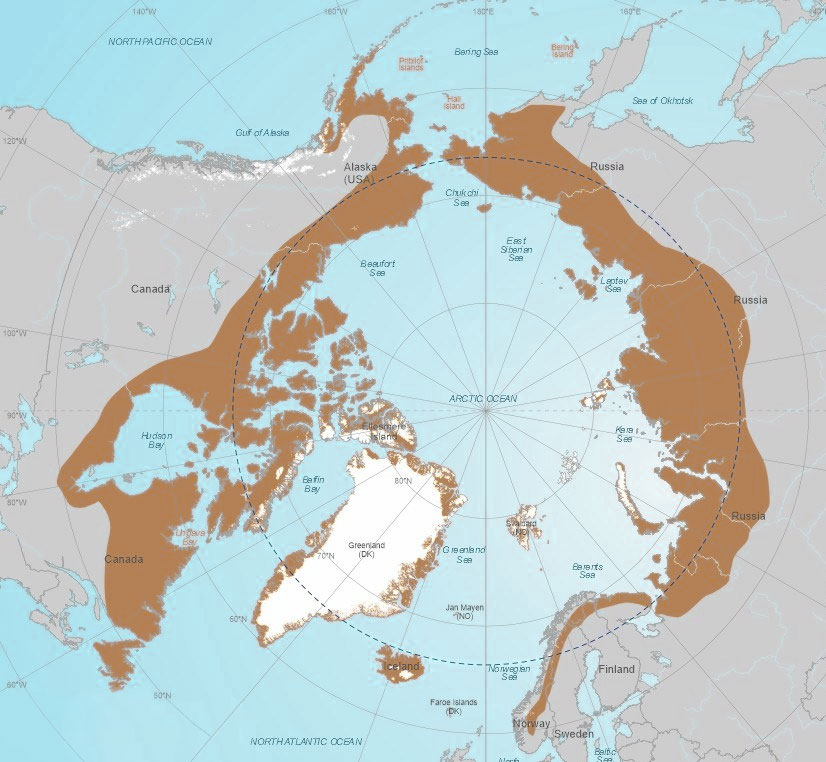
Arctic fox distribution area
The Icelandic arctic fox and basalt
The Arctic fox arrived in Iceland during the last ice age. It didn’t need to cross the North Atlantic to do so, it simply took advantage of the ice pack to travel to the southern borders of the Arctic Circle. When the ice melted and the tundra receded, the arctic foxes living in Iceland, which had until then been trapped in the ice, found themselves on an island. This marked the beginning of their island adventure in Iceland.
But Iceland underwent a major upheaval at the end of the Ice Age. The island, which had previously been a mass of ice, became a barren land of basalt, moss, and tundra. Due to the warm currents of the Gulf Stream, there is little snowfall. Temperatures range from -10°C to 15°C, and volcanoes erupt one after another, creating new dark, desert-like lands. This environment has disrupted one of the arctic fox’s genetic characteristics: its white camouflage, which protects it from predators in snowy environments, has become a handicap!
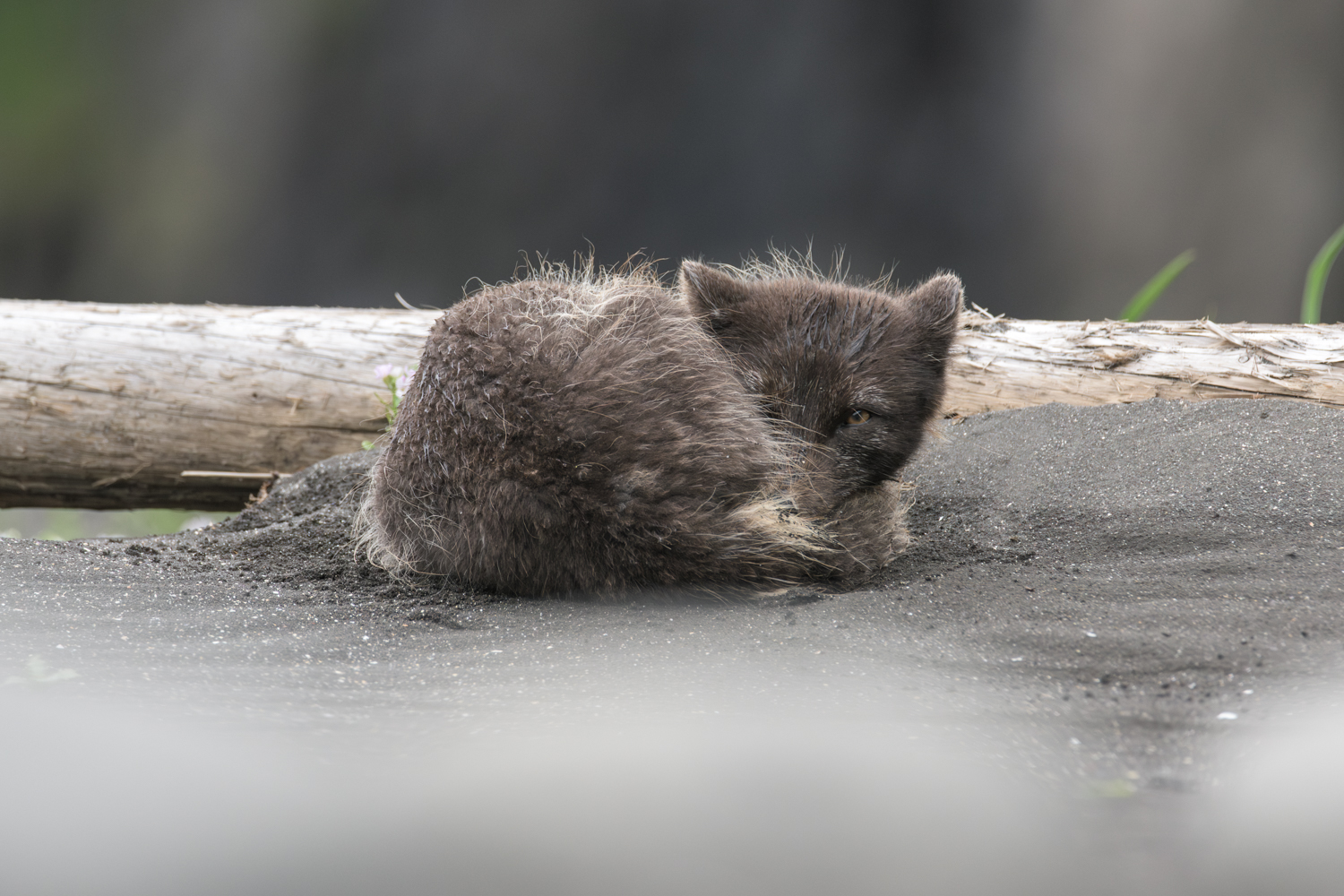
While white arctic foxes represent 80% of the population throughout the Arctic, in Iceland, the brown morph, which is better suited to black basalt rock, has gradually become dominant. We don’t really know which predators precipitated this genetic evolution, but it is certain that the arrival of humans on the island, who began hunting polar foxes, favored the brown foxes, which are more difficult to find.
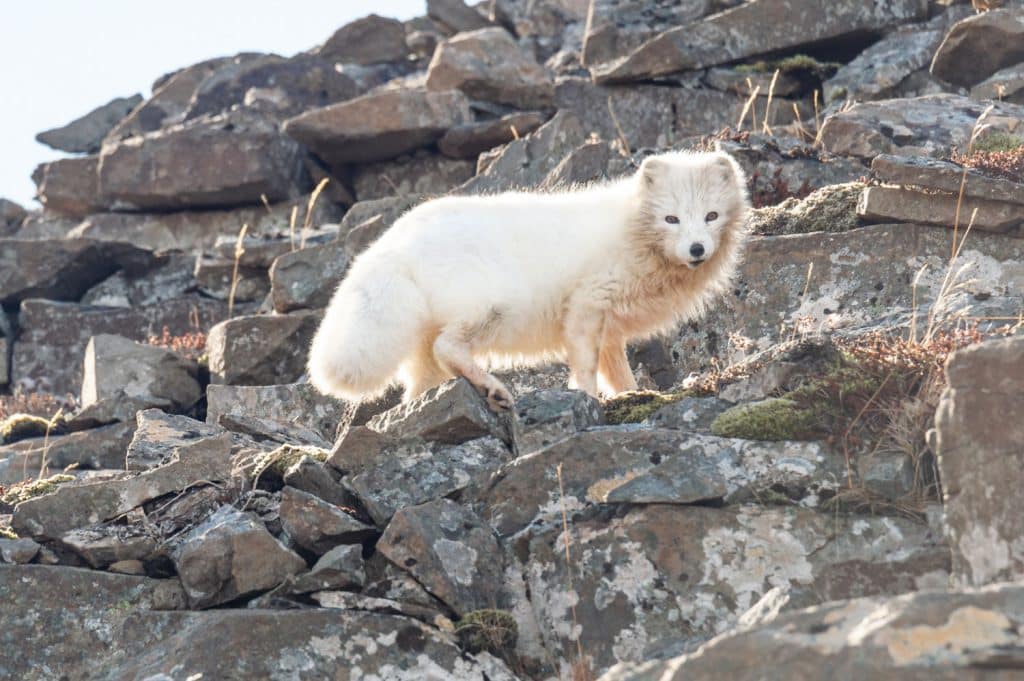
Today, even though brown arctic foxes make up 80% of the population in Iceland, we still see white foxes during our photography workshops. A few years ago, we even had the chance to observe a family of white foxes consisting of two adults and nine cubs.
Here we tell you about the birth of a subspecies: the Icelandic arctic fox (Vulpes Lagopus fuliginosus).
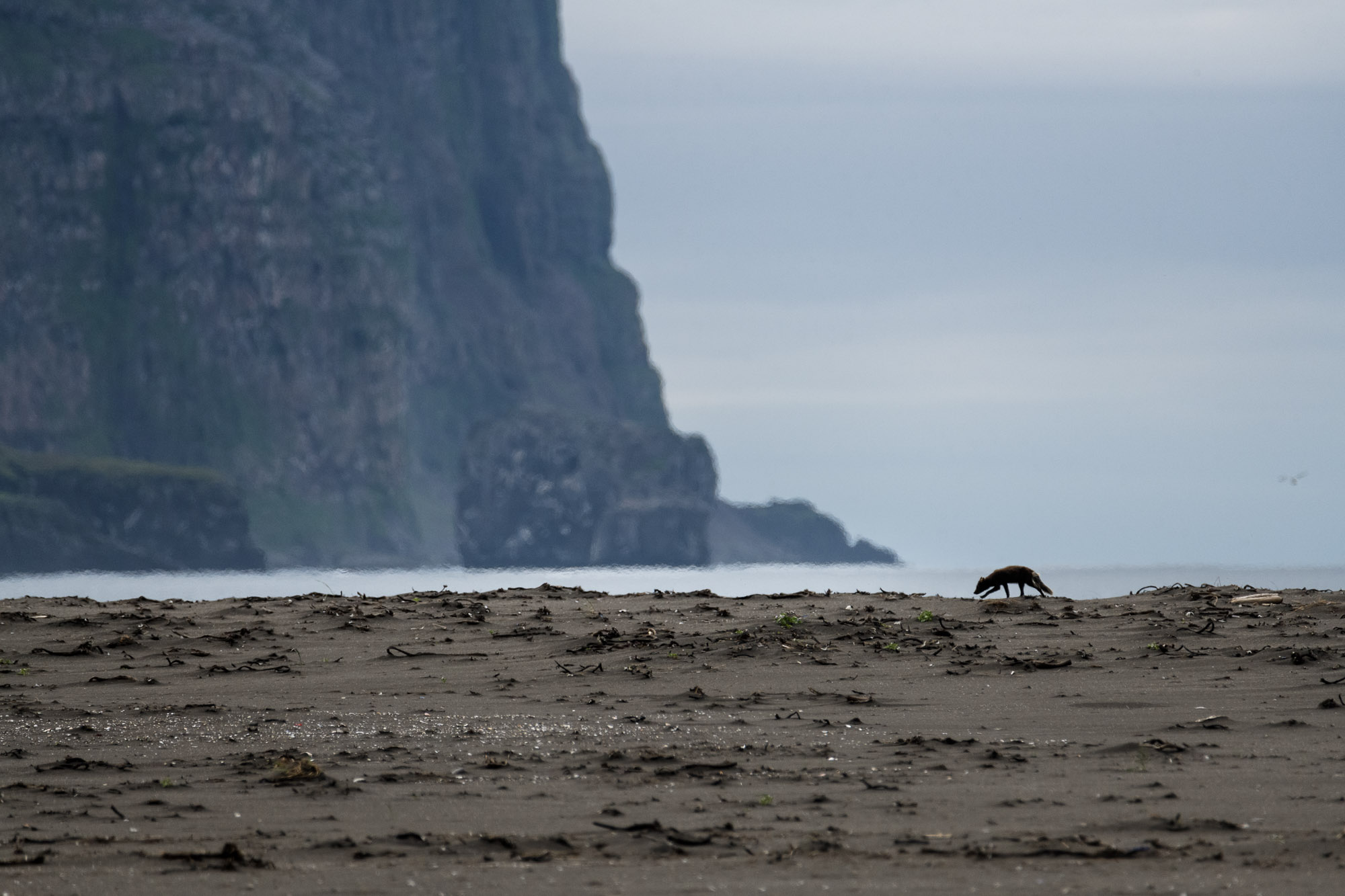
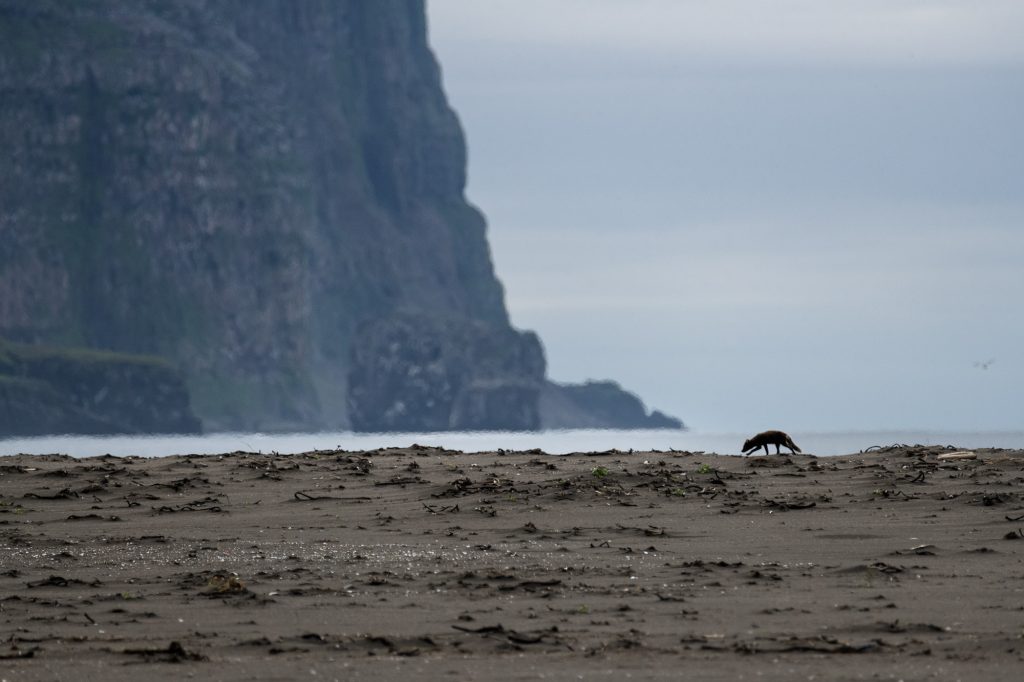
Icelandic arctic fox on a black sand beach
The Arctic fox in the far north
In Scandinavia, Svalbard, Greenland, Canada, and Siberia, the arctic fox finds its food by hunting lemmings that move under the snow cover. Its hunting technique is similar to that of the red fox hunting voles. This food source has always been one of its main ones.
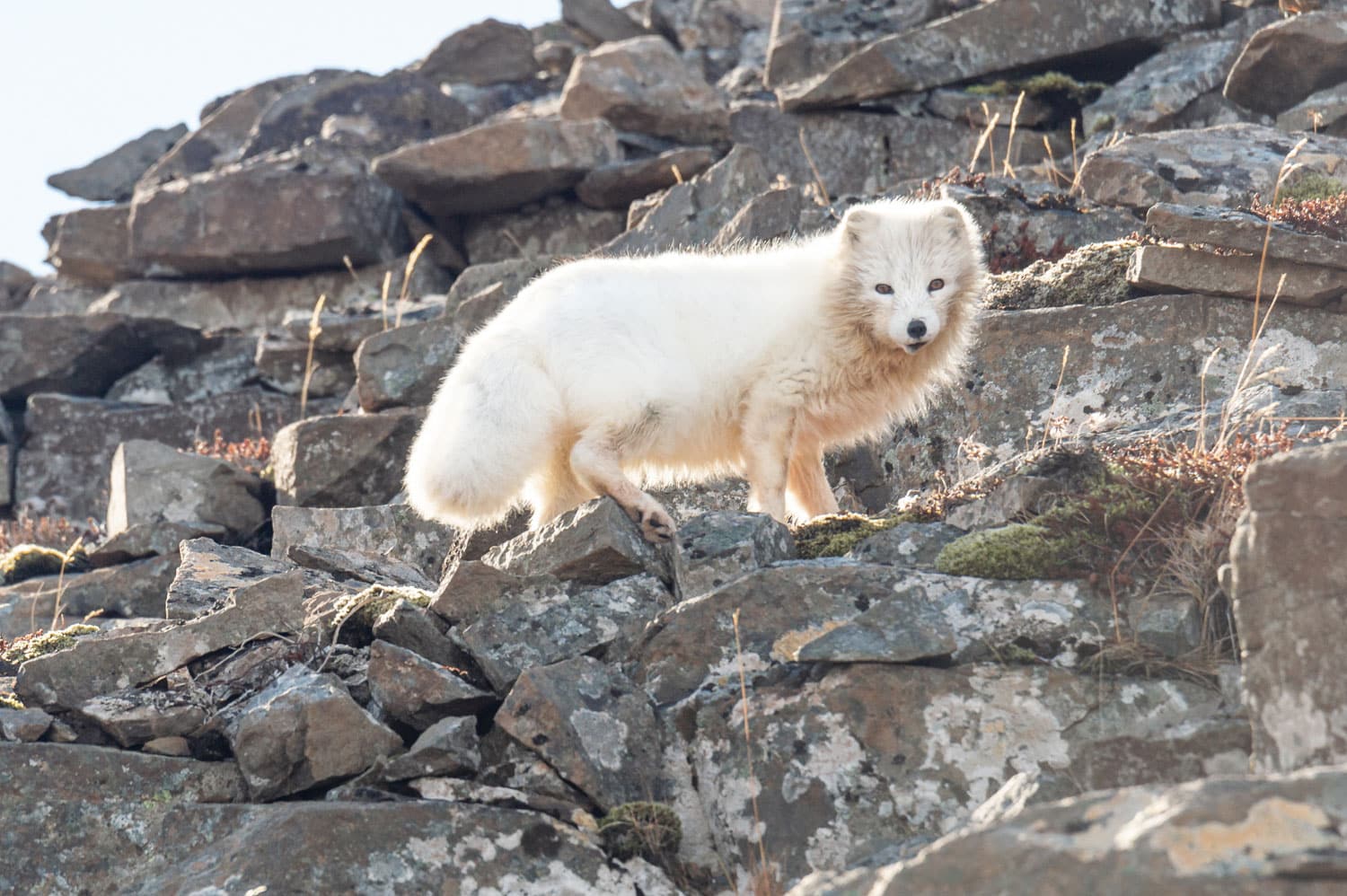
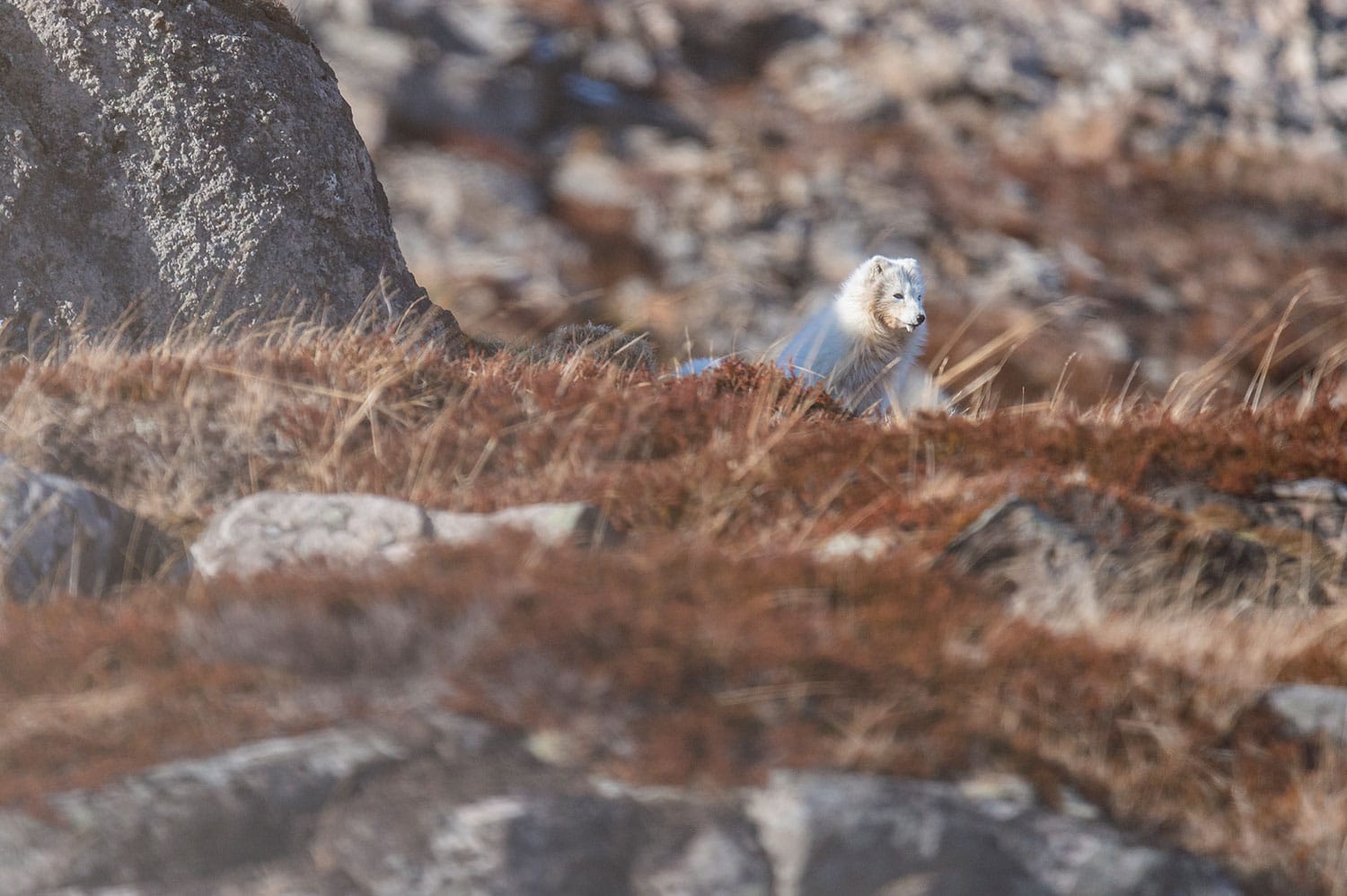
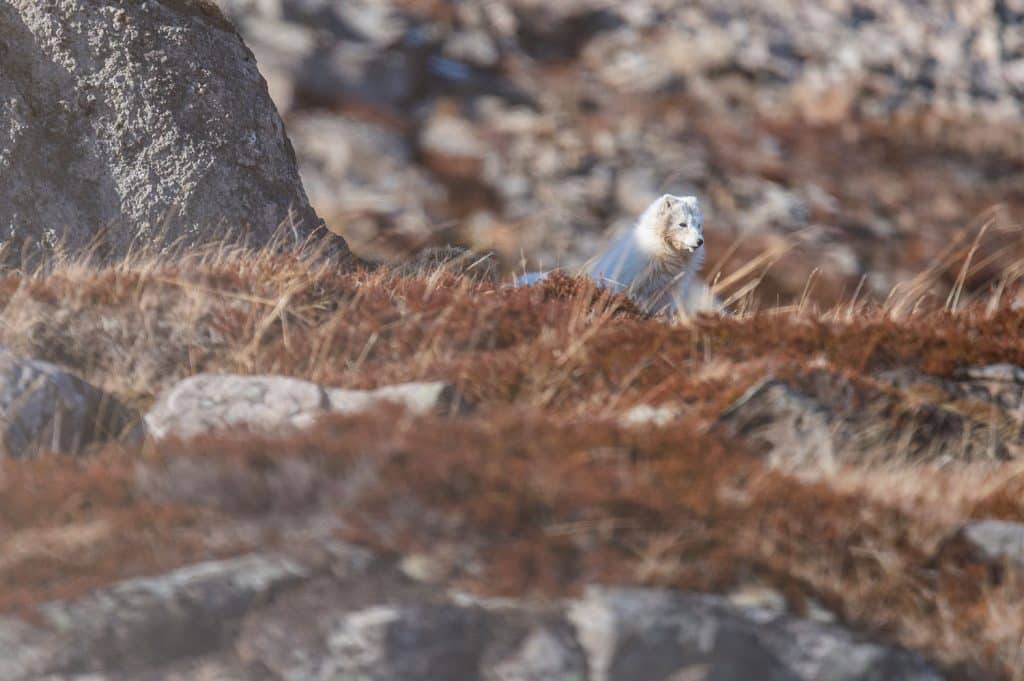
The Arctic fox has therefore always been dependent on snow and ice. It has developed camouflage adapted to this environment, like the rock ptarmigan and polar bears. The most common morph, the white morph, is completely white in winter. In summer, its back turns gray and its belly turns beige. This camouflage is ideal in the tundra covered with light-colored lichen (beige, light gray, etc.).
White camouflage has always enabled the arctic fox to survive in snowy and icy environments. It is very difficult to spot there. In fact, in all Arctic regions that have retained significant snow cover, the arctic fox has retained the same genetic characteristics.
White arctic fox in winter
Lemmings, seabirds, or fish?
The situation for Icelandic arctic foxes quickly changed. The absence of sea ice forced polar bears to leave these lands. This change deprived them of one of their food sources: the remains of seals killed by bears. Furthermore, there is now no evidence of lemmings in Iceland during the last ice age. Arctic foxes found themselves trapped on land where their main food source was absent. But history would have it that, during the same period, Iceland became a refuge for millions of seabirds that began nesting on its basalt cliffs.
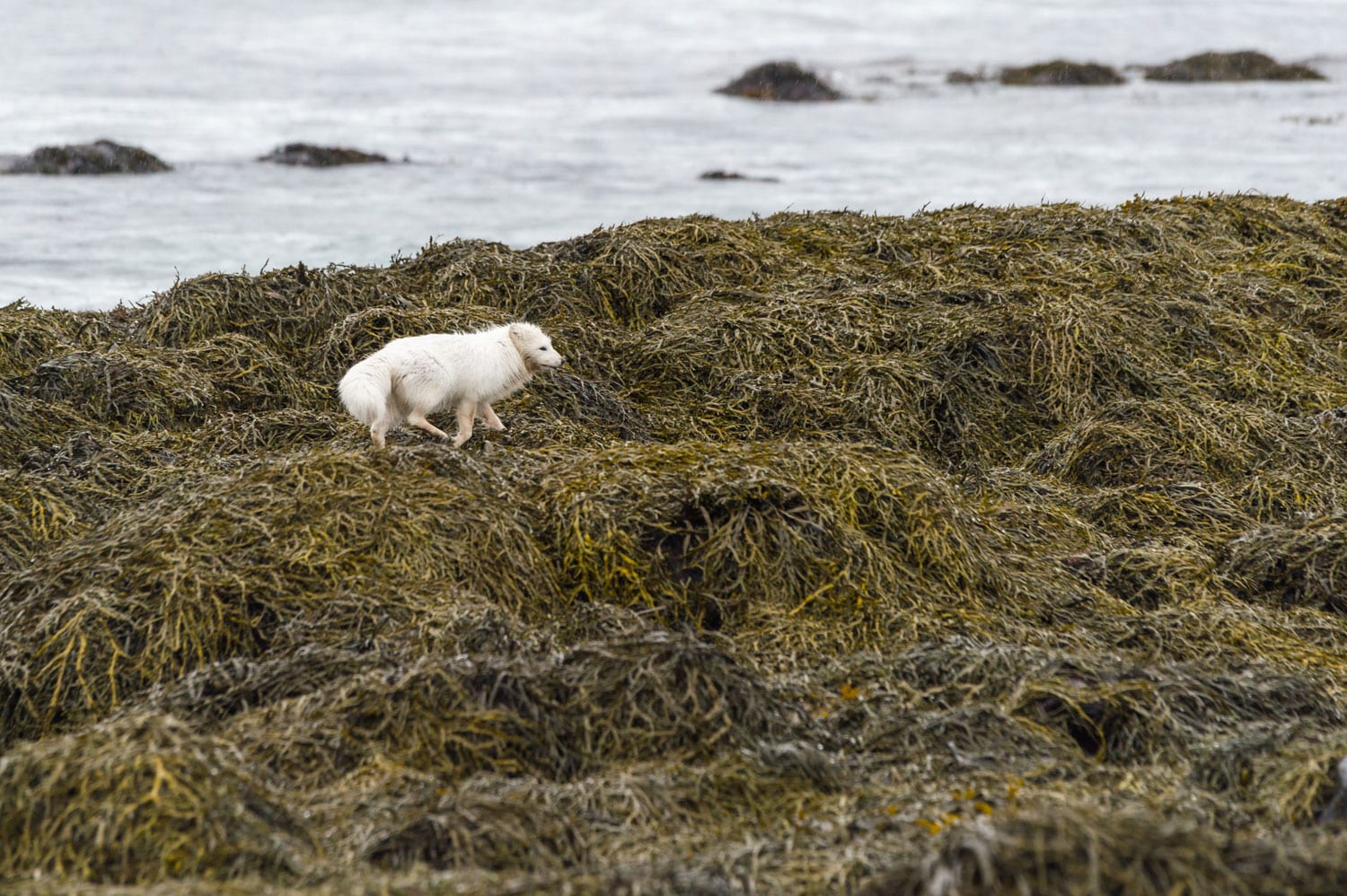
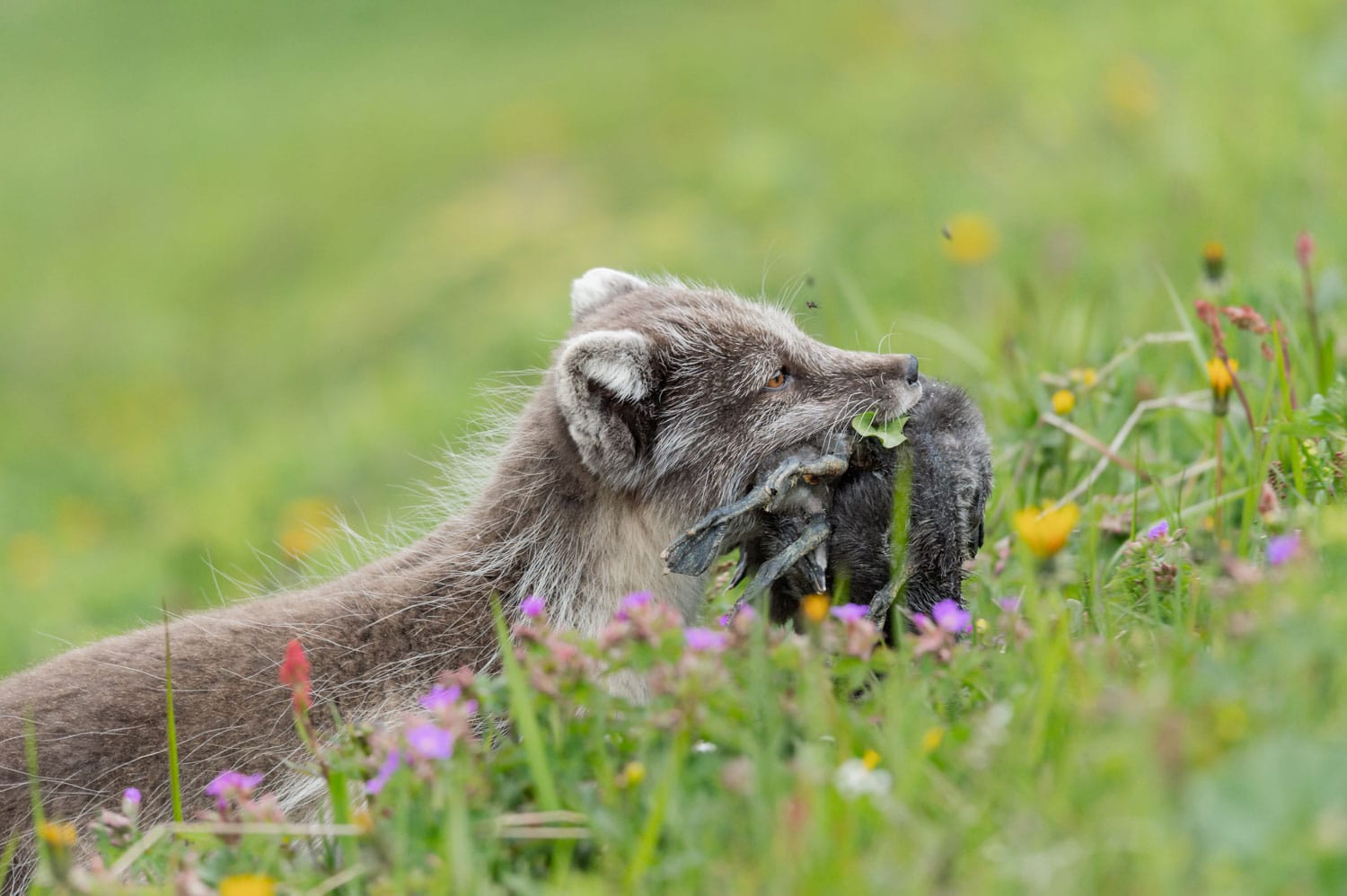
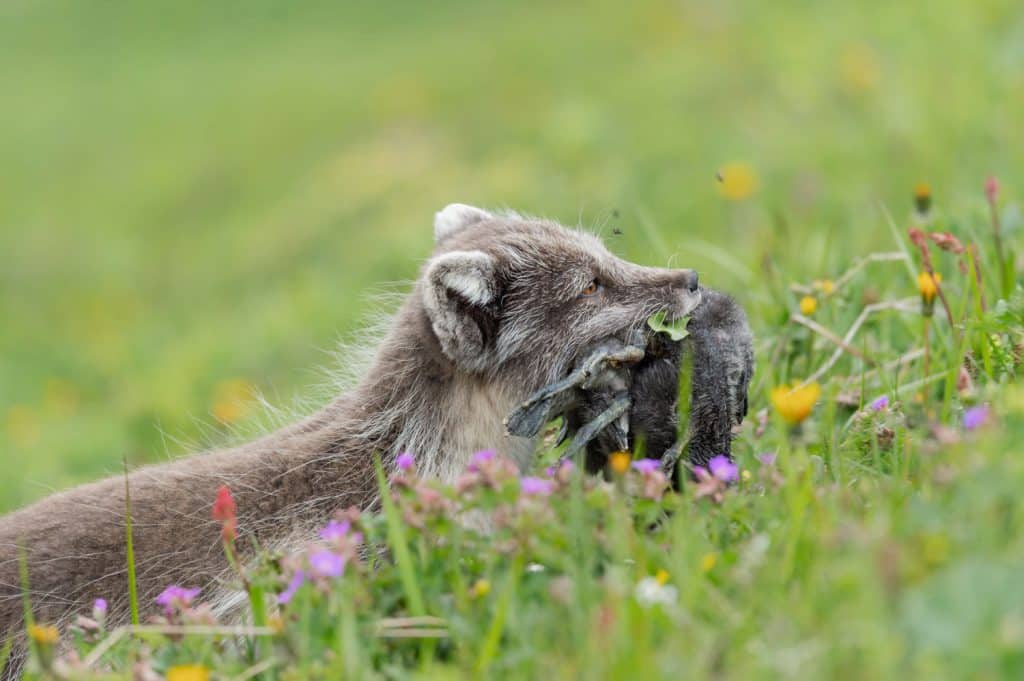
Not many mammals are capable of quickly changing their diet to adapt to climate change. But the Icelandic Arctic fox seized the opportunities available to it. Little by little, it made the Icelandic cliffs its pantry. Puffins, razorbills, fulmars, and other guillemots became the mainstay of its diet from April to August. On the other hand, Iceland’s rich and open waters have turned the Icelandic coastline into a graveyard for fish and shellfish. All the Icelandic arctic fox had to do was help itself at low tide. From September to April, this is its main source of food.
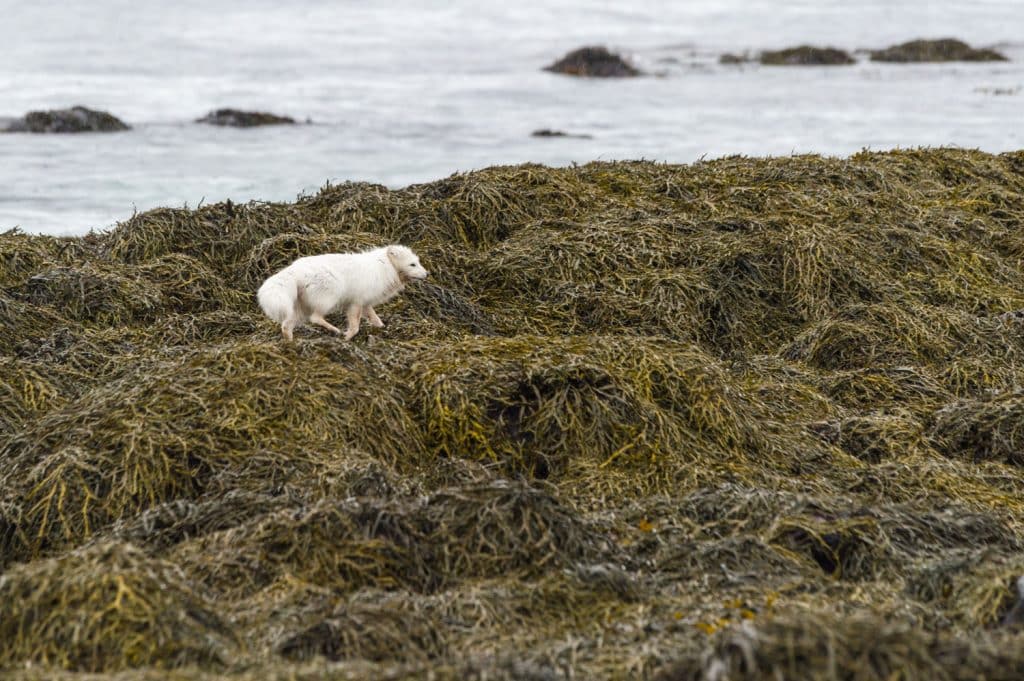
An arctic fox in search of food at low tide
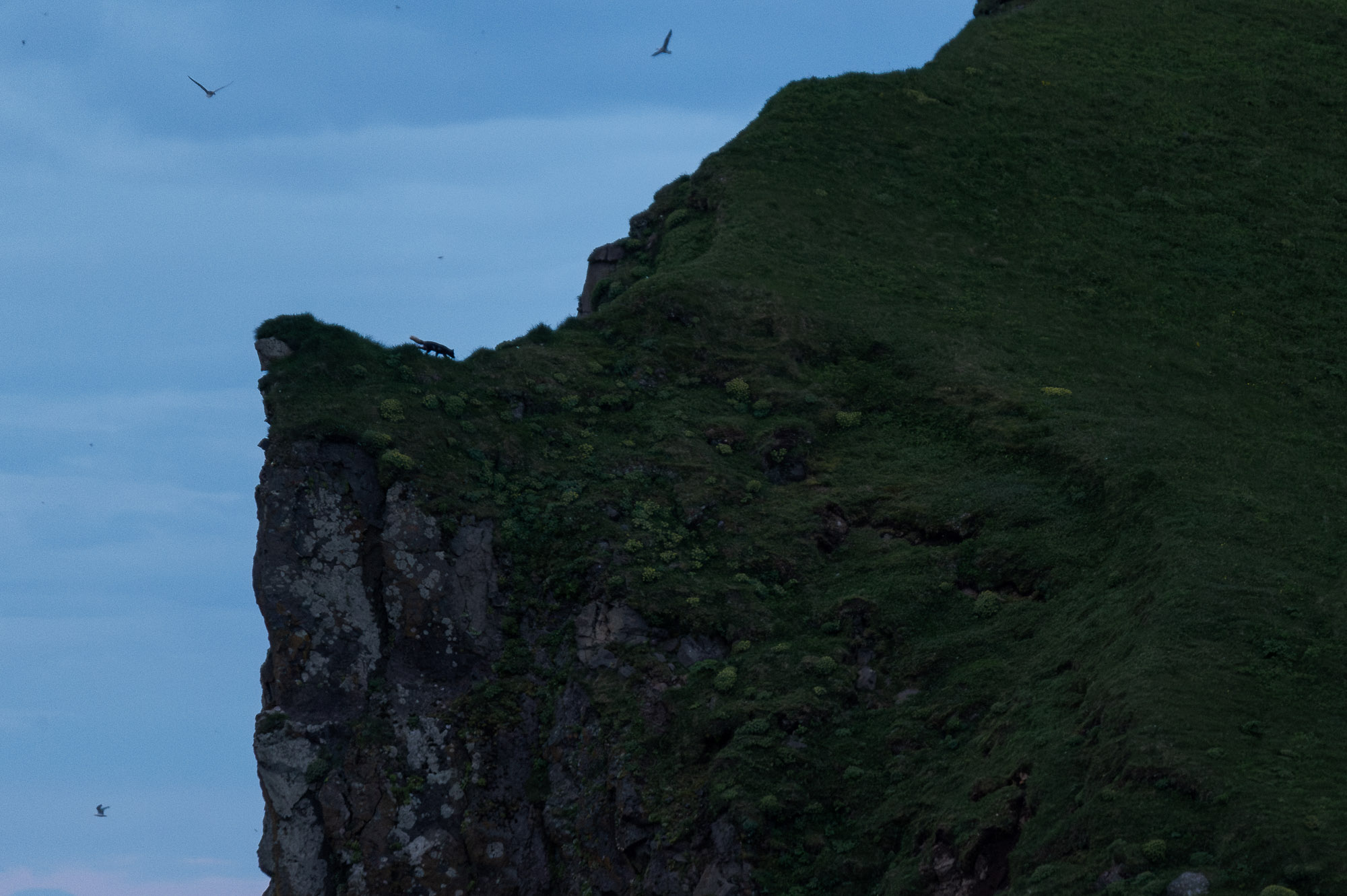
This is how the Arctic fox became the hunter of Icelandic cliffs that it is today. It has acquired incredible climbing skills, descending and ascending the steepest cliffs. During our photo tours, we often take our photographers to observe these spectacular hunting scenes.
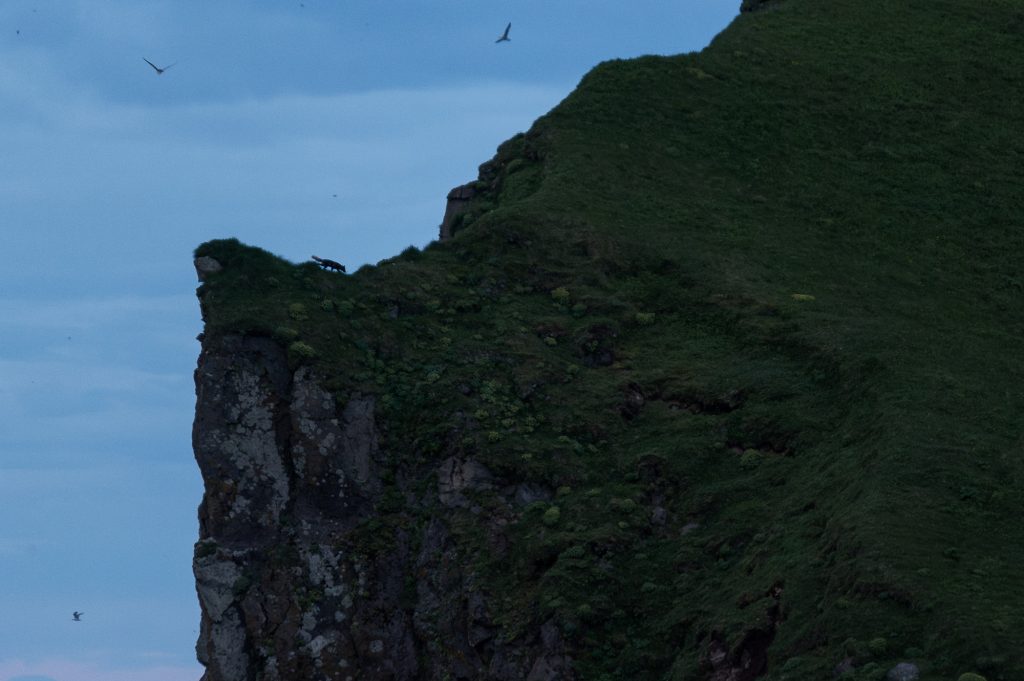
Arctic fox hunting on Icelandic cliffs
An arctic fox with a seabird in its mouth
Arctic foxes of Greenland and Svalbard
As mentioned above, the end of the last ice age disrupted the Arctic climate. One of the major changes was the retreat of the ice pack, which freed up the waters around Iceland and Norway in particular. However, Greenland, Svalbard, northern Russia, and northern Canada remained connected to the ice pack covering the Arctic. As a result, arctic foxes were able to continue to roam freely in these regions.
Animal species continue to evolve genetically in a homogeneous manner if they can move freely within their range. This is the case for the Arctic fox in the Arctic. This leads us to conclude that when we observe an Arctic fox in Greenland or Svalbard, we are observing the same species and the same subspecies, which is the common Arctic fox (Vulpes Lagopus Lagopus).
In addition to the common Arctic fox found throughout the Arctic and the Icelandic Arctic fox mentioned above, there are two other subspecies:
The Bering Island Arctic fox (Vulpes lagopus beringensis) in Russia
The Pribilof Islands Arctic fox (Vulpes lagopus pribilofensis) in Alaska
On the one hand, the white morph is dominant among the arctic foxes of Greenland and Svalbard. On the other hand, their diet includes lemmings and seals. This is what differentiates them from Icelandic arctic foxes. It is not impossible that the differences between these two subspecies will become more pronounced given the ongoing climate change. In Iceland, more and more unusual behavior is being observed in Arctic foxes, which we have personally witnessed during our photo tours.
White Arctic Fox in winter
Settlement of Iceland by the Vikings
As we have said, the arctic fox has evolved since the last ice age. The main change concerns the brown morph, which has become dominant. But we can legitimately ask ourselves the question: given that the arctic fox had no predators in Iceland during the 11,000 years that separate us from the ice age, why did the brown morph dominate? Because, yes, the evolution of species is caused by environmental constraints in particular. The answer to this question may lie with humans. On the one hand, because the arrival of the Vikings in Iceland around 870 AD created a direct competitor for the arctic fox’s resources, and on the other hand, because humans are predators of the arctic fox.
For centuries, arctic foxes have been hunted by humans for two reasons: the first is to sell their fur, and the second is to protect livestock (mainly lambs). In Iceland, white arctic foxes, which were very visible in summer, must therefore have had a higher mortality rate due to hunting by humans. It should be noted that the Icelandic government pays fox hunters. This may have caused, or at least exacerbated, the drastic reduction in the white morph in Iceland.
Today, the Icelandic arctic fox is still hunted. However, Icelandic public opinion is increasingly opposed to this hunt. Nature reserves such as Hornstrandir have been created. Hunting is prohibited in these reserves. Fewer and fewer young Icelanders are attracted to this hunt, either out of concern for nature conservation or simply because they do not see the point of it.
Finally, the Icelandic Environment Agency recently came out against polar fox hunting. This is partly because hunting serves no purpose, and partly because it costs the Icelandic state too much money. The Icelandic Environment Agency has stated that Icelandic farmers have provided no evidence of Arctic foxes preying on livestock. This type of predation is increasingly seen as a rural legend, something scientists already knew. Let’s hope that hunting is banned for good in Iceland, which would create optimal conditions for Iceland’s only endemic mammal.

Sorry, the comment form is closed at this time.